









What you'll do on this two-hour whale watch
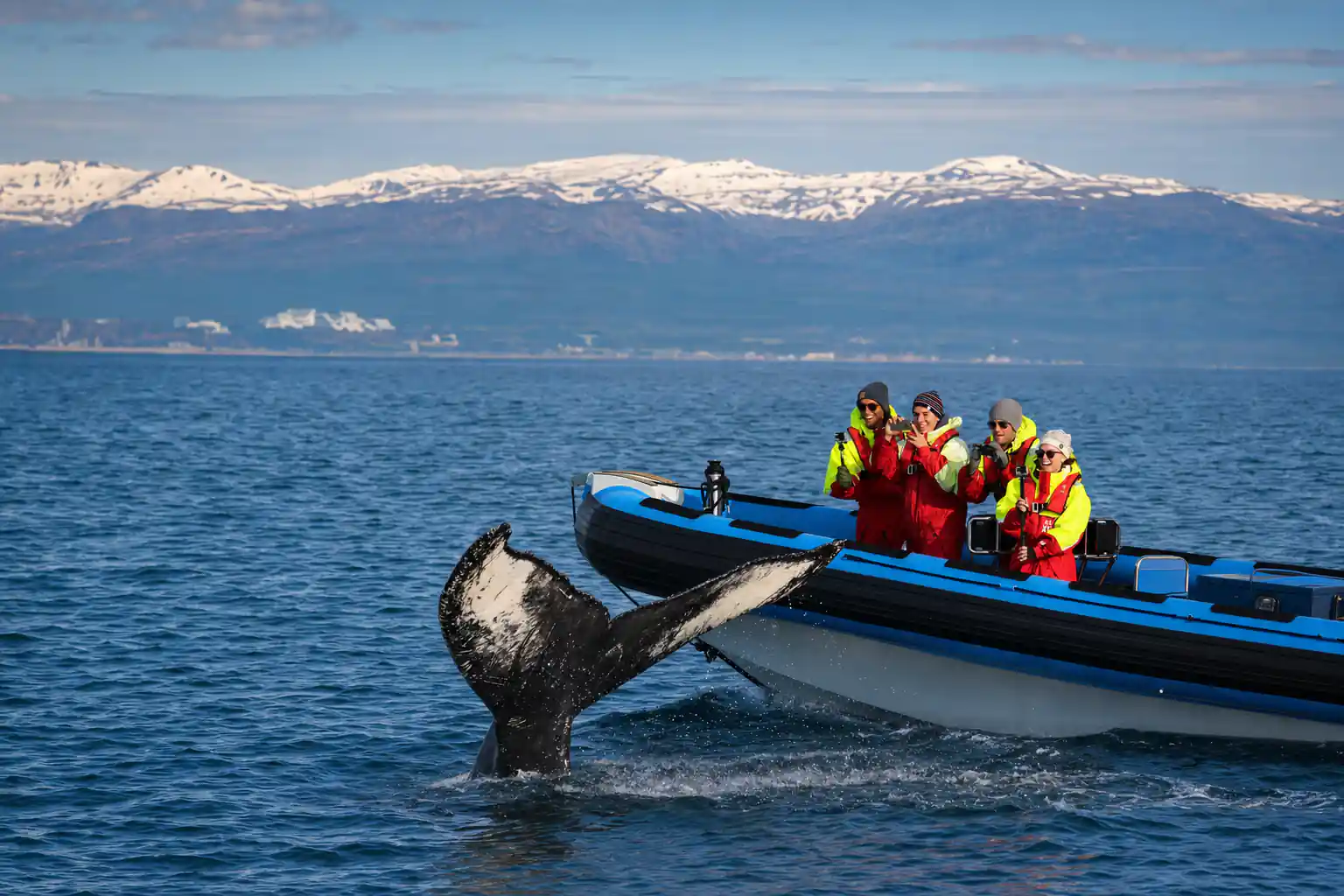
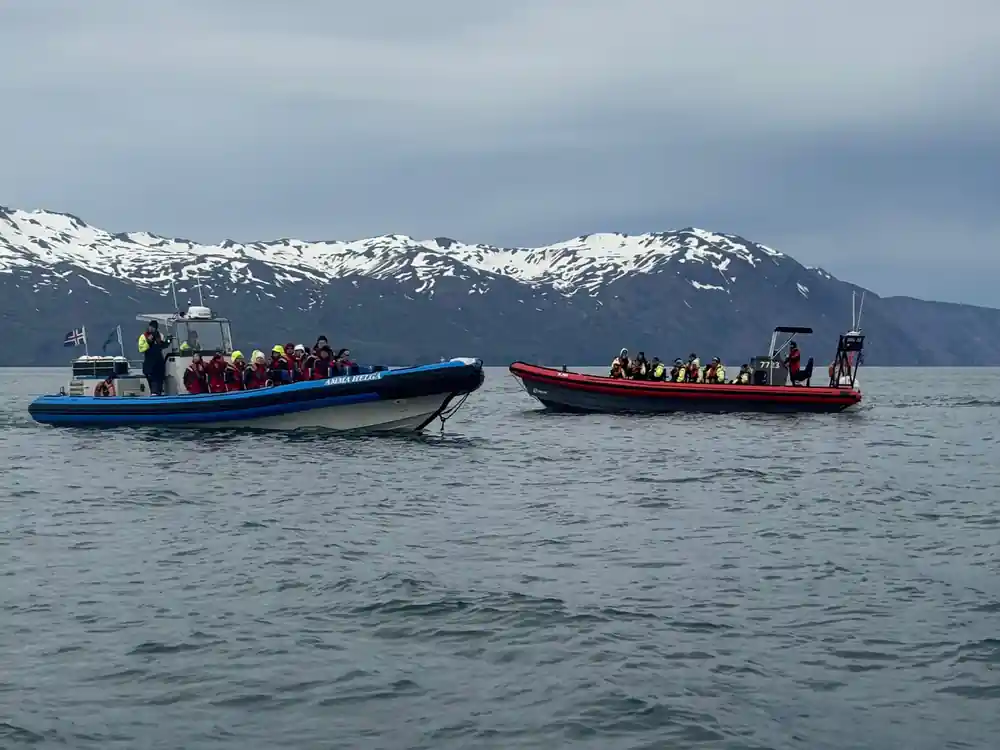
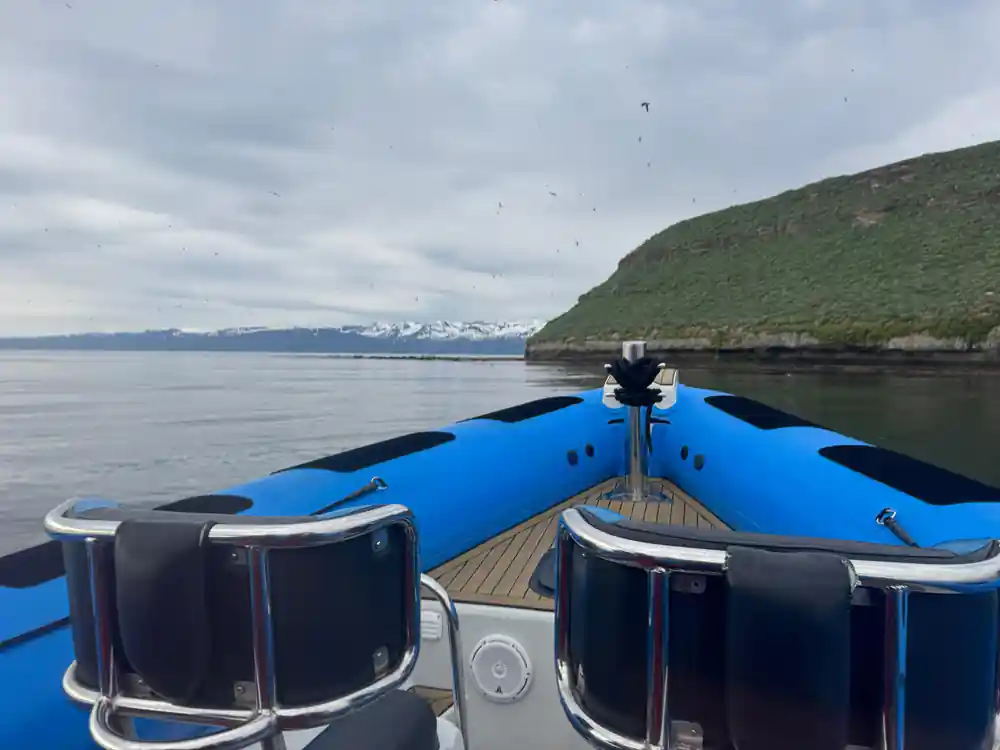
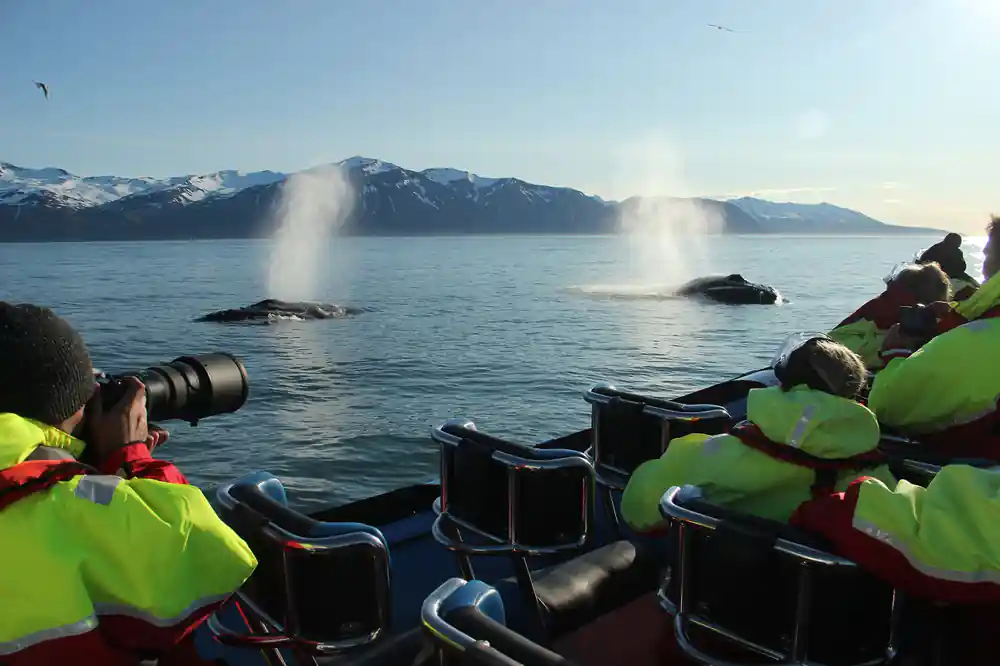
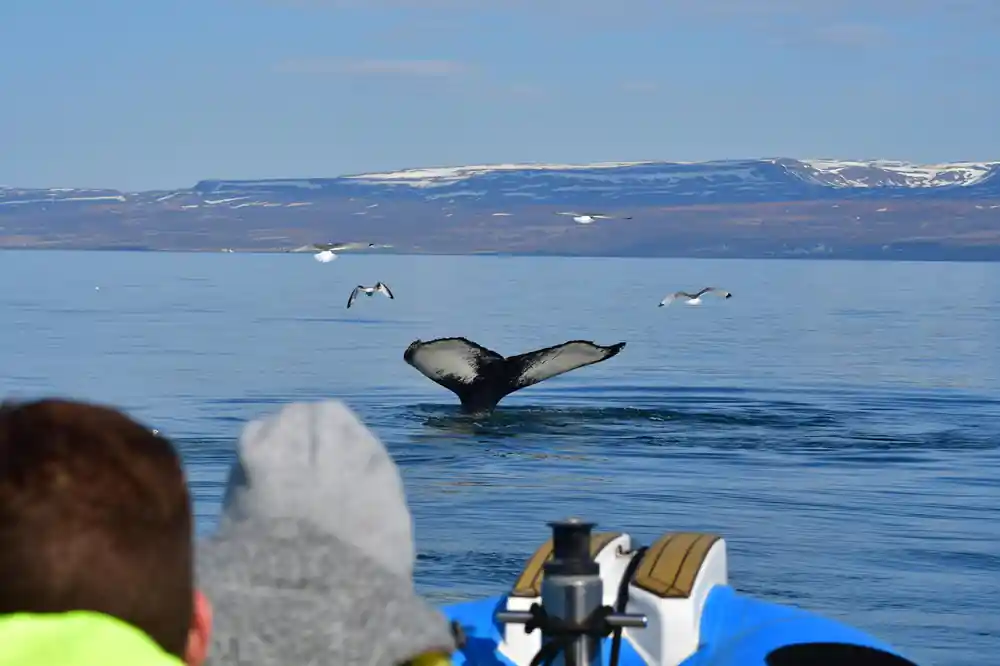
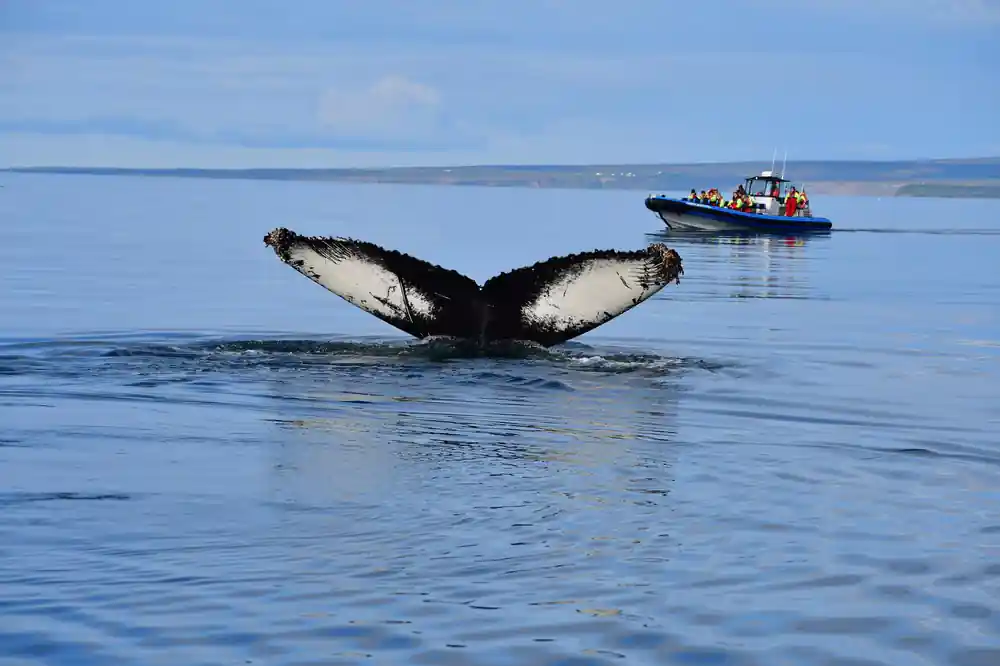
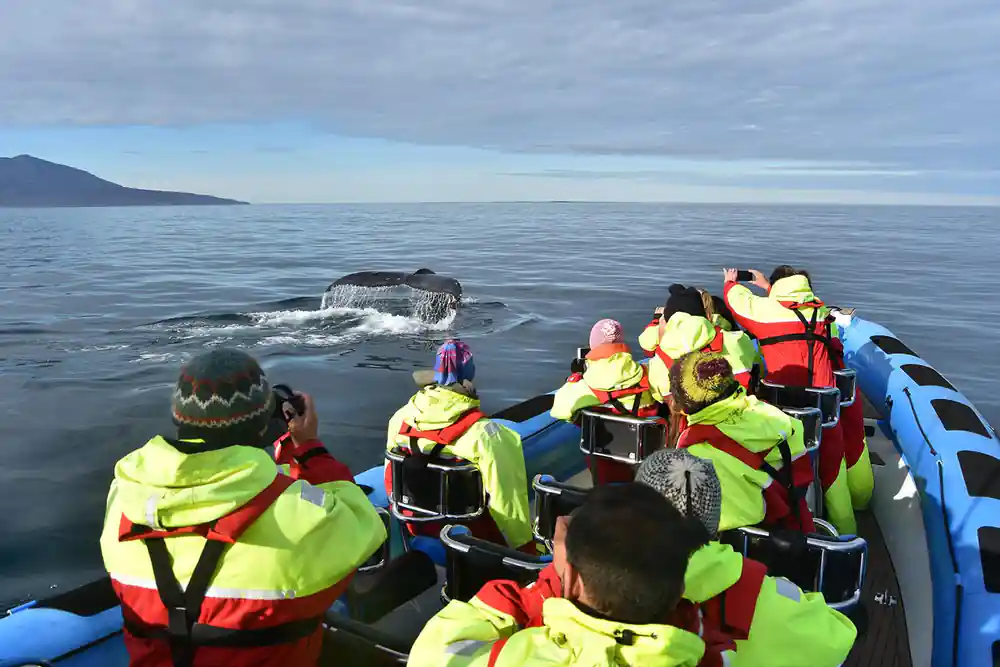
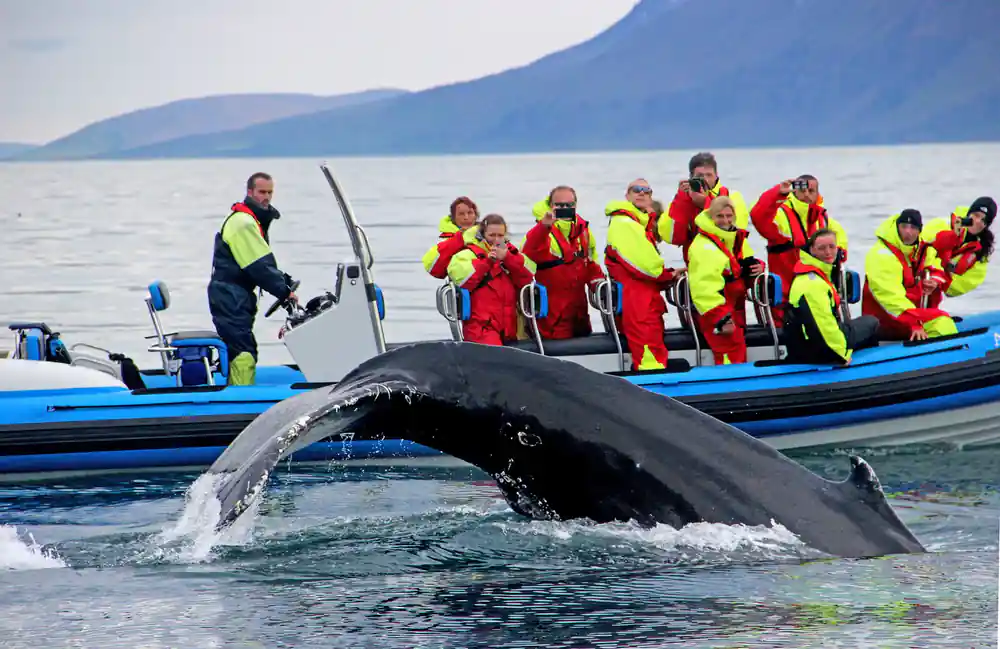
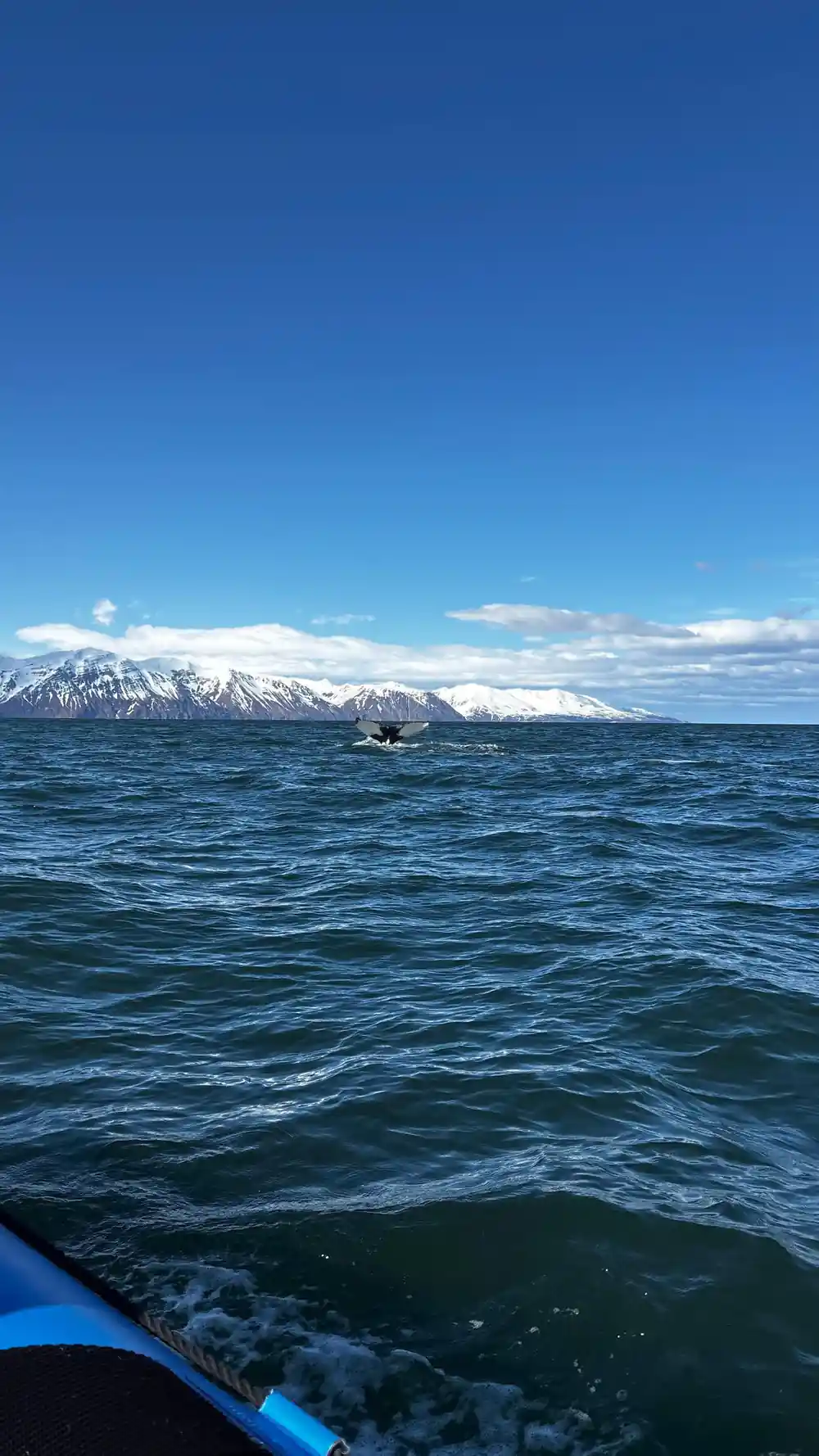
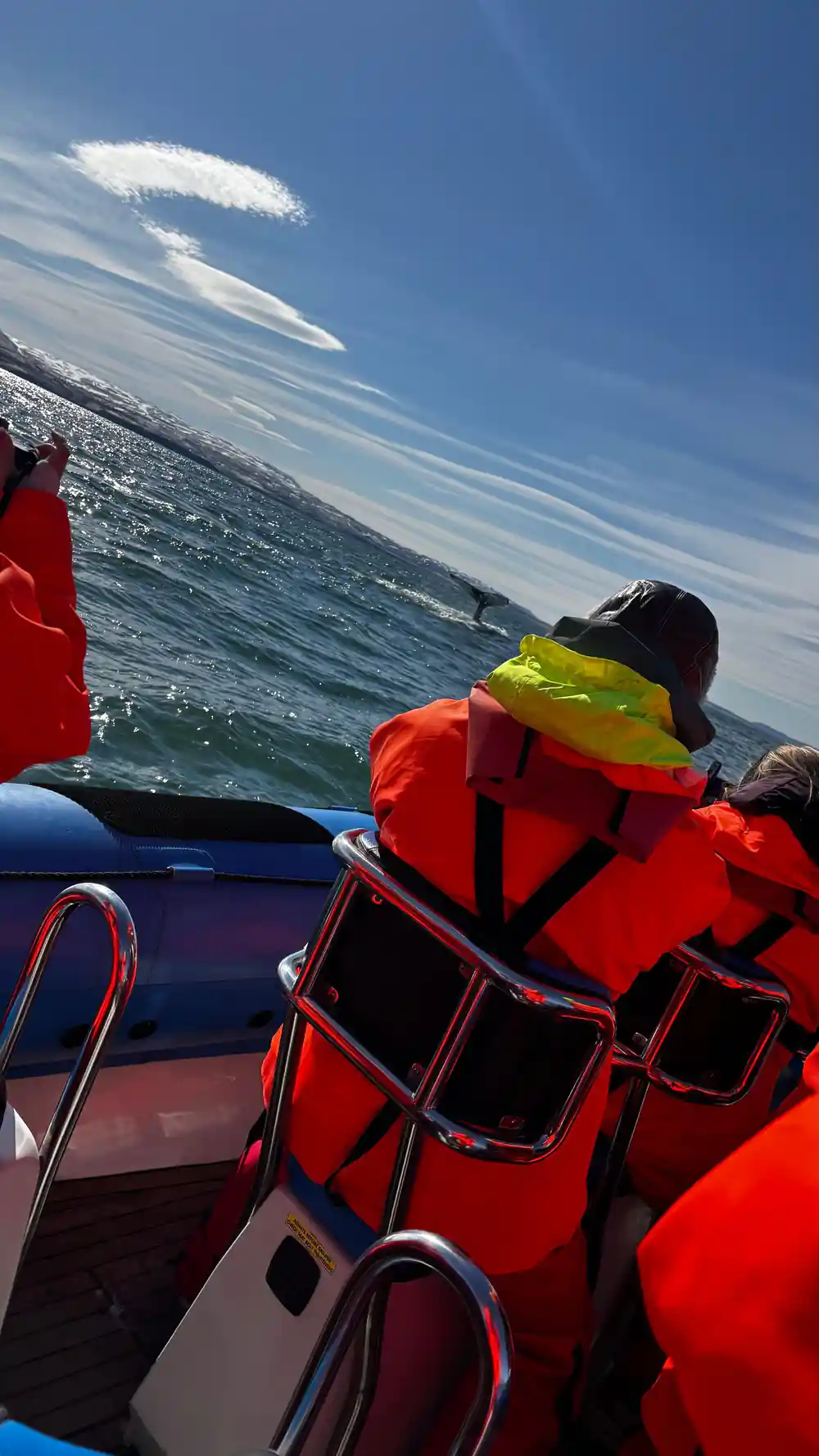
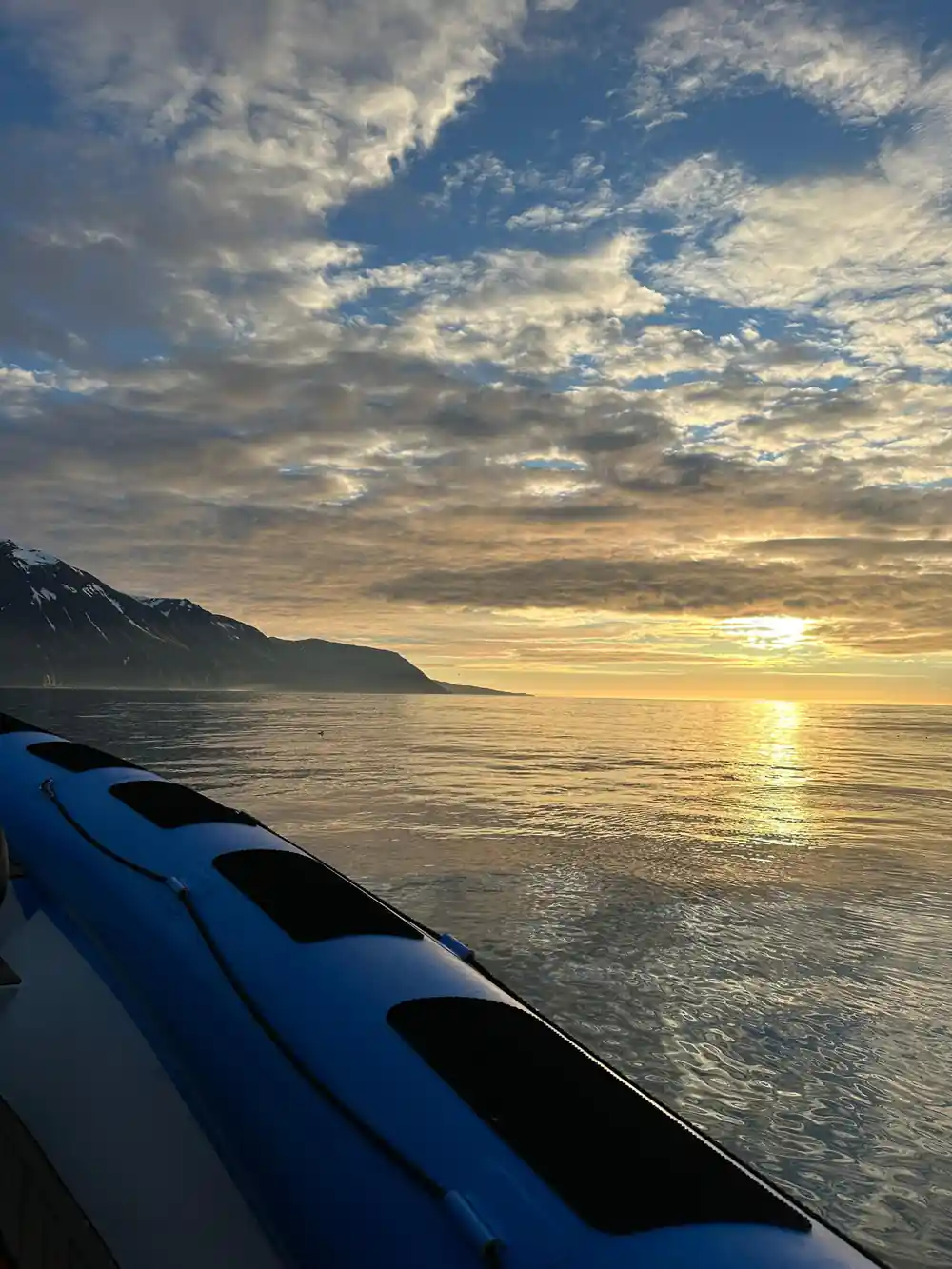
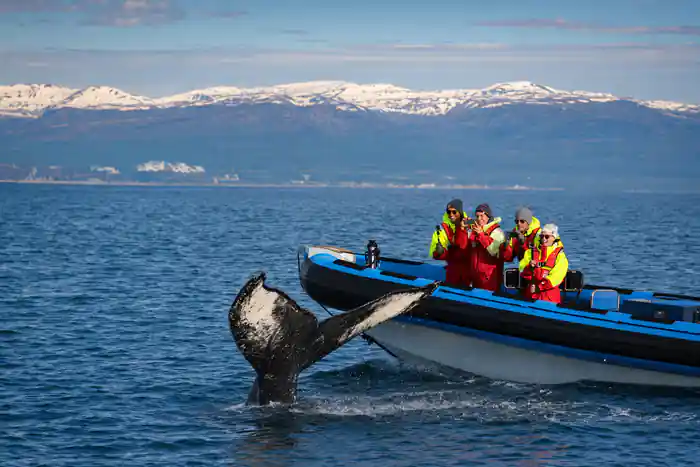
You board a rigid inflatable boat (RIB) at Húsavík harbour and head into Skjálfandi Bay, where the North Atlantic's richest whale grounds lie within 15 minutes of shore. Your specialist guide navigates toward recent sightings, using binoculars and local knowledge to track marine life. The speedboat's shallow draft and manoeuvrability let it reach areas larger vessels cannot access, and its speed means more time searching and less time travelling. You'll spend roughly 90 minutes actively scanning the water, with the crew cutting engines when whales surface nearby so you can observe without disturbance.
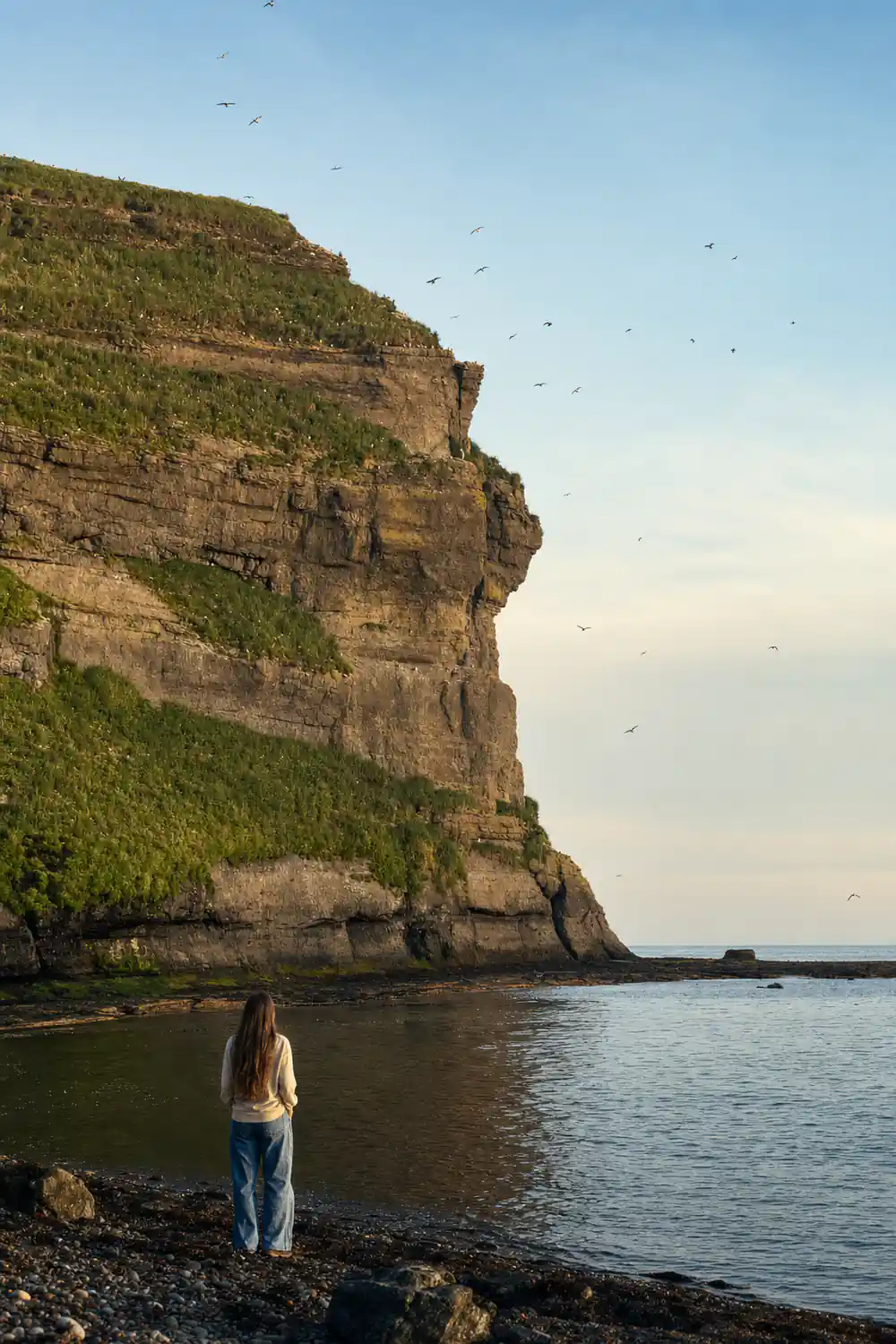
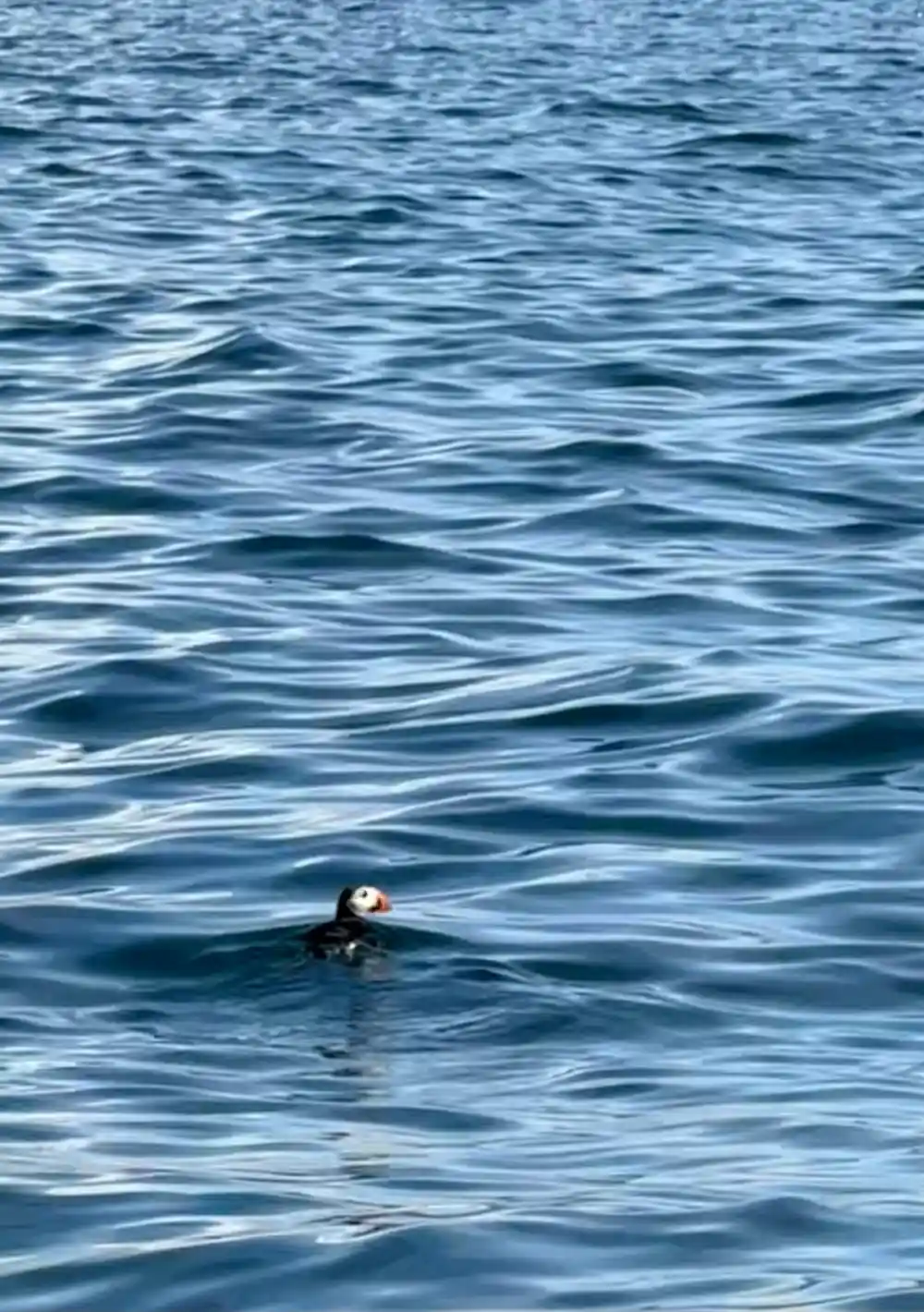
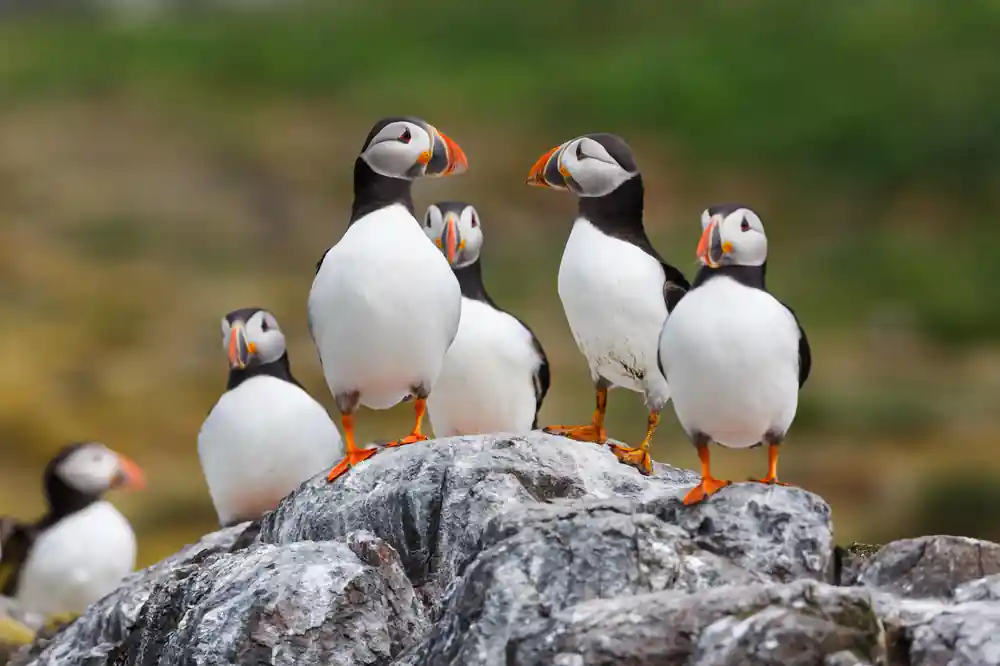
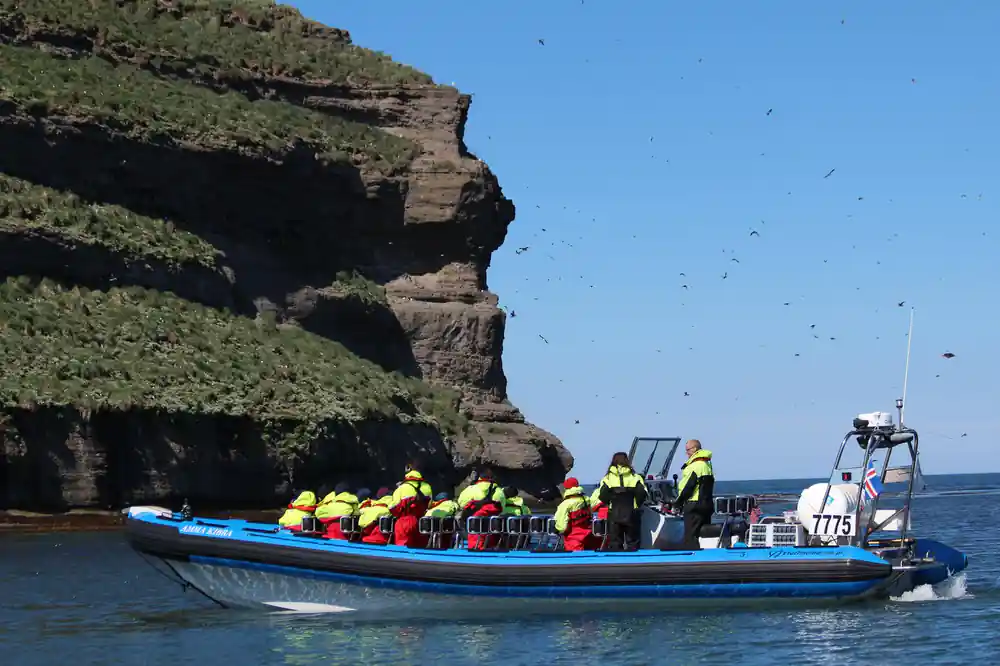
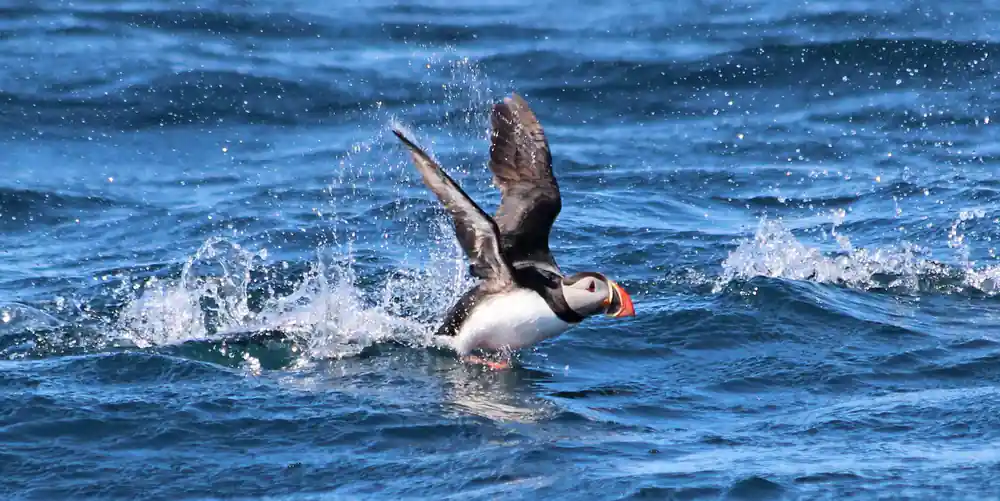
The boat stops at Puffin Island during the route, a breeding site where thousands of Atlantic puffins nest in burrows on the cliffs. Depending on the season, you may see puffins diving for fish, nesting pairs, or flying between colonies. Your guide provides live commentary throughout, explaining whale behaviour, bird ecology, and the geology of the bay. You return to Húsavík harbour by the two-hour mark, with the option to explore the town's museums and restaurants afterward.
Whales and seabirds you might encounter
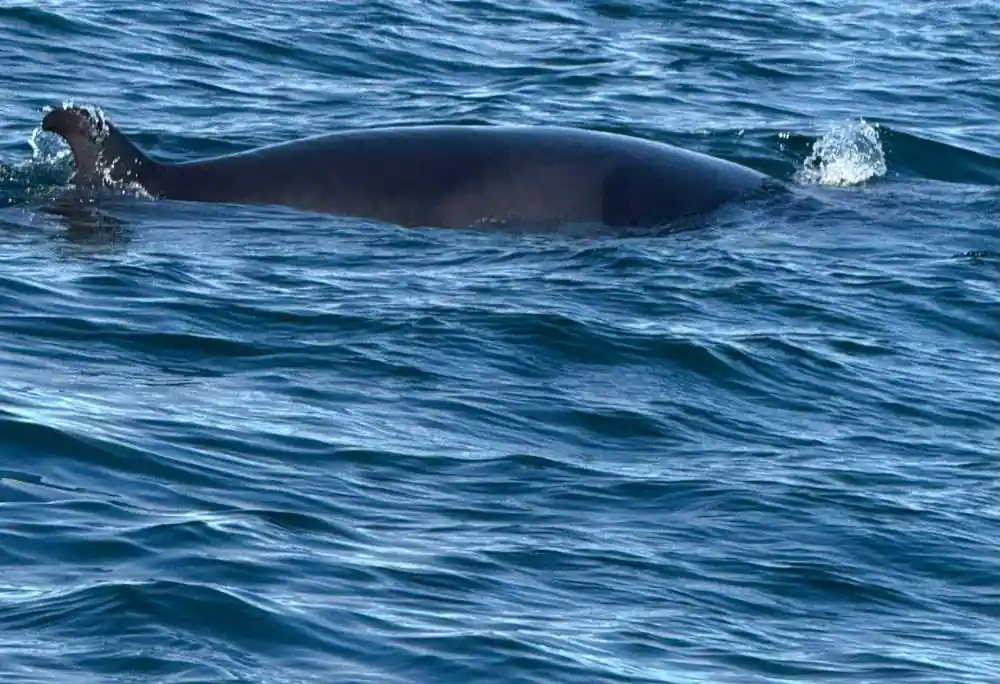
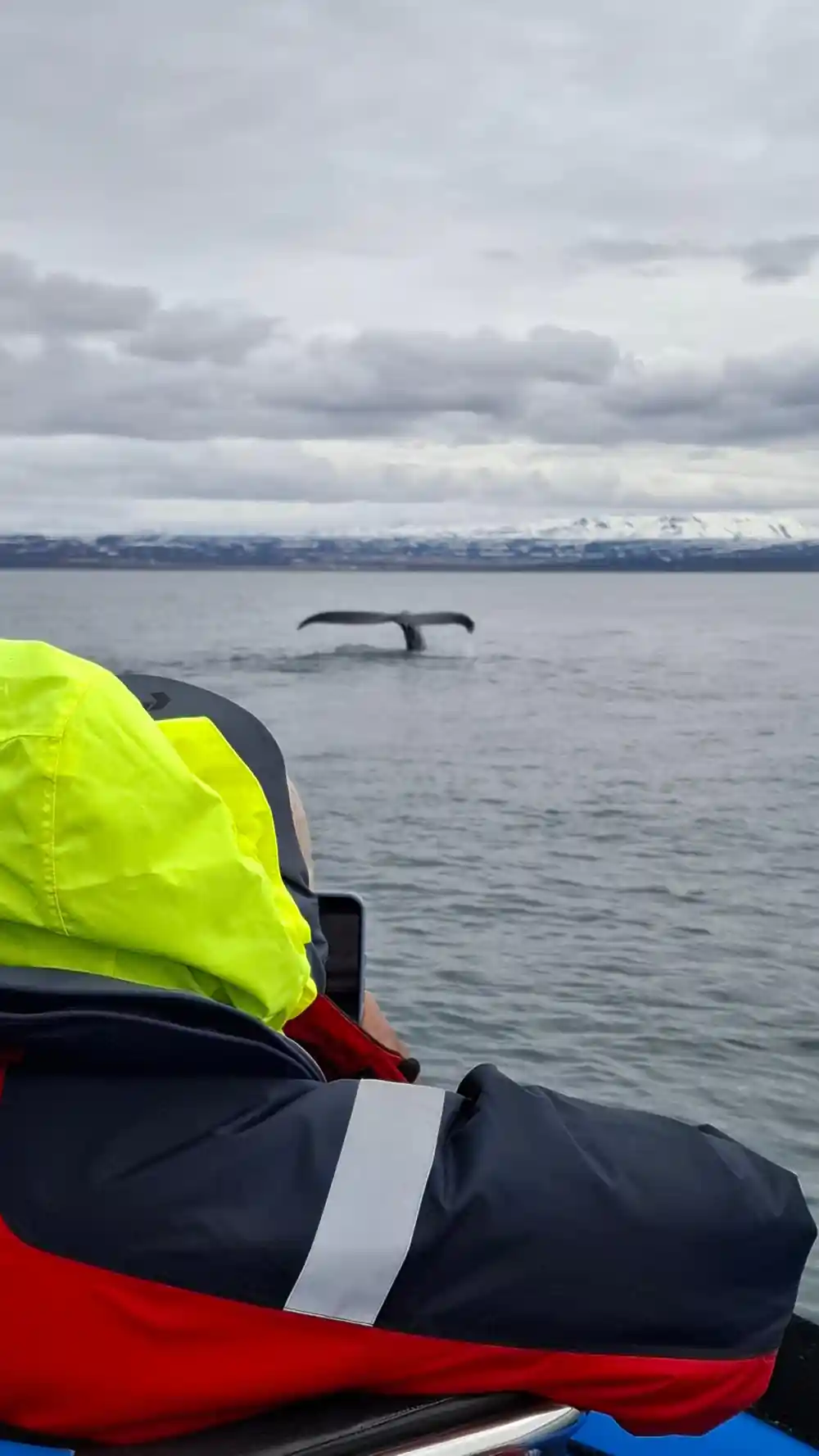
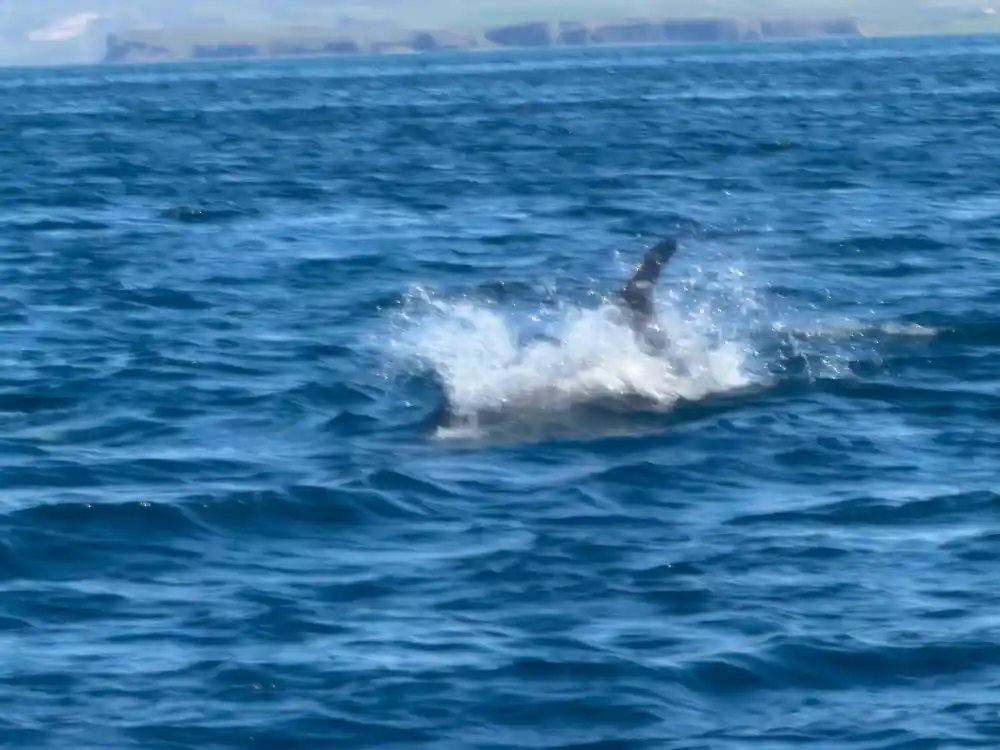
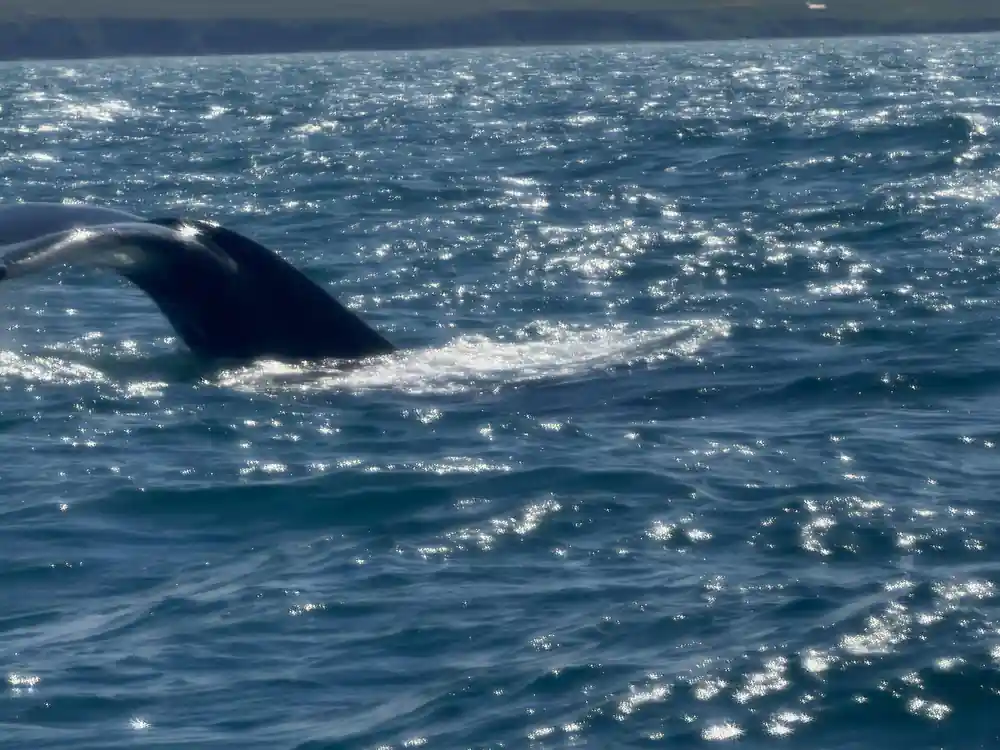
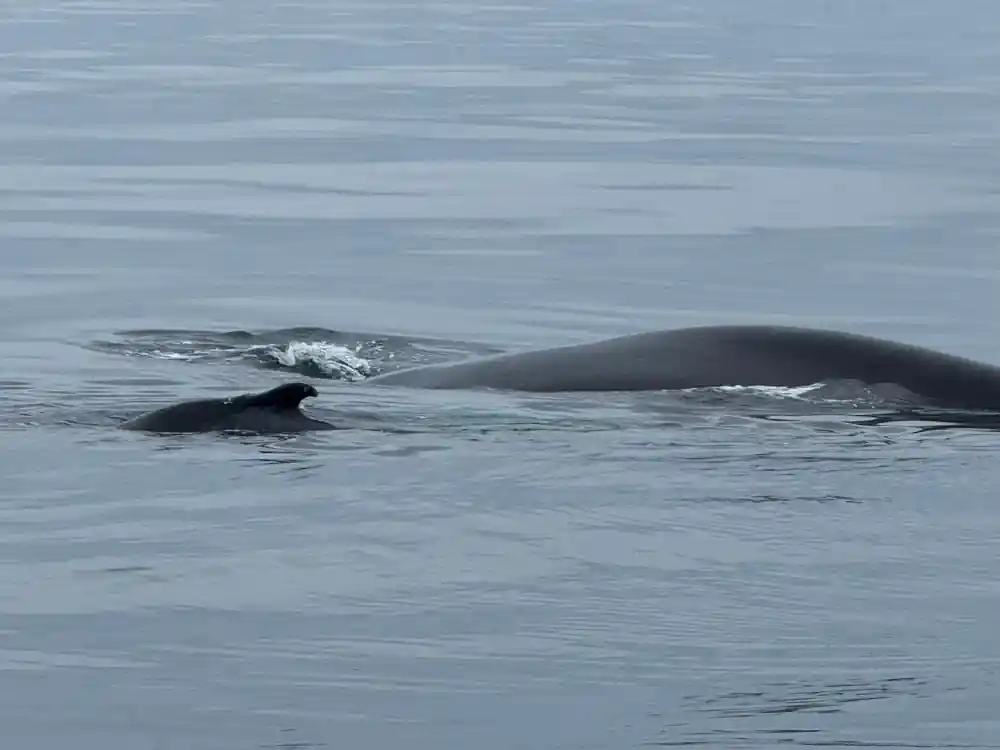
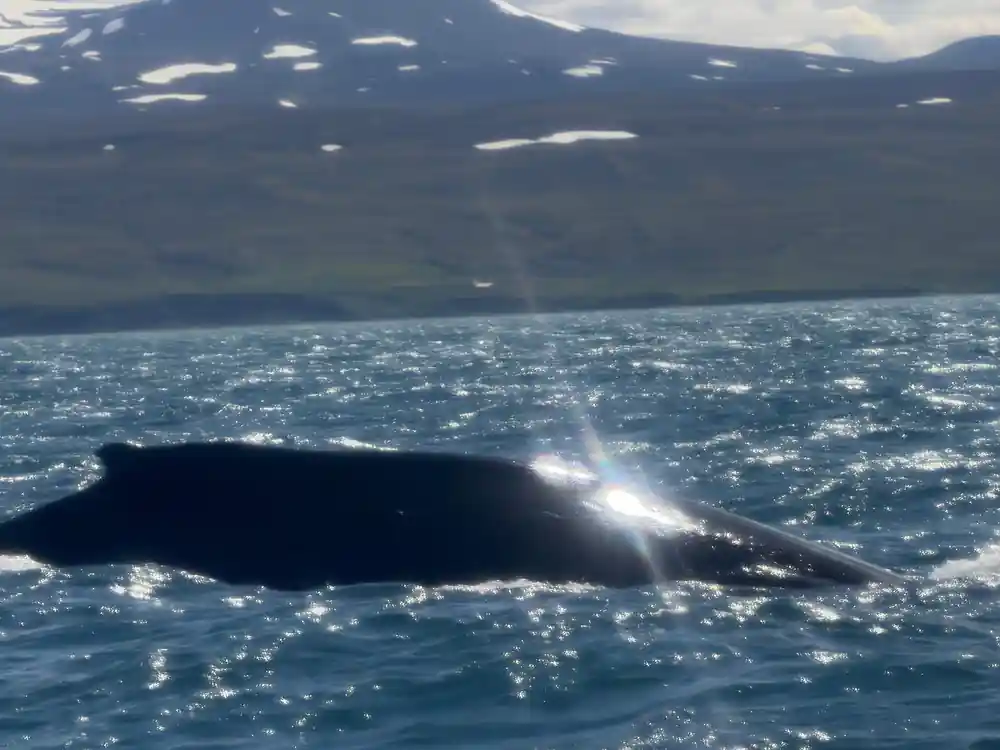
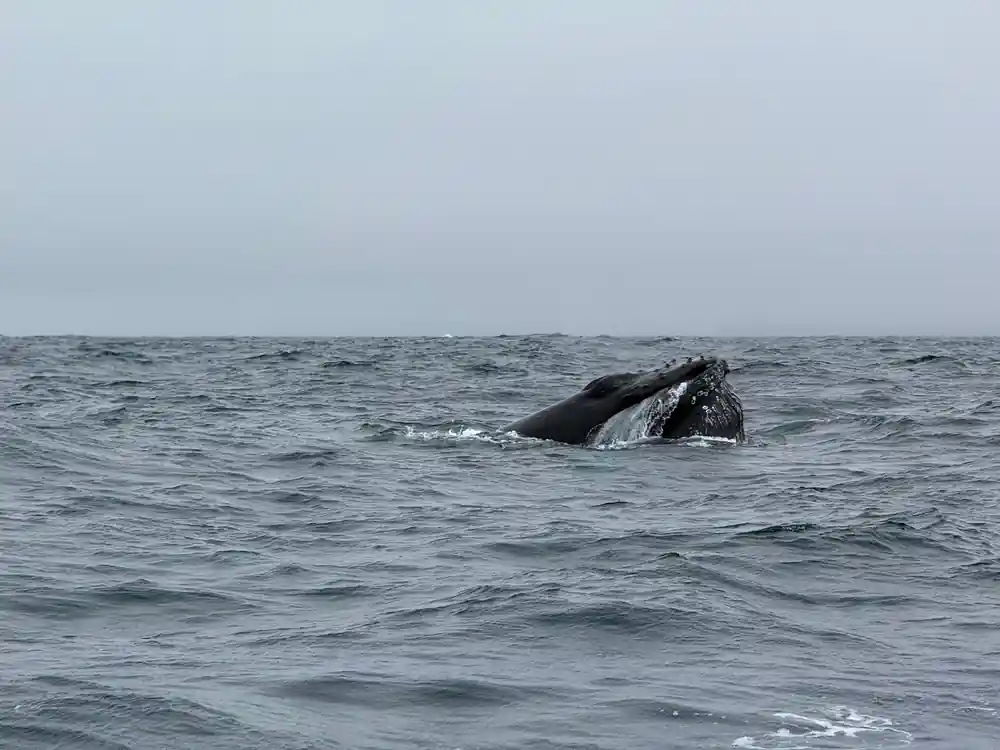
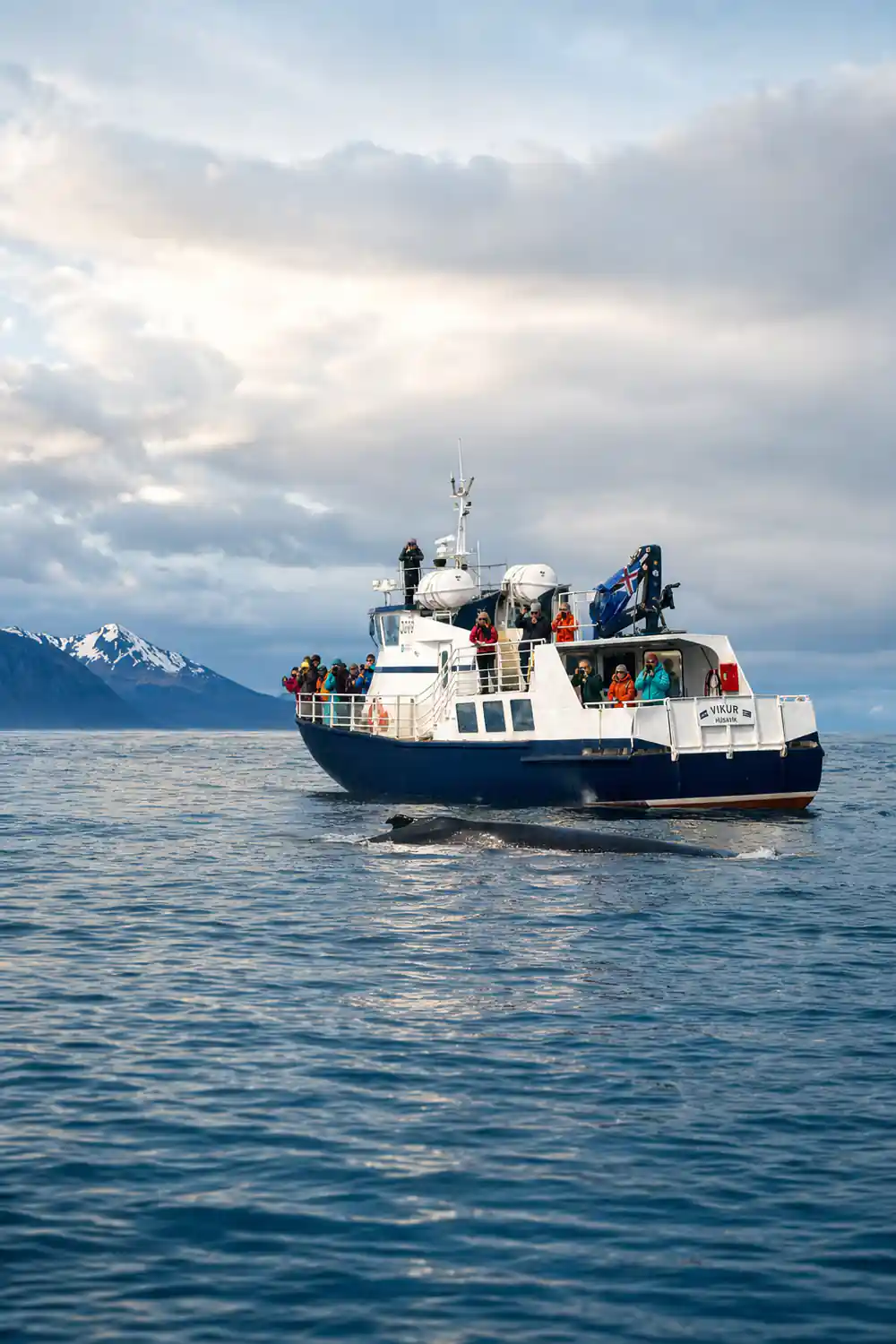
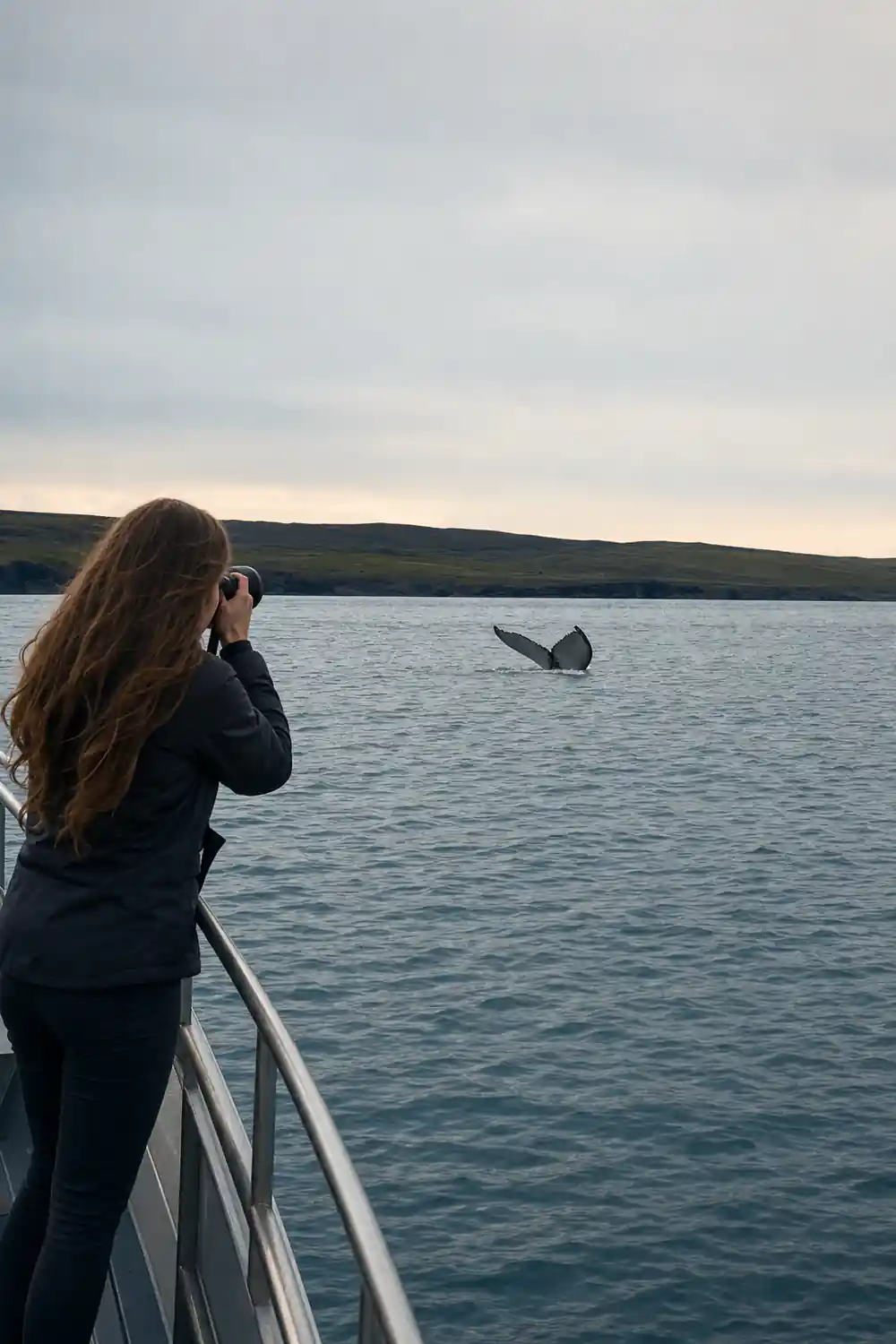
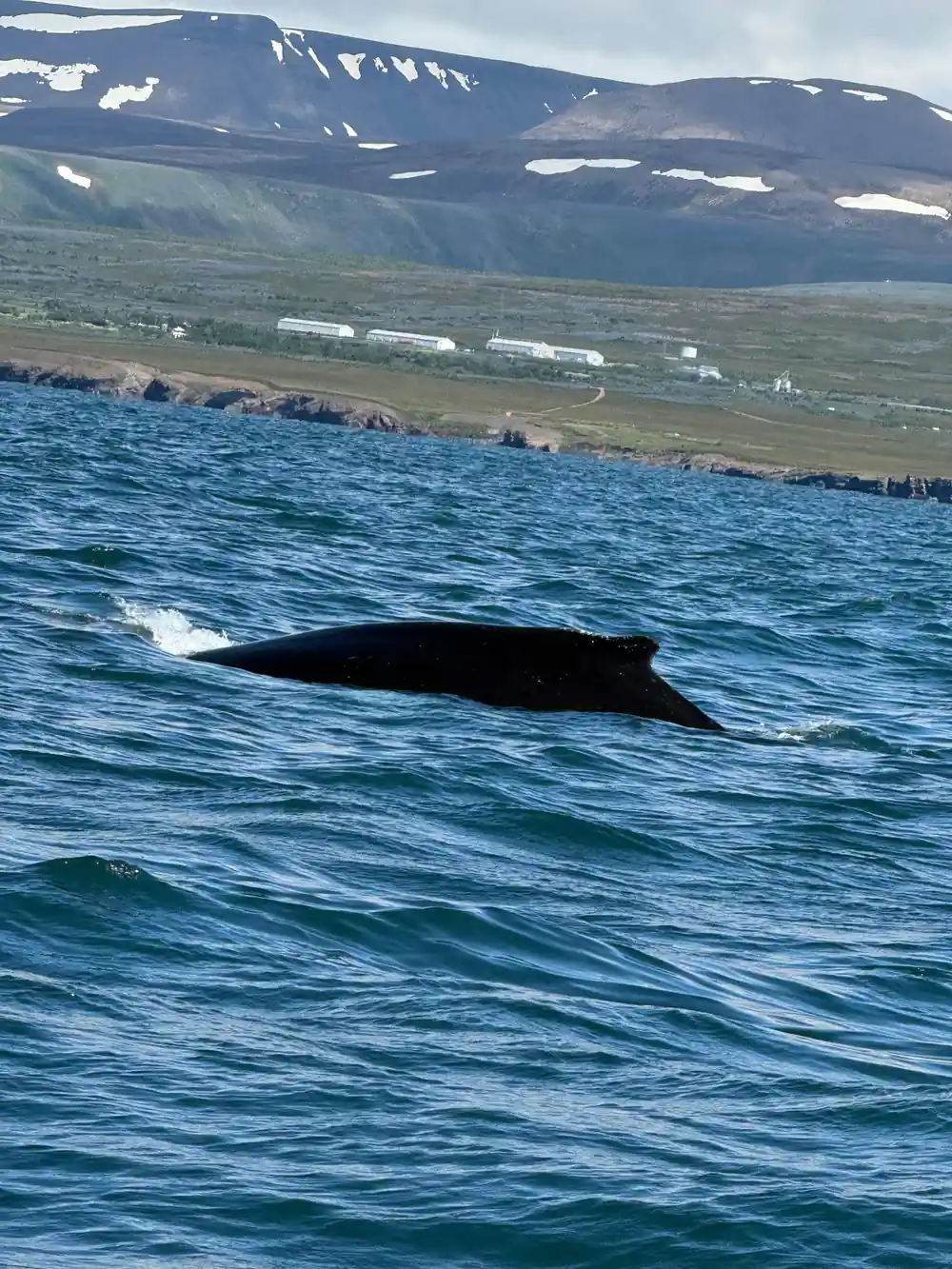
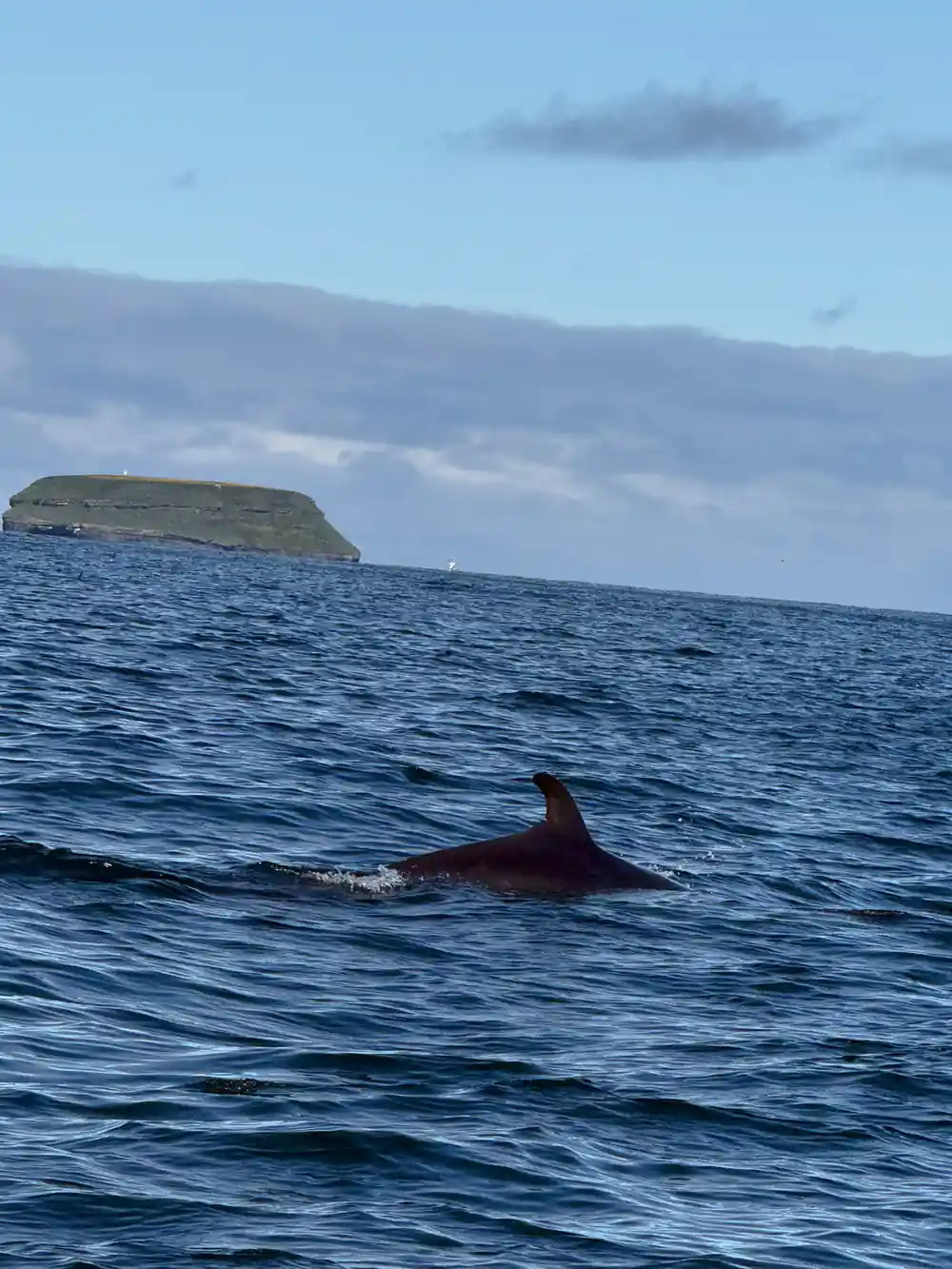
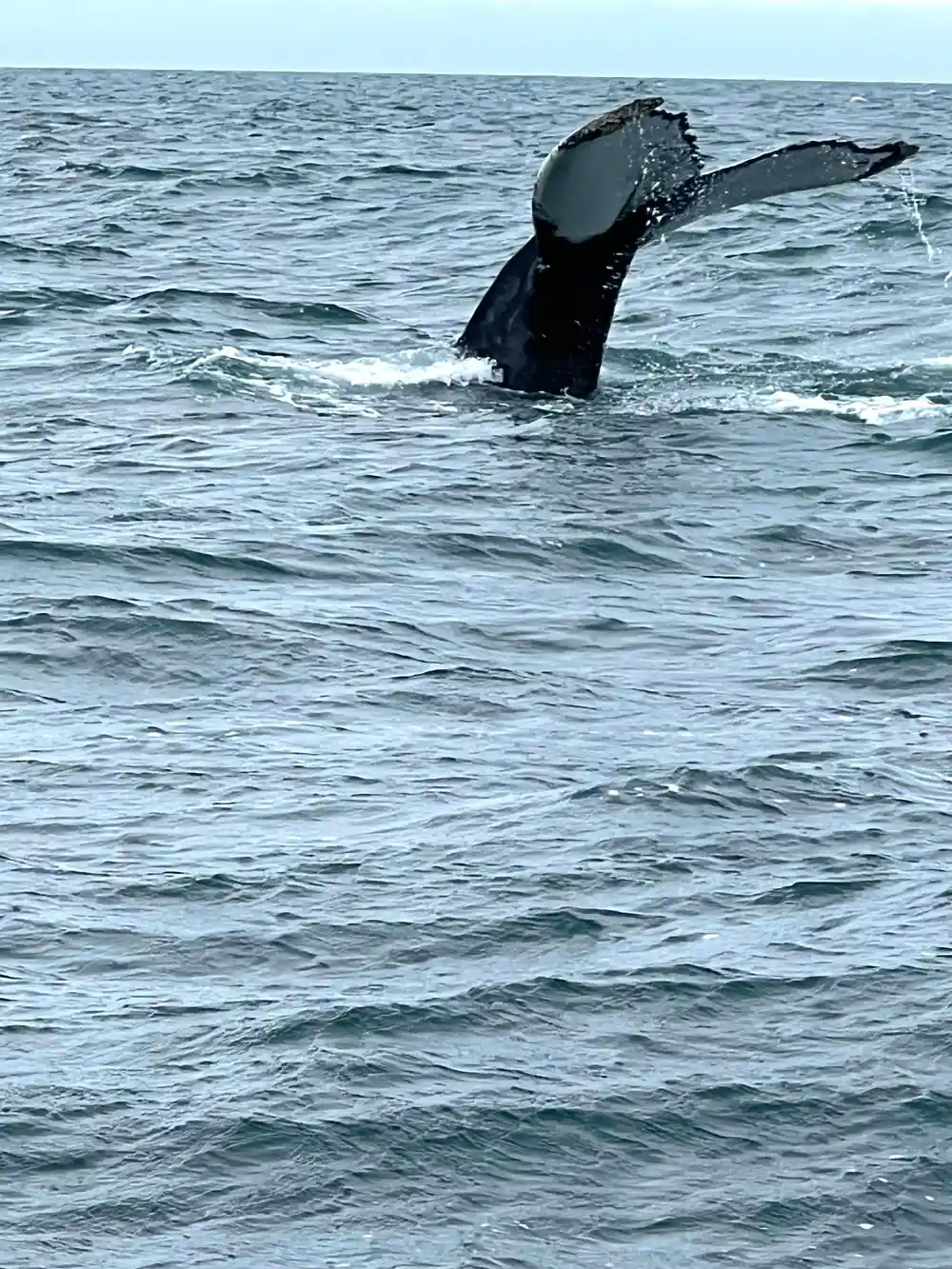
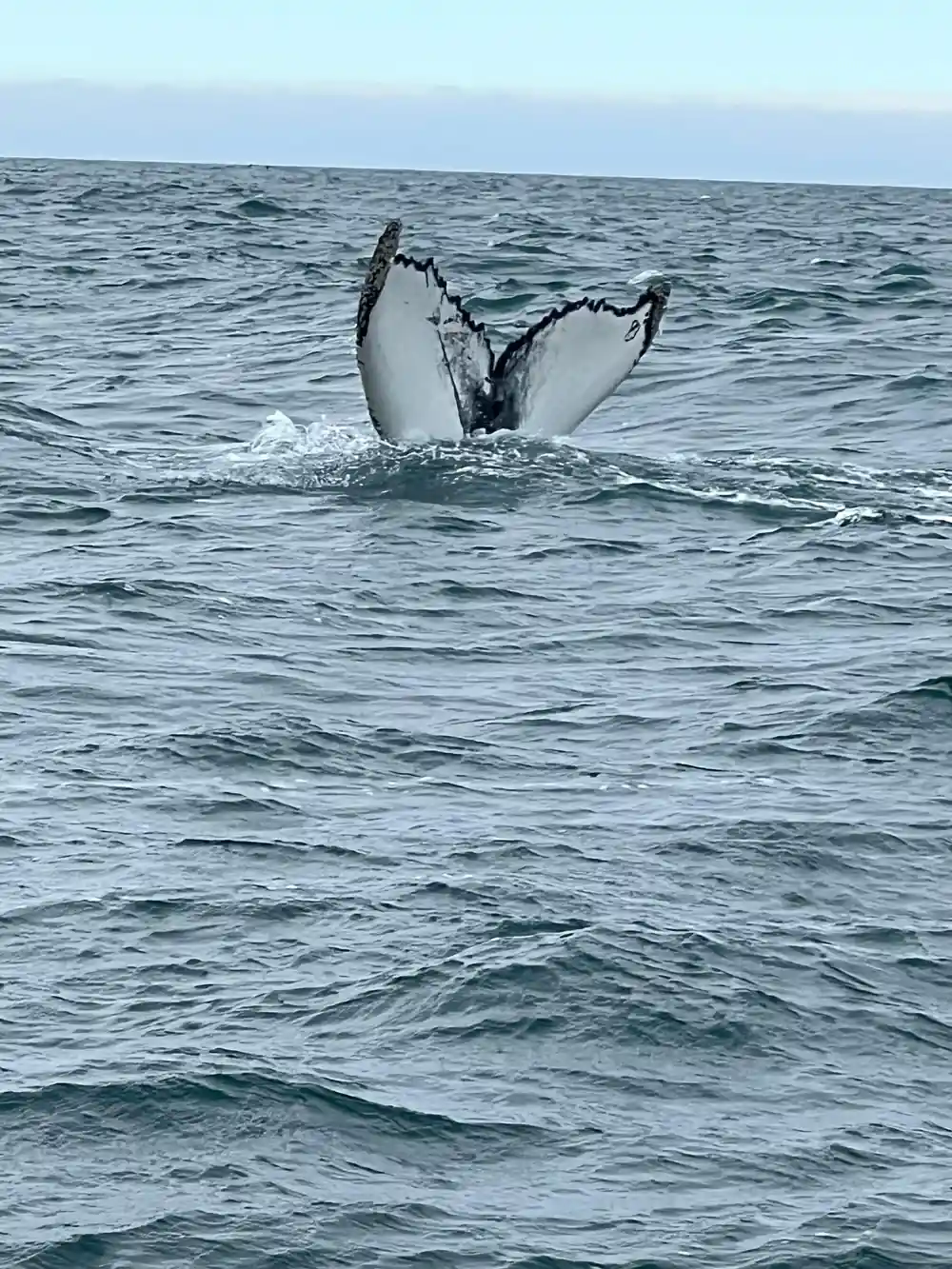
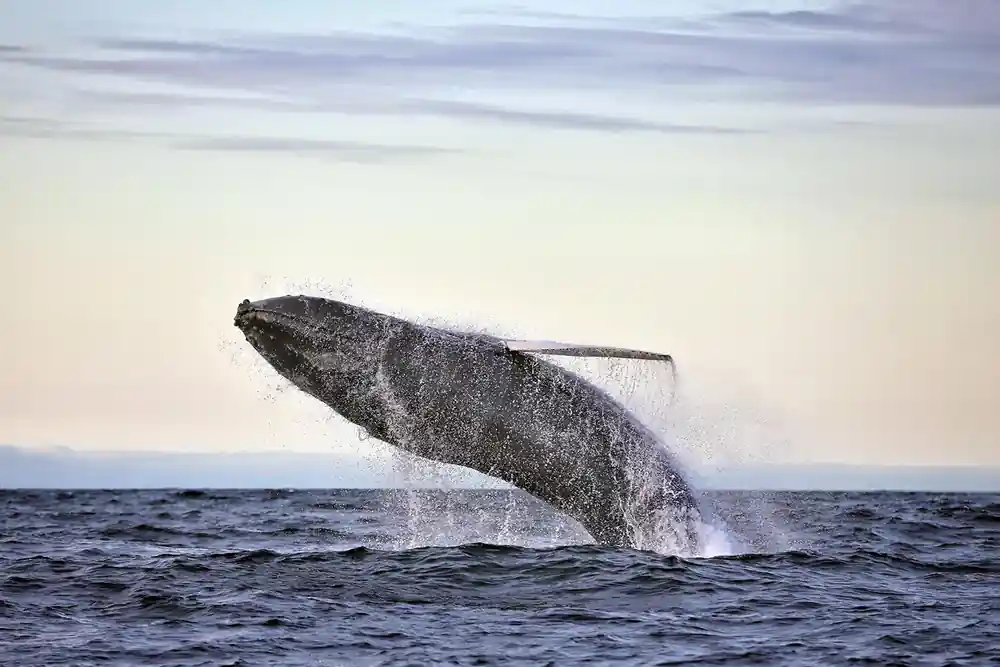
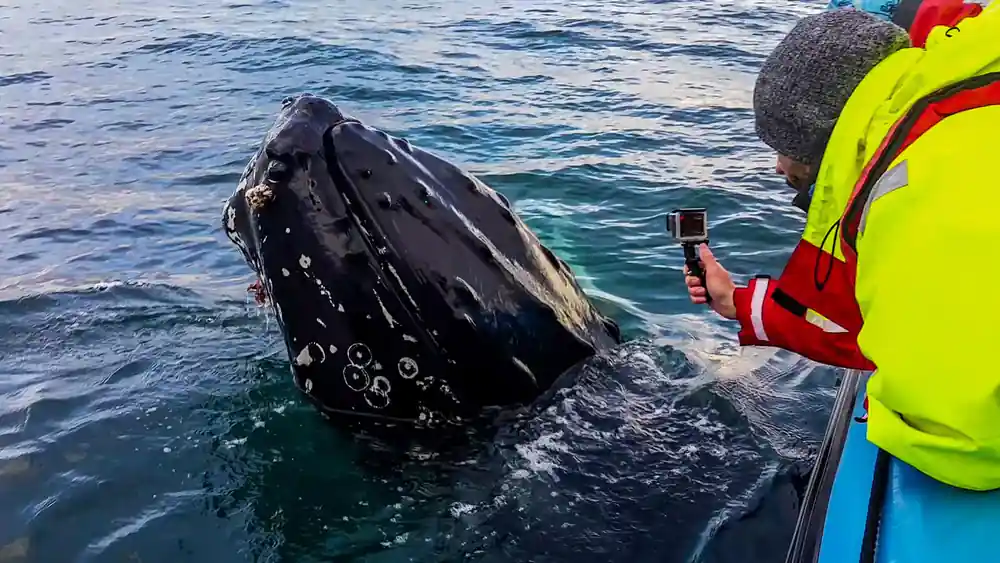
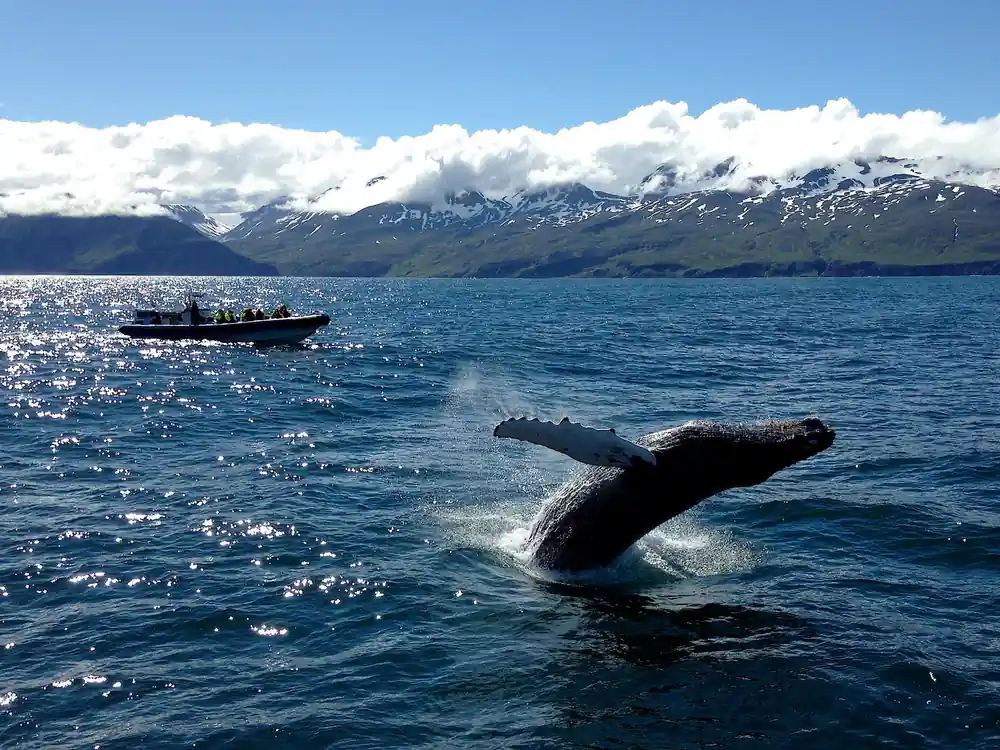
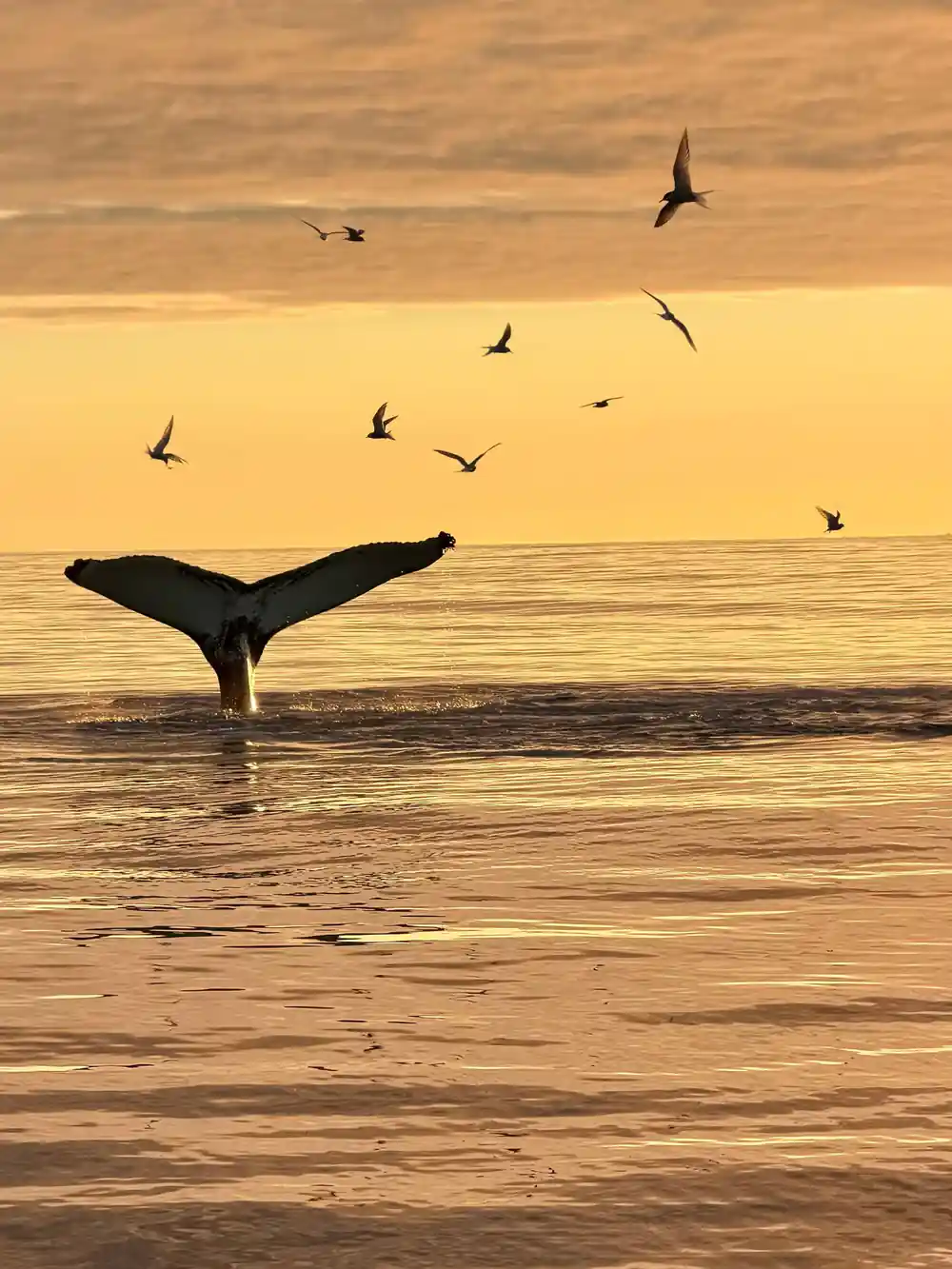
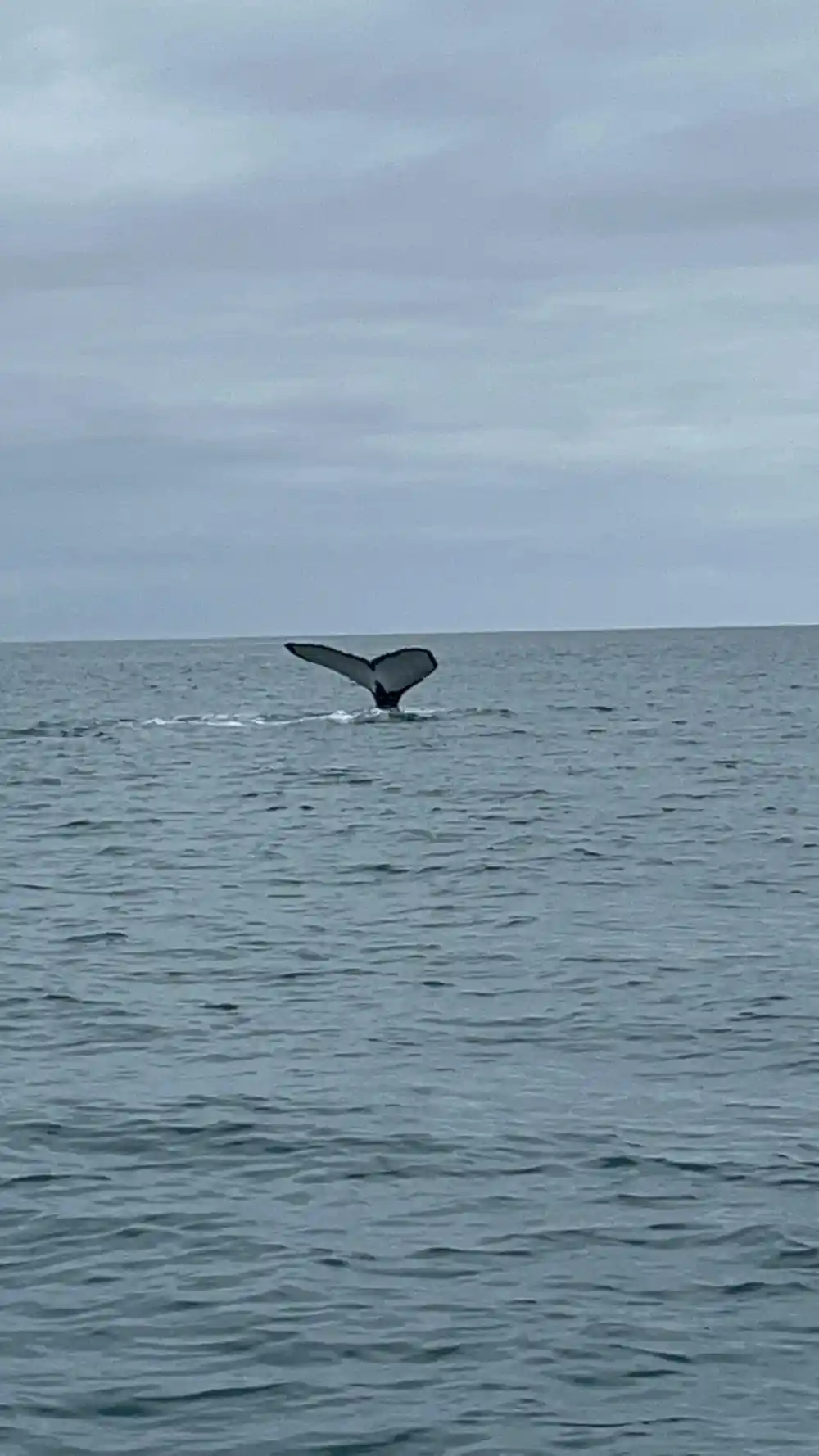
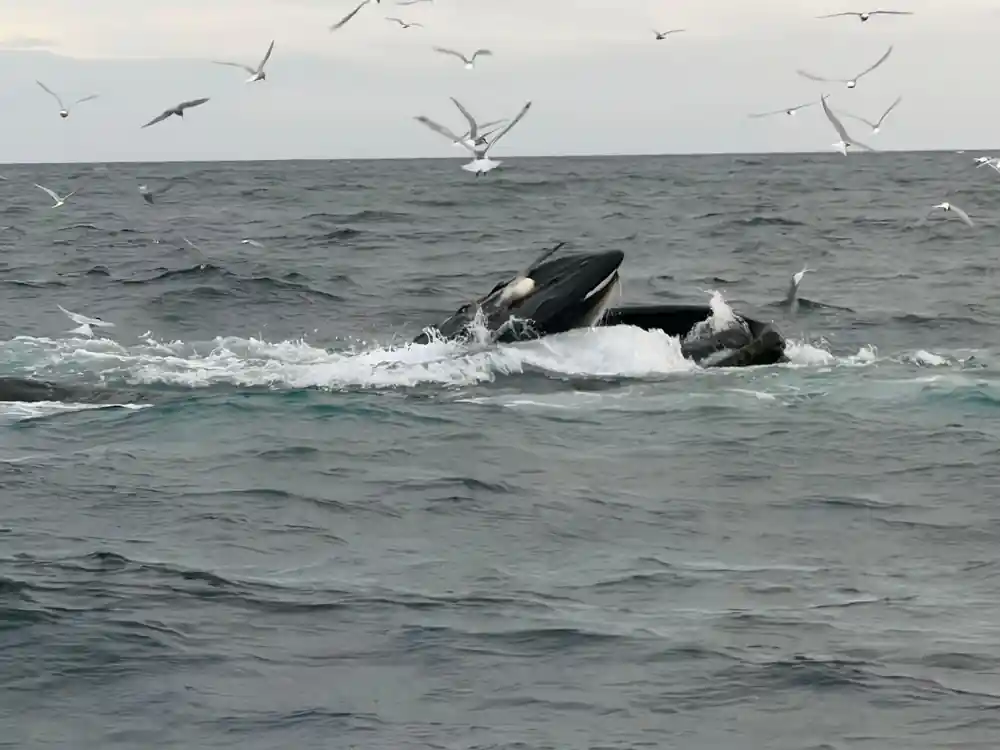
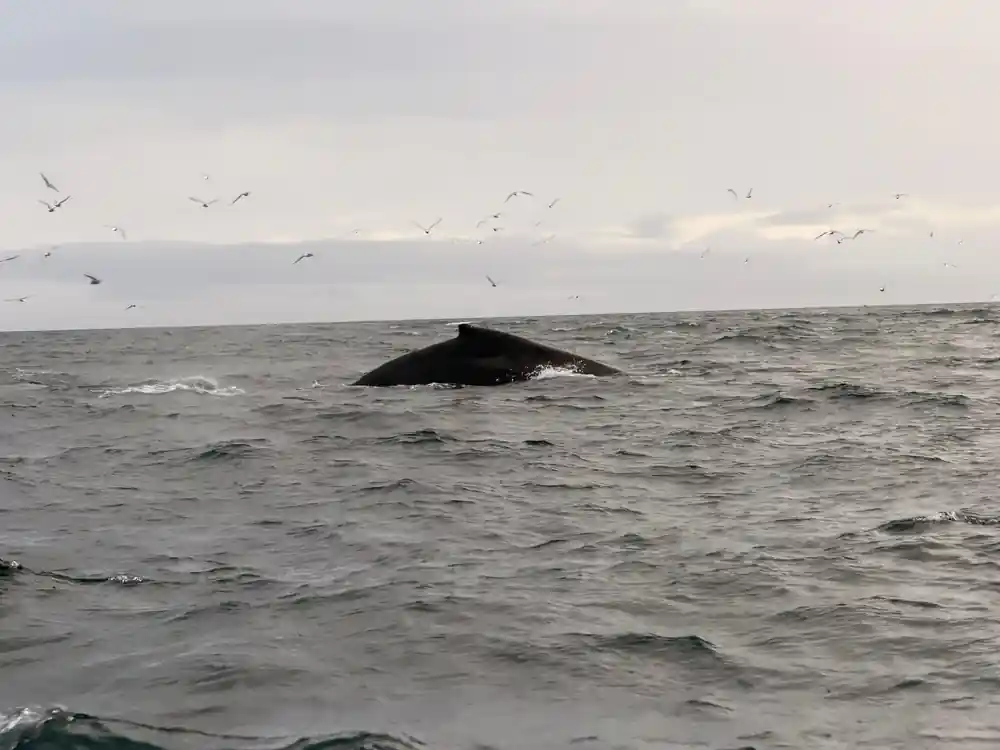
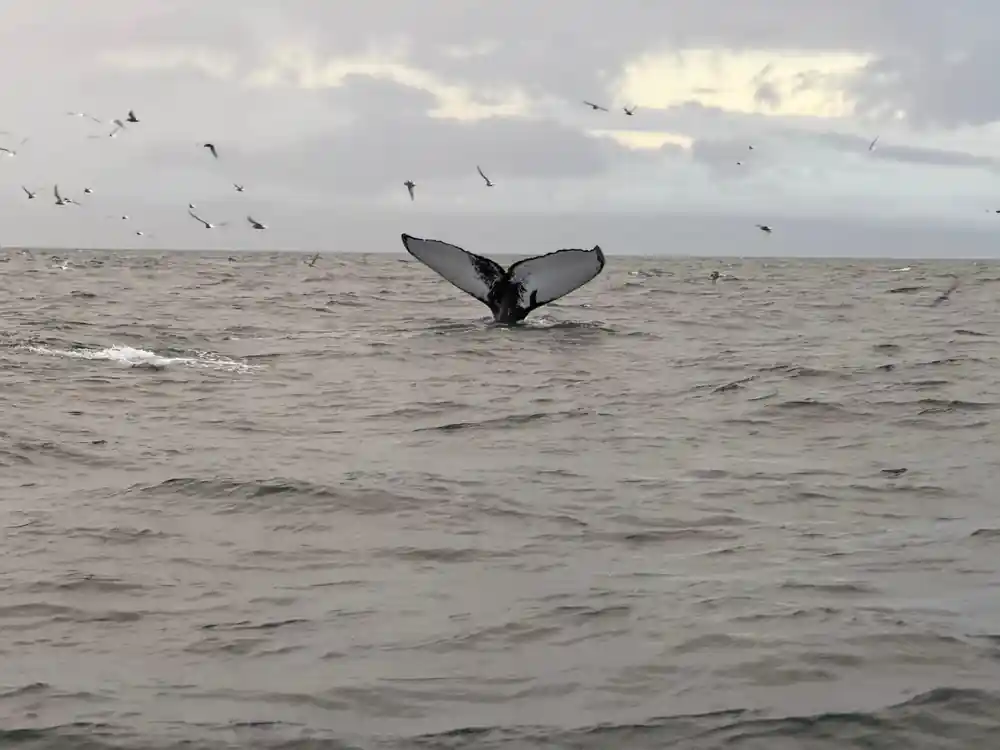
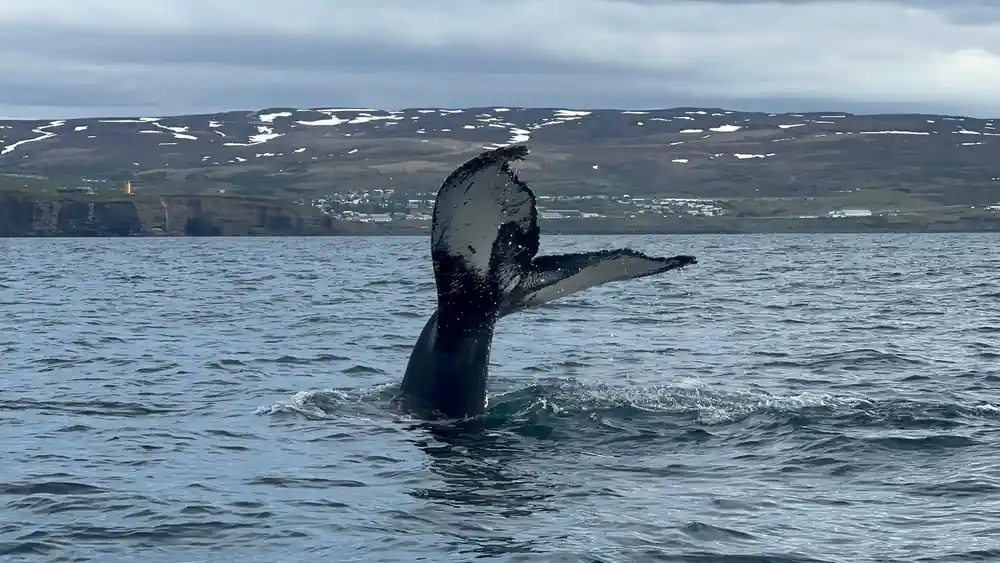
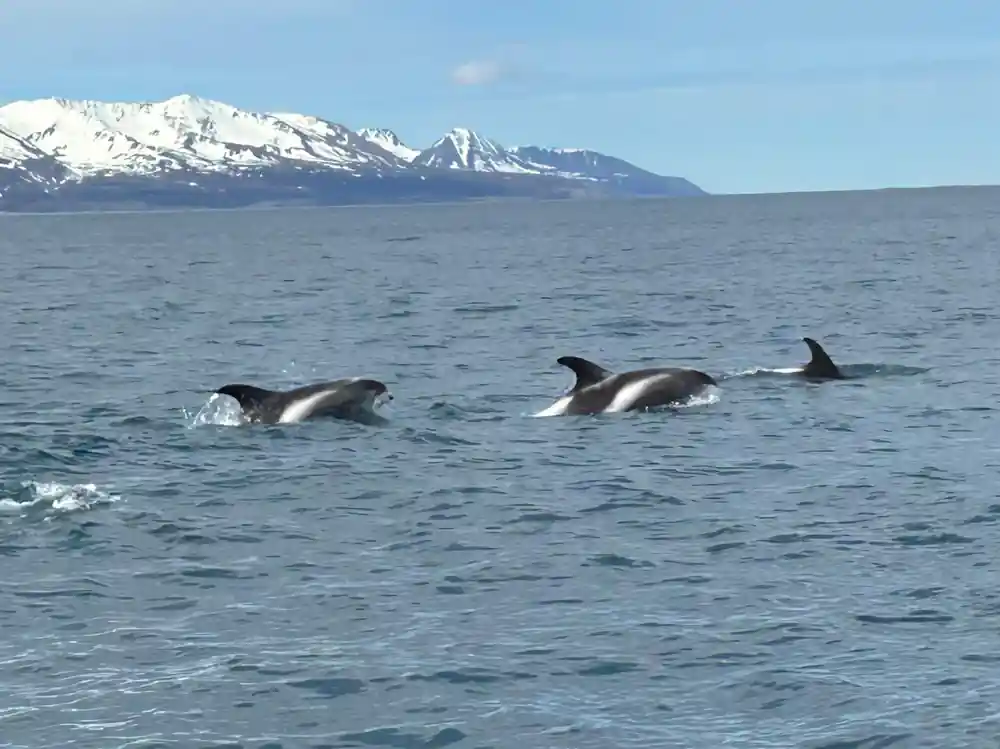
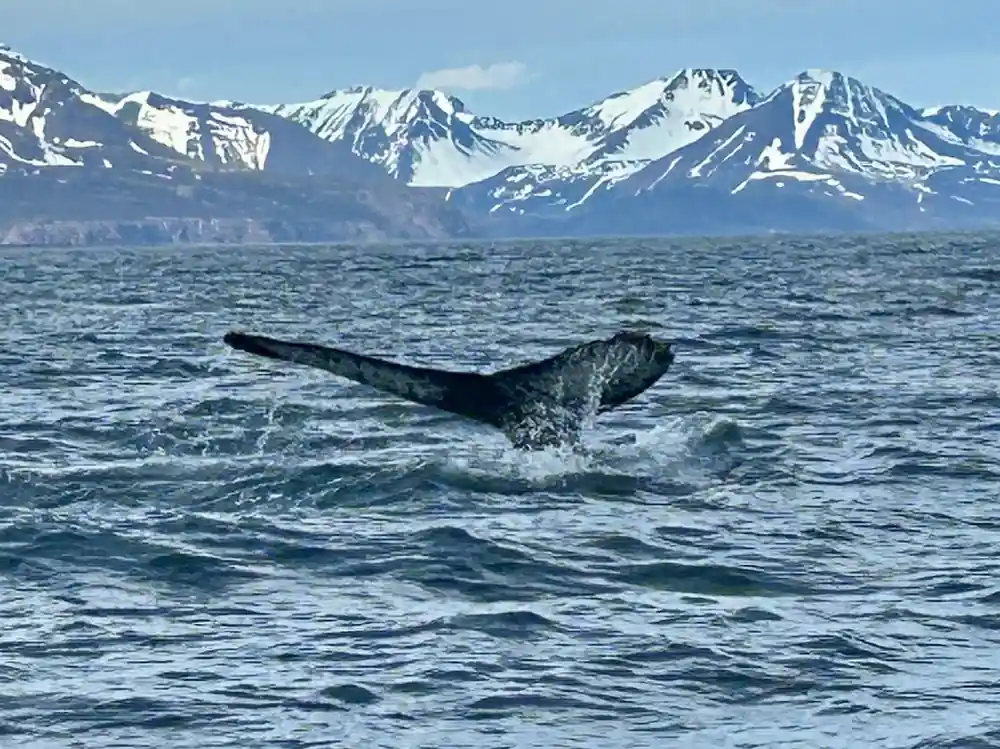
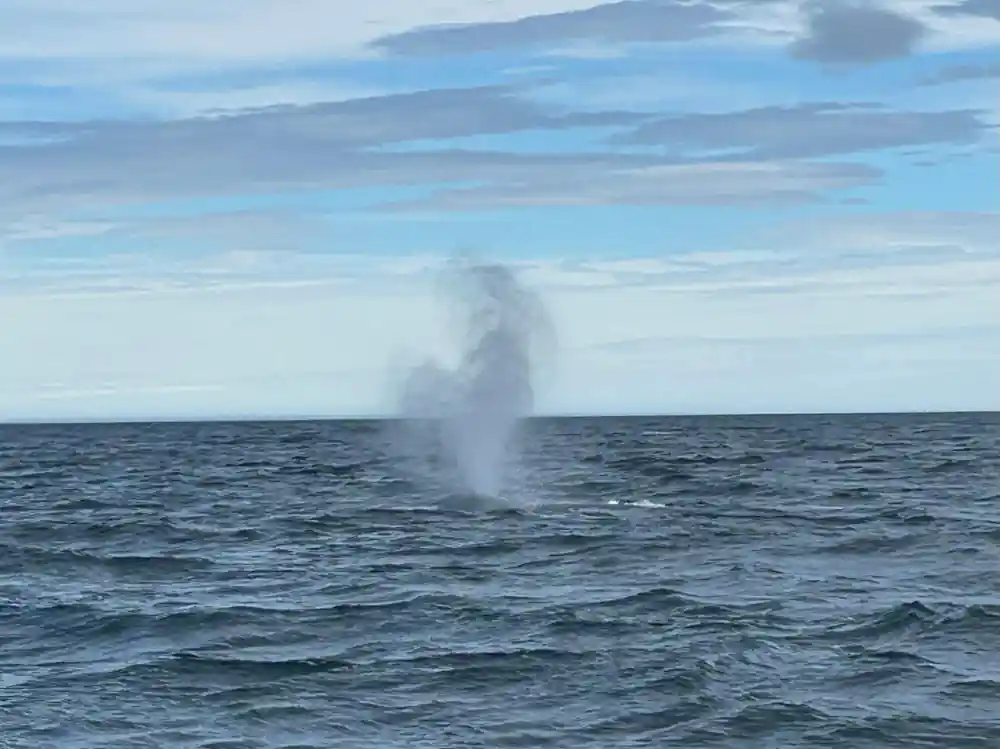
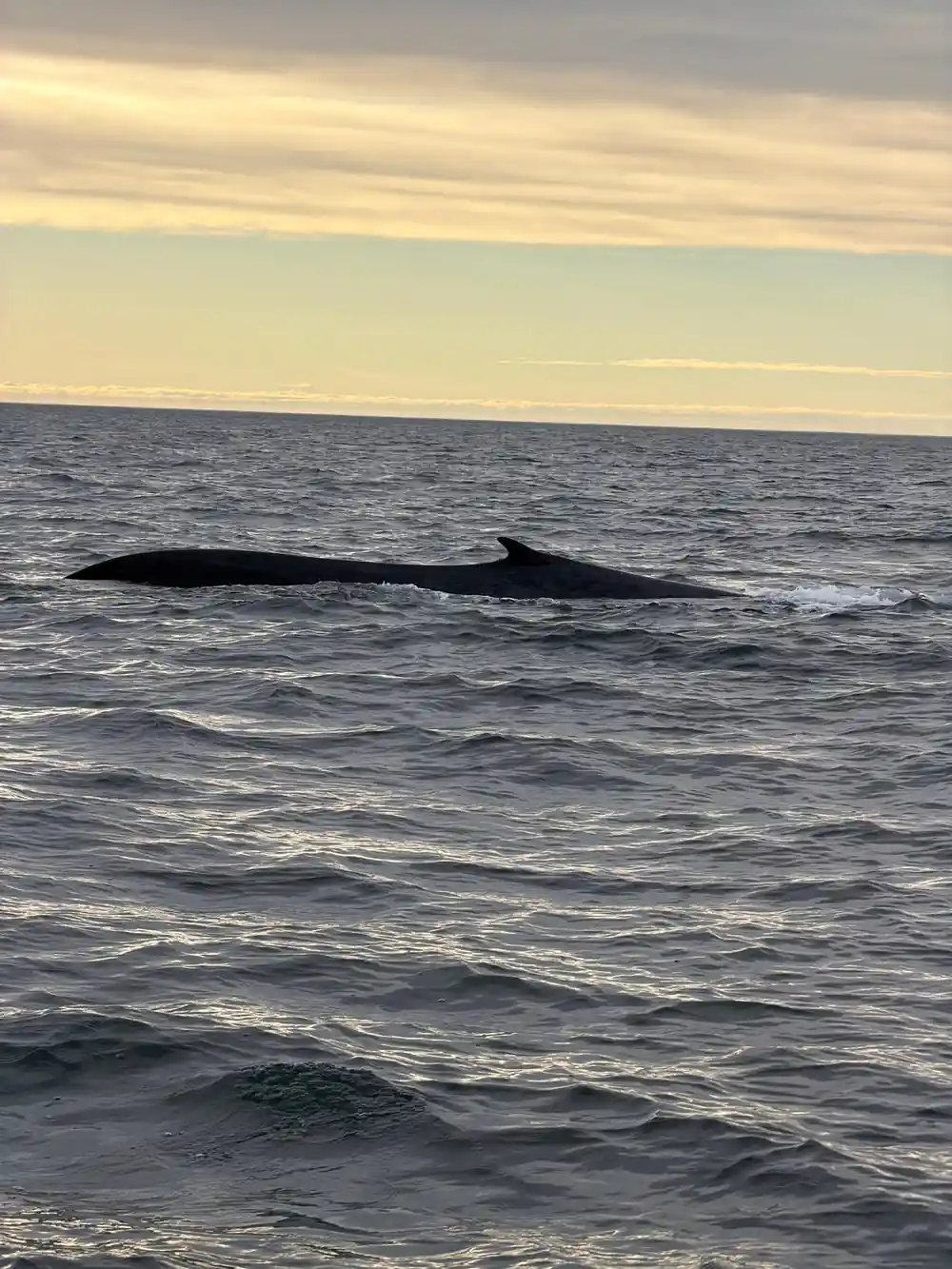
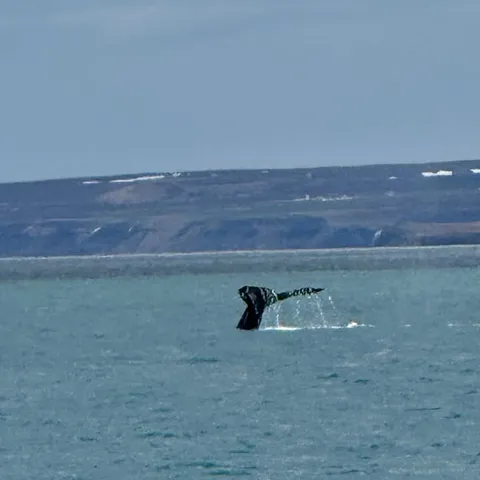
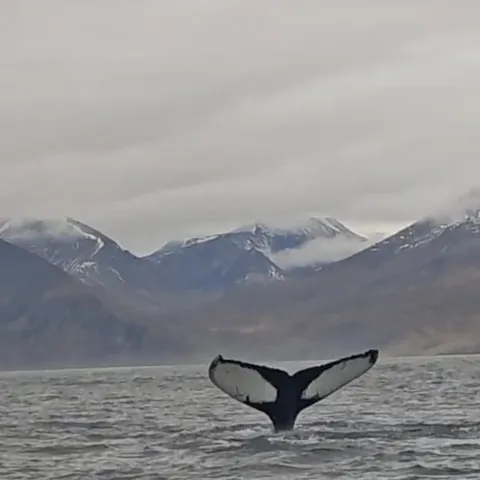
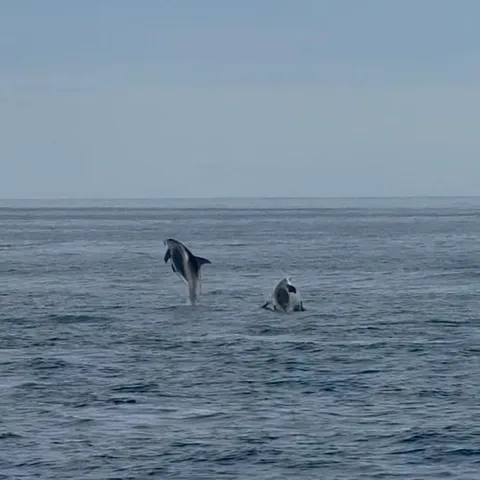
Minke whales are among the most common sightings in Skjálfandi Bay through the peak season, though no tour can promise them. These small baleen whales (25 feet long) often approach the boat and breach or fluke dive, providing excellent viewing opportunities. Humpback whales appear less frequently but are unmistakable when they do, with long pectoral fins and dramatic breaching displays. White-beaked dolphins are regular visitors to the bay, travelling in pods and sometimes racing alongside the RIB. Harbour porpoises, seals, and occasionally larger species like blue whales or fin whales round out the possible sightings, though these are less predictable.
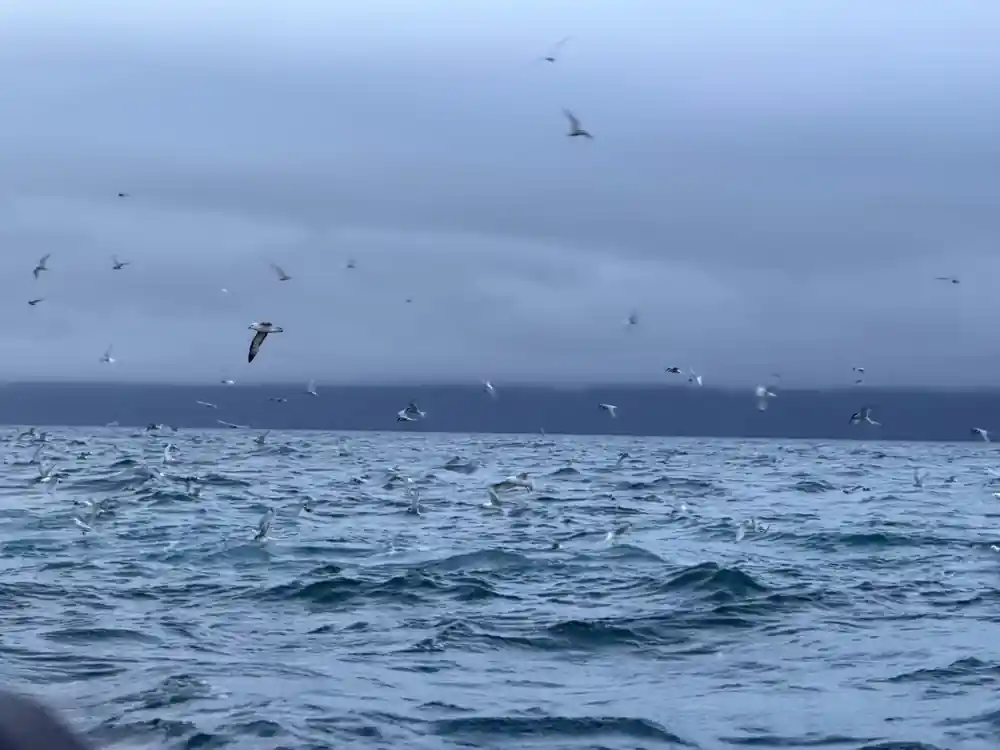
Puffin Island fills with seabirds from spring to late summer, with Atlantic puffins the main attraction during the breeding season (April to August). You'll also see kittiwakes, guillemots, and razorbills nesting on the cliff faces. The island itself is a protected bird reserve, and the boat maintains a respectful distance to avoid disturbing nesting birds. Tours outside the puffin season (September to March) shift focus to whale watching, as many seabirds migrate south, though some species remain. Your guide can identify each bird by sight and explain their feeding and nesting habits.
Why a speedboat outperforms larger tour boats
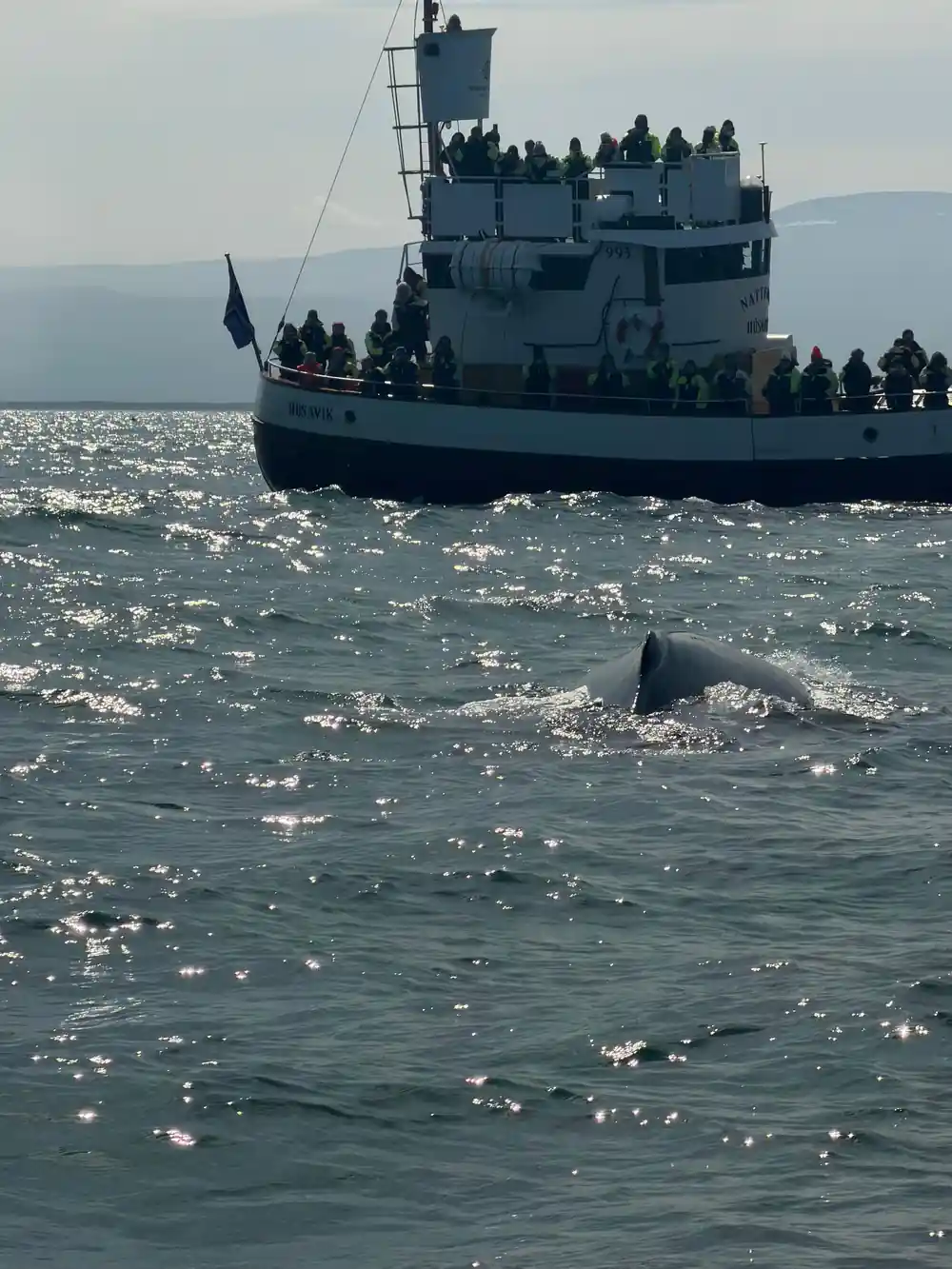
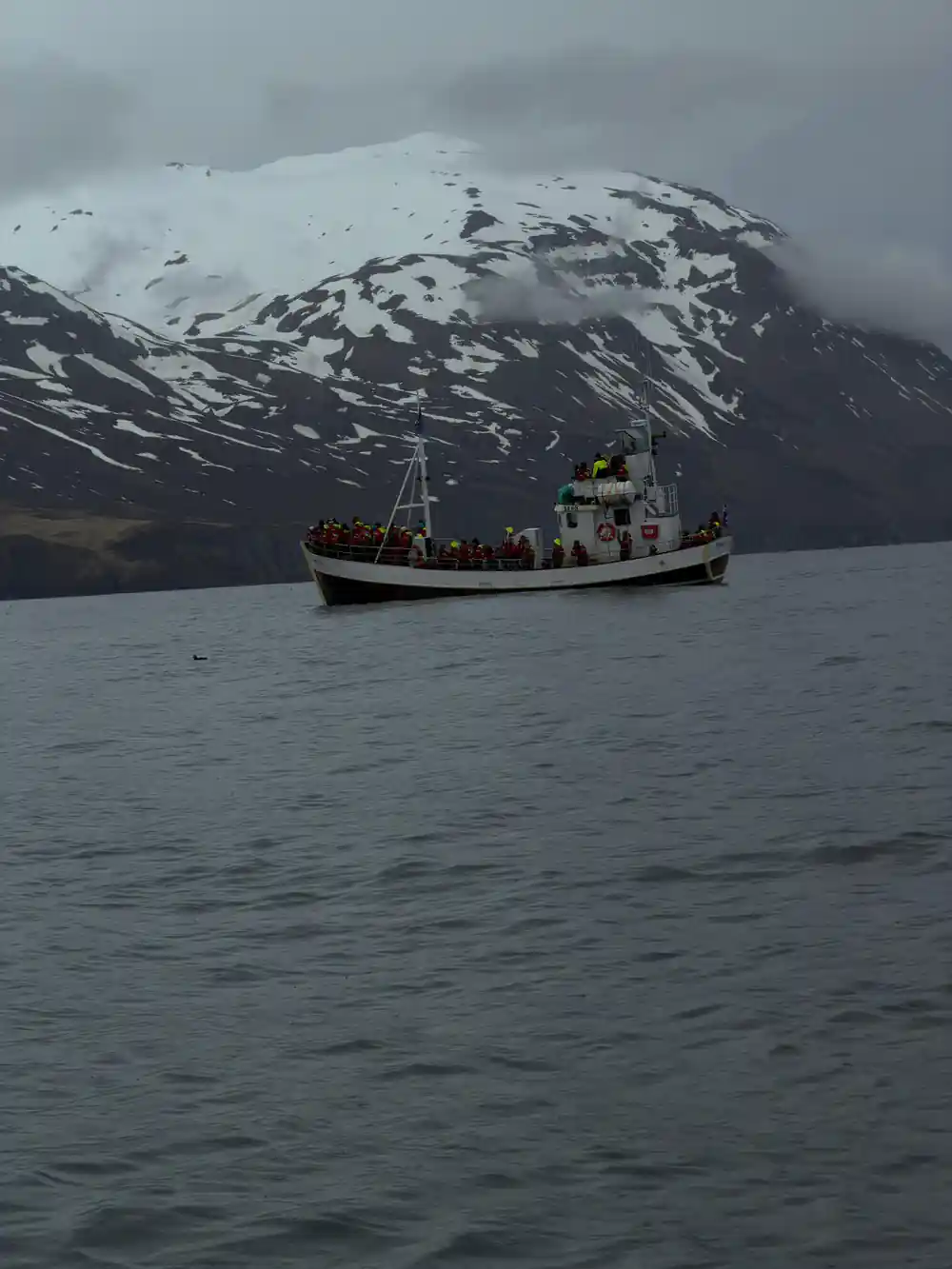
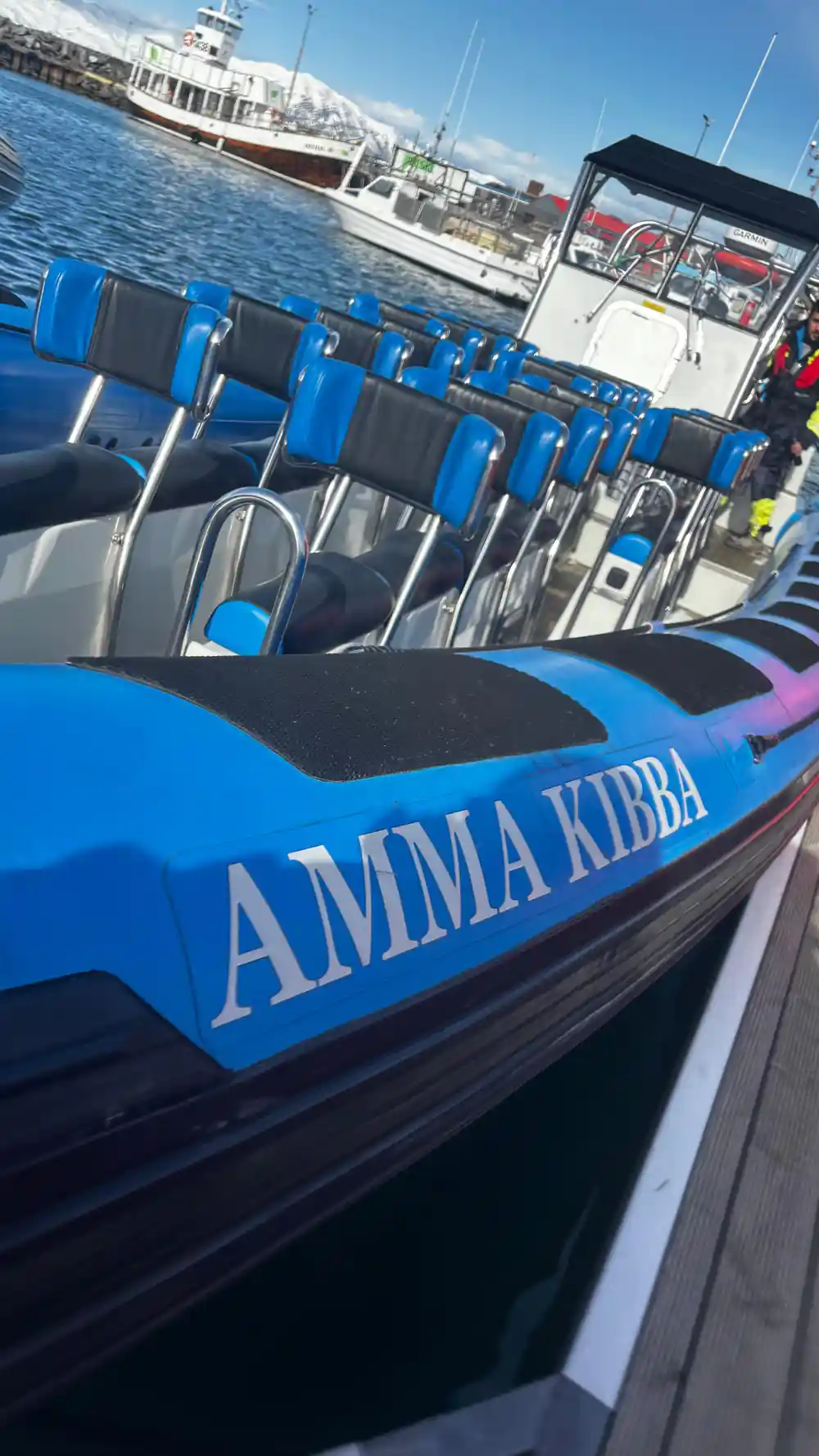
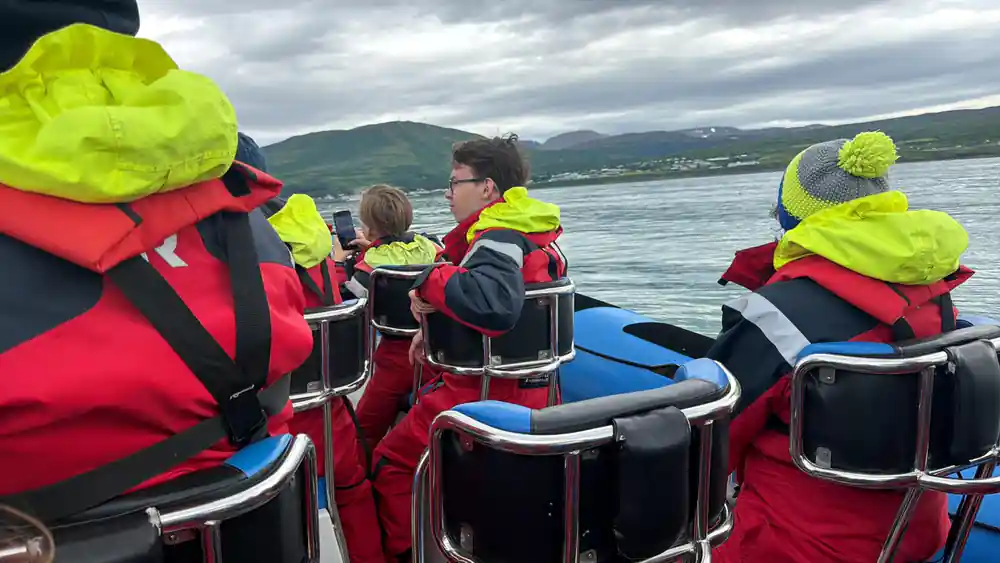
This RIB carries a maximum of 12 passengers, against the hundred or more a traditional oak boat takes. Smaller groups mean closer access to whales without overwhelming them, and the boat can change course quickly when a sighting occurs. The low profile and narrow beam allow the RIB to enter shallower waters and work close in along the shore in spring, where big boats cannot venture. Speed is not the main advantage; rather, it's the agility to position you directly alongside marine life while maintaining safe distances. Rigid hulls also mean less rolling in rough seas, a comfort benefit when the Atlantic swells pick up.
The RIB's open-air design puts you at deck level, eye-to-eye with the horizon where whales surface, rather than viewing from high railings on a multi-storey vessel. Your specialist guide stands among the passengers, answering questions in real time and spotting activity that larger tour operators miss. Fuel efficiency means lower carbon impact per passenger, and the boat can depart more frequently to match demand, giving you better timing flexibility. For a Húsavík whale watch tour, the speedboat experience trades the scale of a large ship for intimacy and responsiveness.
Húsavík versus other northern whale watching ports
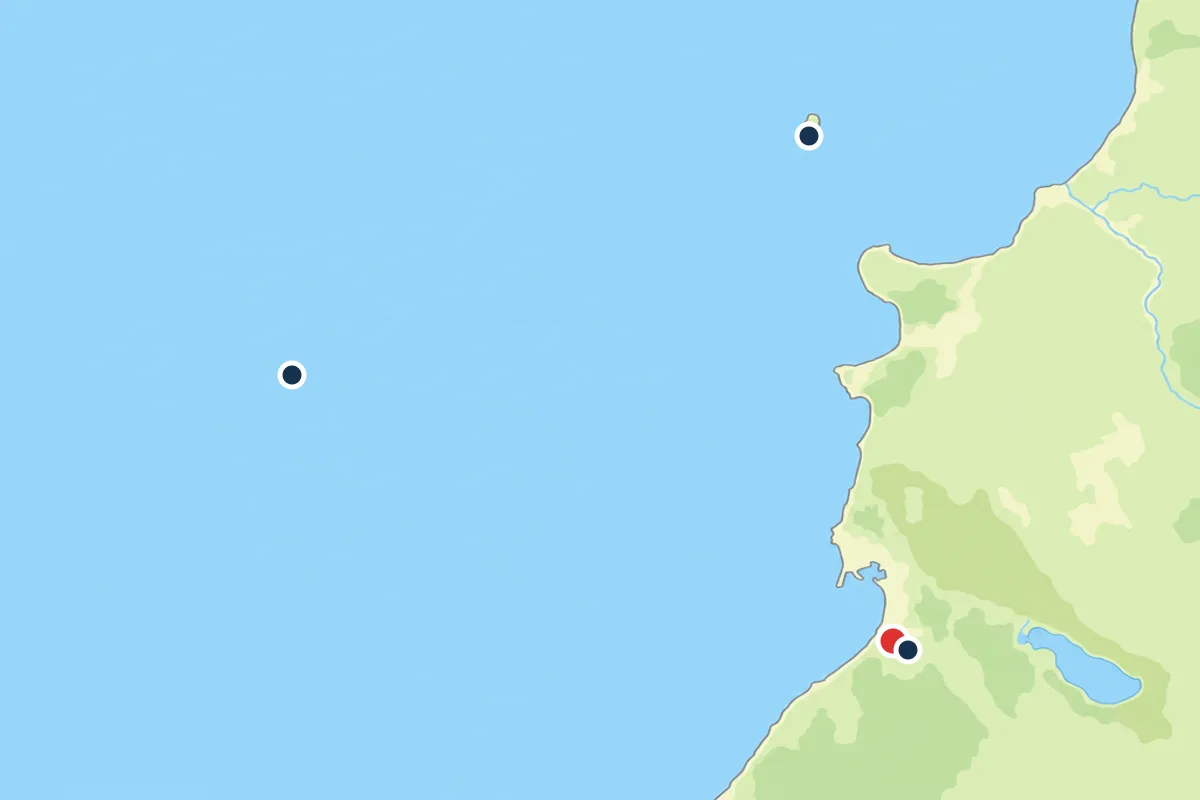
Húsavík sits on the eastern shore of Skjálfandi Bay, 460 kilometres northeast of Reykjavík by road. The town has been a trading port for centuries and is where Icelandic whale watching began in the 1990s; it now has more whale-watching operators than anywhere else in Iceland. Skjálfandi Bay's shallow depth (80 to 100 metres) and rich upwelling currents create ideal feeding grounds for minke and humpback whales, especially in summer. The bay's protected anchorage means calmer seas on average compared to the open Atlantic routes departing from other towns. When comparing Húsavík or Dalvik whale watching, Húsavík has the advantage of established marine research partnerships and more frequent departures throughout the year.
Akureyri, 76 kilometres southwest of Húsavík, also offers whale-watching tours but departs from a deep fjord with different marine conditions. The Húsavík versus Akureyri whale watching choice often comes down to tour schedule and accommodation location. Húsavík's cluster of tour operators means better availability and more specialised guides per boat. The town also has a whale museum and seafood restaurants within walking distance of the harbour, making a full day experience practical. For visitors based in North Iceland, Húsavík remains the original hub and statistically the best-positioned departure point for whale encounters in Icelandic waters.
What's included and what you need to know
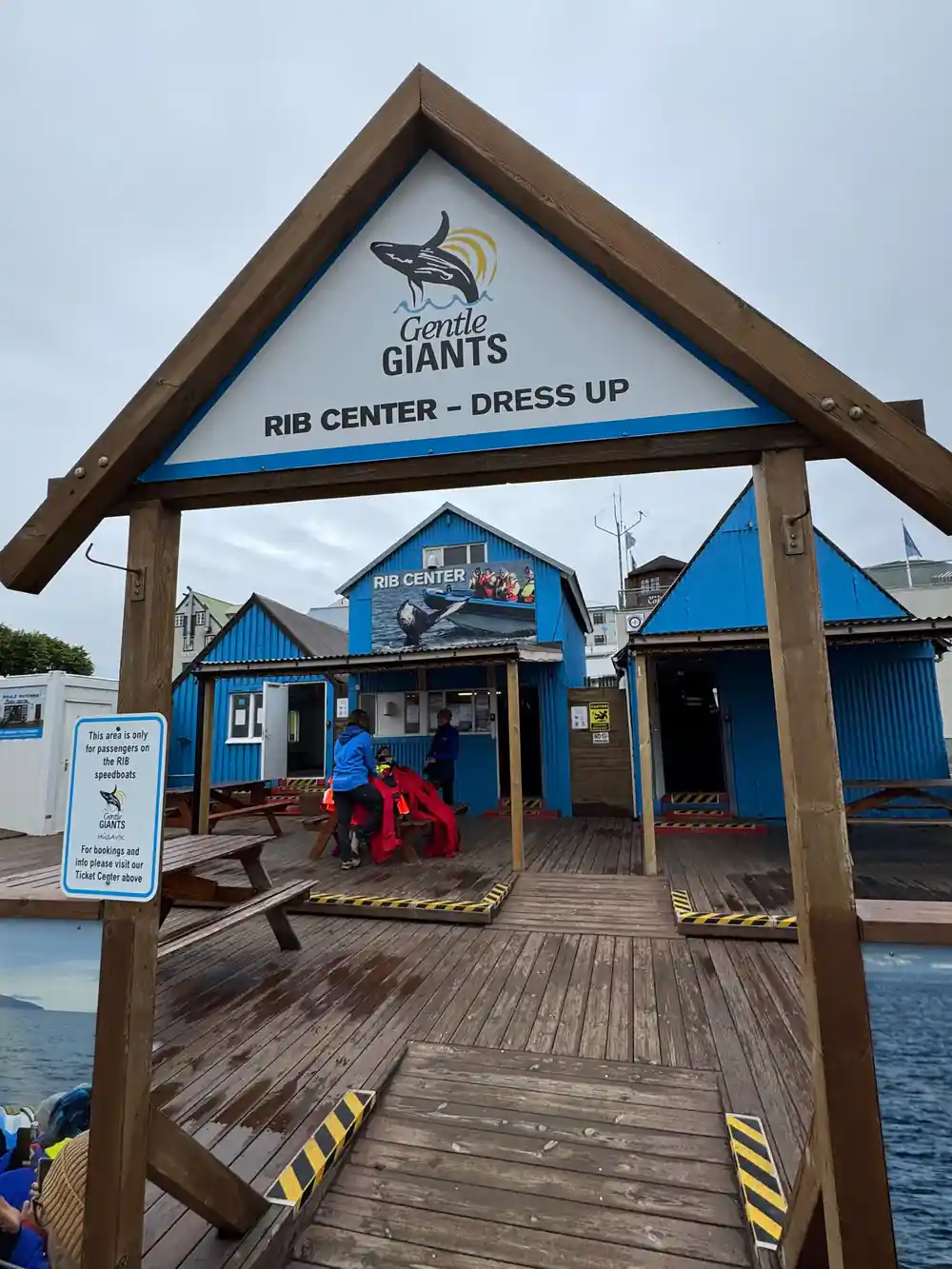
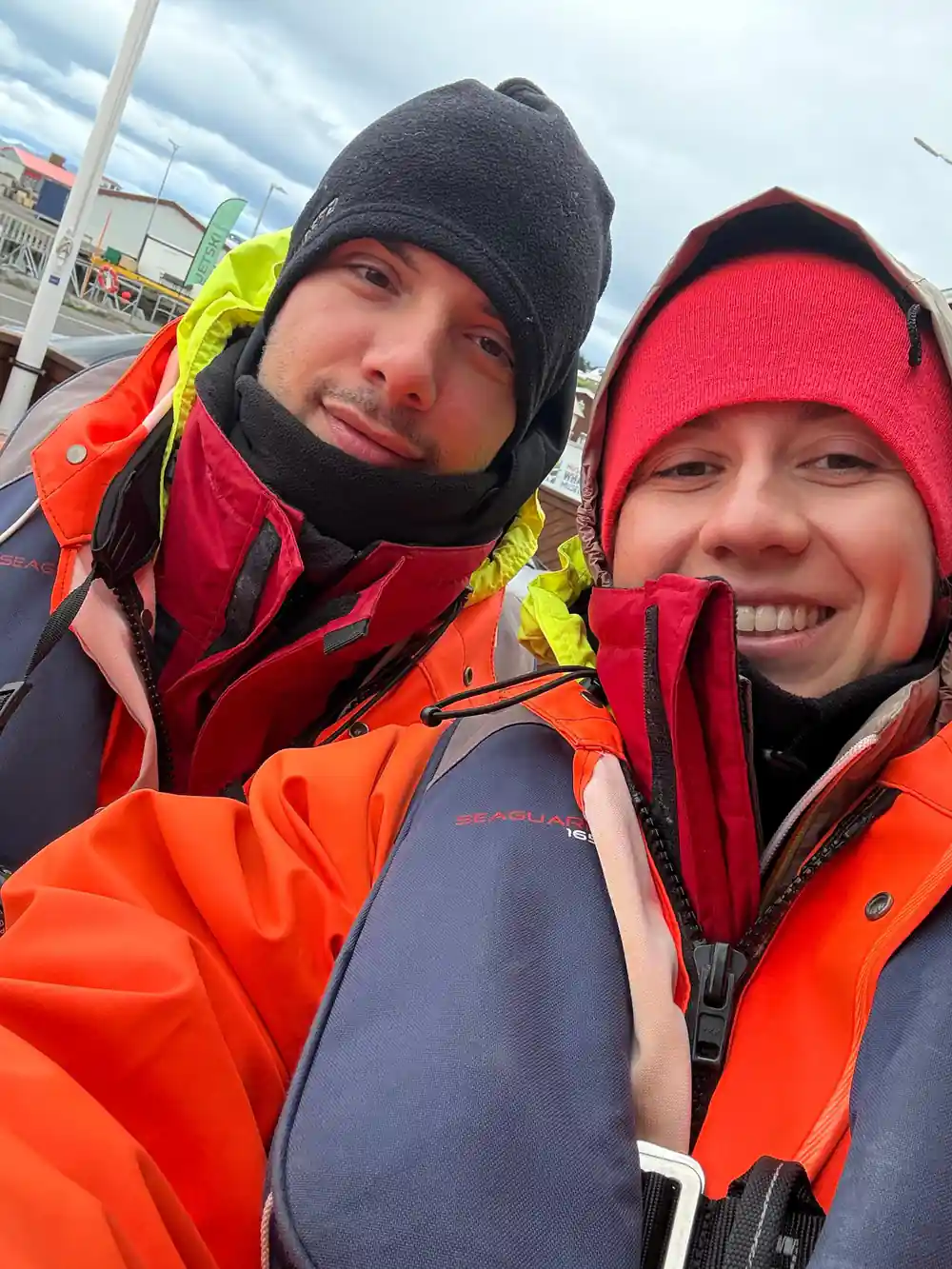
Your ticket covers the round-trip RIB speedboat cruise, a specialist guide, and live commentary during the entire tour. Warm safety overalls are provided and mandatory; these are waterproof suits that protect you from spray and wind chill. Rain jackets are available if weather turns wet, and crew members help you fit and remove all gear. There is no cabin to retreat into: the boat is open, and the warm overalls are what keeps the cold off you. Transport from your accommodation is not included; you'll need to arrange your own arrival at the Gentle Giants ticket centre in Húsavík.
Bring warm layers even in summer, as wind on the water reduces temperature significantly. Seasickness medication is not provided, but the open design and frequent movement mean motion sickness is less common than on large enclosed boats. A waterproof camera bag protects your phone or camera from salt spray. The tour departs rain or shine, so cancellations are rare; tour operators maintain a high safety standard and only cancel in extreme weather. Arrive 40 minutes early for check-in and the safety briefing, and inform the crew of any mobility concerns when you arrive at the harbour.
Booking and best timing for whale sightings
Tours depart multiple times daily from May through August, with fewer departures in winter months. Morning tours (typically 9:00 AM) often coincide with calmer seas, while afternoon departures (2:00 PM or 3:00 PM) suit those arriving later in the day. June and July offer the longest daylight hours and the highest statistical whale encounter rates. Minke whales are present from April through October; humpbacks peak in June and July. Winter tours (November to March) see fewer bird sightings but can yield sperm whales and other deep-diving species. Booking online in advance guarantees your spot, especially during peak tourist season, and allows you to select your preferred departure time.
A two-hour tour is intensive without feeling rushed, giving you sufficient time on the water to spot marine life while keeping energy levels high. Consider your tolerance for cold and motion before booking: the open RIB is exposed to weather, and the boat rocks with sea state even in Skjálfandi's sheltered waters. Families with children aged 8 and up can participate; crew members advise on safety overalls for smaller children. Refund policies vary by operator, so confirm cancellation terms when you purchase. If no whales or dolphins are seen, the operator gives you a free voucher for its traditional oak-boat tour; no refund is offered in that case.
Is this tour worth booking
Iceland's whale-watching reputation rests on tours like this one: small-group intimacy, genuine marine expertise, and high encounter odds in a confined bay. Húsavík whale watching has consistently strong sighting records because Skjálfandi Bay concentrates marine life in a compact area. The two-hour duration is ideal for most visitors - long enough for meaningful observation, short enough to fit multiple activities into a single day. The speedboat format prioritises your comfort and engagement over bulk passenger numbers, justifying the experience's value. If whale watching is a priority for your Iceland trip, this tour should rank at the top of your North Iceland itinerary.
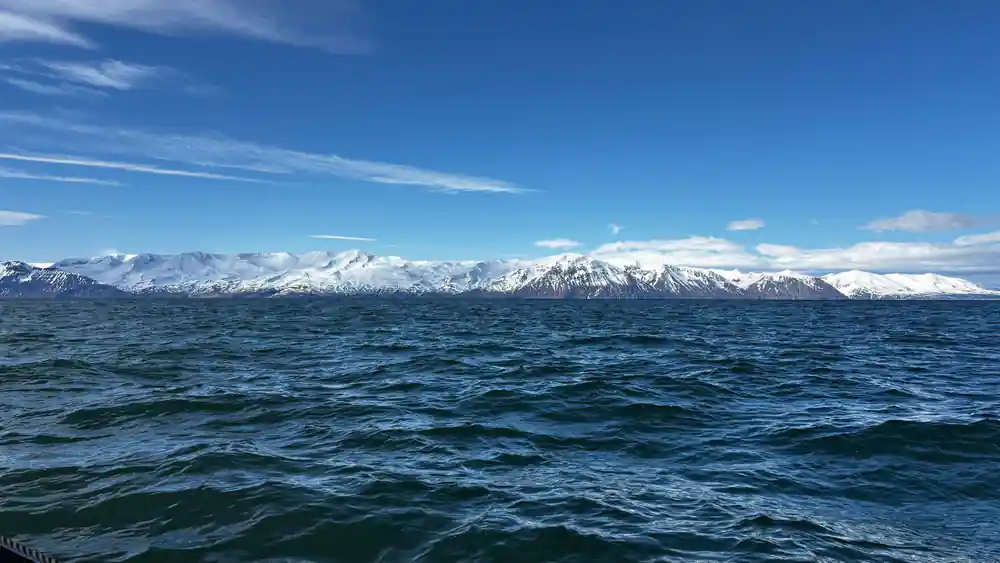
The combination of whales, puffins, and coastal scenery delivers variety within a single outing, and your guide's live commentary transforms what you see into genuine understanding rather than simple sightings. The price-to-experience ratio is competitive against other Iceland tours. Book this tour if you're visiting North Iceland in any season, can tolerate open-air boating, and want the highest statistical chance of seeing whales in their natural environment. Cancellation guarantees mean low financial risk if weather intervenes, and the option to rebook on another date protects your investment.