The essentials
- The Húsavík Whale Museum was founded in 1997, with the aim of giving detailed and interesting information about whales and their habitat.[1]
- Museum tickets are not bookable through this site; the whale watching tours that leave from the same harbour are.
- Húsavík has a population of roughly 2,500, so the museum, the cafés and the harbour are all within an easy walk.[2]
- Commercial whale watching in Iceland began in Húsavík in 1995, and the museum and the harbour sit close together, so a visit and a boat trip fit into one day.[3]
- The whale watching tour with a guide runs 3 hours from US$99 and is wheelchair accessible, with free cancellation up to 24 hours in advance.[4]
- Top choice Original Big Whale Safari from US$171 Duration2 hours[5]Rating4.73 from 1,423 reviews[5]GuideLive tour guide: English[5]CancellationFree cancellation up to 24 hours[5] Check availability
- Whale Watching with Guide from US$99 Duration3 hours[4]Rating4.63 from 2,958 reviews[4]GuideLive tour guide: English[4]CancellationFree cancellation up to 24 hours[4] See this tour
- Big Whales & Puffin Island from US$164 Duration2 hours[6]Rating4.83 from 1,059 reviews[6]GuideLive tour guide: English[6]CancellationFree cancellation up to 24 hours[6] See this tour
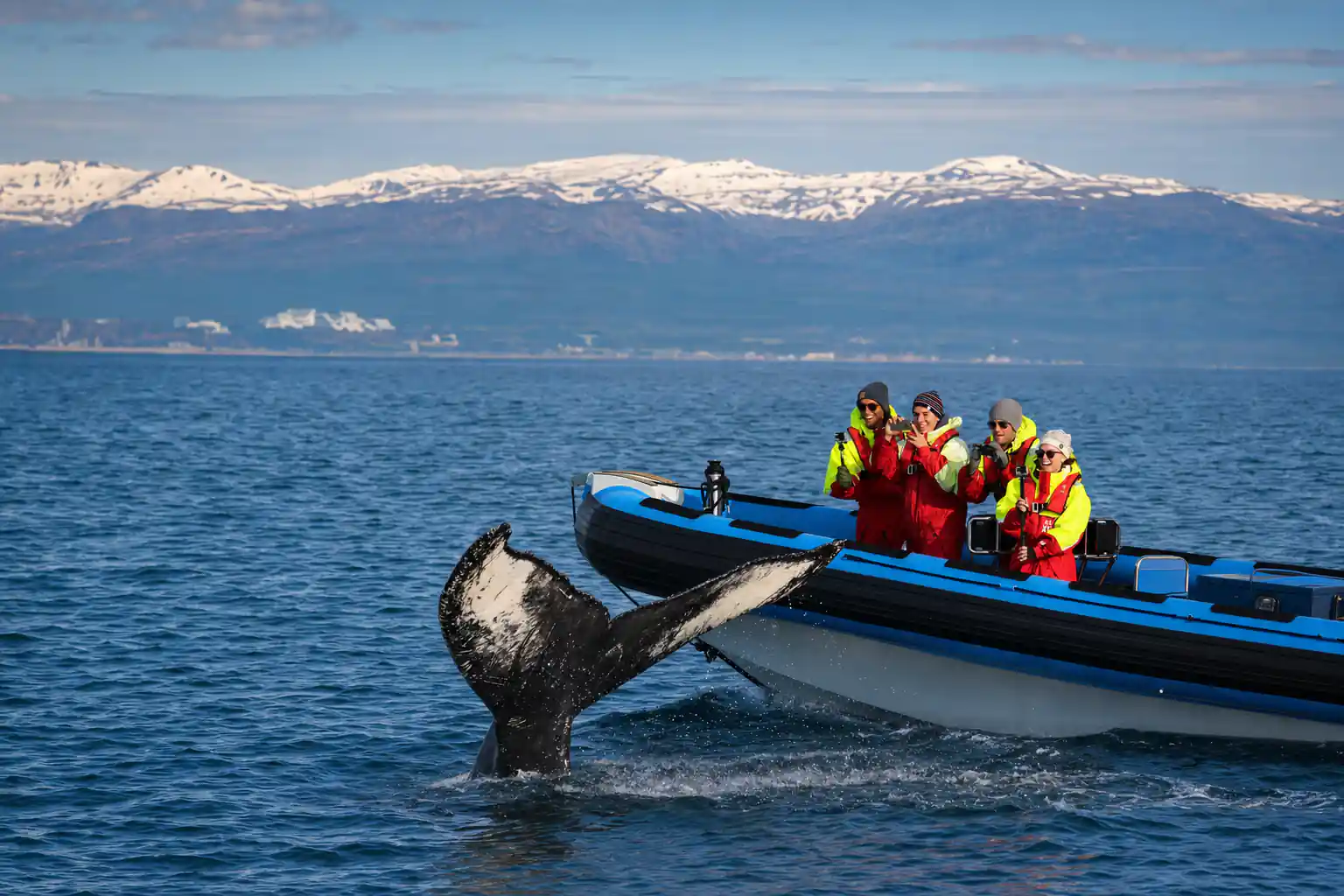
The Húsavík Whale Museum was founded in 1997. It's foremost aim is to provide detailed and interesting information about whales and their habitat.
Is the Húsavík Whale Museum worth your time?
Plan the day
What you will find at the Húsavík Whale Museum
The Húsavík Whale Museum sits a short walk from the harbour in Húsavík, on the north coast of Iceland, and it is the natural first stop before you head out on to Skjálfandi Bay yourself. The museum was founded in 1997, and its stated aim is to give detailed and interesting information about whales and their habitat.[1] Expect skeletons, models and quiet rooms where you can take your time over the details, which makes the whole place a good primer for a boat trip later in the day.
Displays cover the whales of the North Atlantic, the working history of the local fleet and the research that still goes on in the bay. The museum is compact, so you can move through it quickly on a tight schedule or settle in for a slower couple of hours reading every panel. Labels are written for travellers rather than specialists, and staff are used to answering questions from people who have just come off the water.
Húsavík has a population of roughly 2,500, which means the museum, the cafés and the whale watching harbour are all within an easy walk of one another.[2] Plan on a leisurely hour inside, then leave yourself time for the walk down to the docks and a look at the boats before departure. On a wet day the museum is the warm, dry option that still leaves you feeling you have learned something about the place.
Húsavík, the house bay
The town's name comes from the settlement story. According to the Settlement Book, Garðar and Náttfari set up their winter camp in Skjálfandi Bay and built a house in Húsavík, which means 'the house bay.'[10] The water in front of the town is still the reason people come, and the museum's earliest exhibits pick up that thread and follow it forward through the centuries of fishing and farming.
Skjálfandi Bay is about 28 kilometers wide at its widest point and about 25 kilometers long.[11] The mountains that ring the shore give the bay a sheltered, bowl-like feel, and on a calm day the water inside it looks almost flat. That is the water the boats cross to reach the feeding grounds, and it is the water the museum's displays describe, with maps that make the geography click.
Commercial whale watching in Iceland began in Húsavík in 1995.[3] On North Sailing tours there is a chance to encounter up to 11 different cetacean species, and the company says its Húsavík whale watching tours have had a 97% overall whale sighting success rate based on sightings in Skjálfandi Bay since 1995.[12] Knowing which species are possible, and roughly what each one looks like at the surface, is exactly what a museum visit gives you before you step aboard.
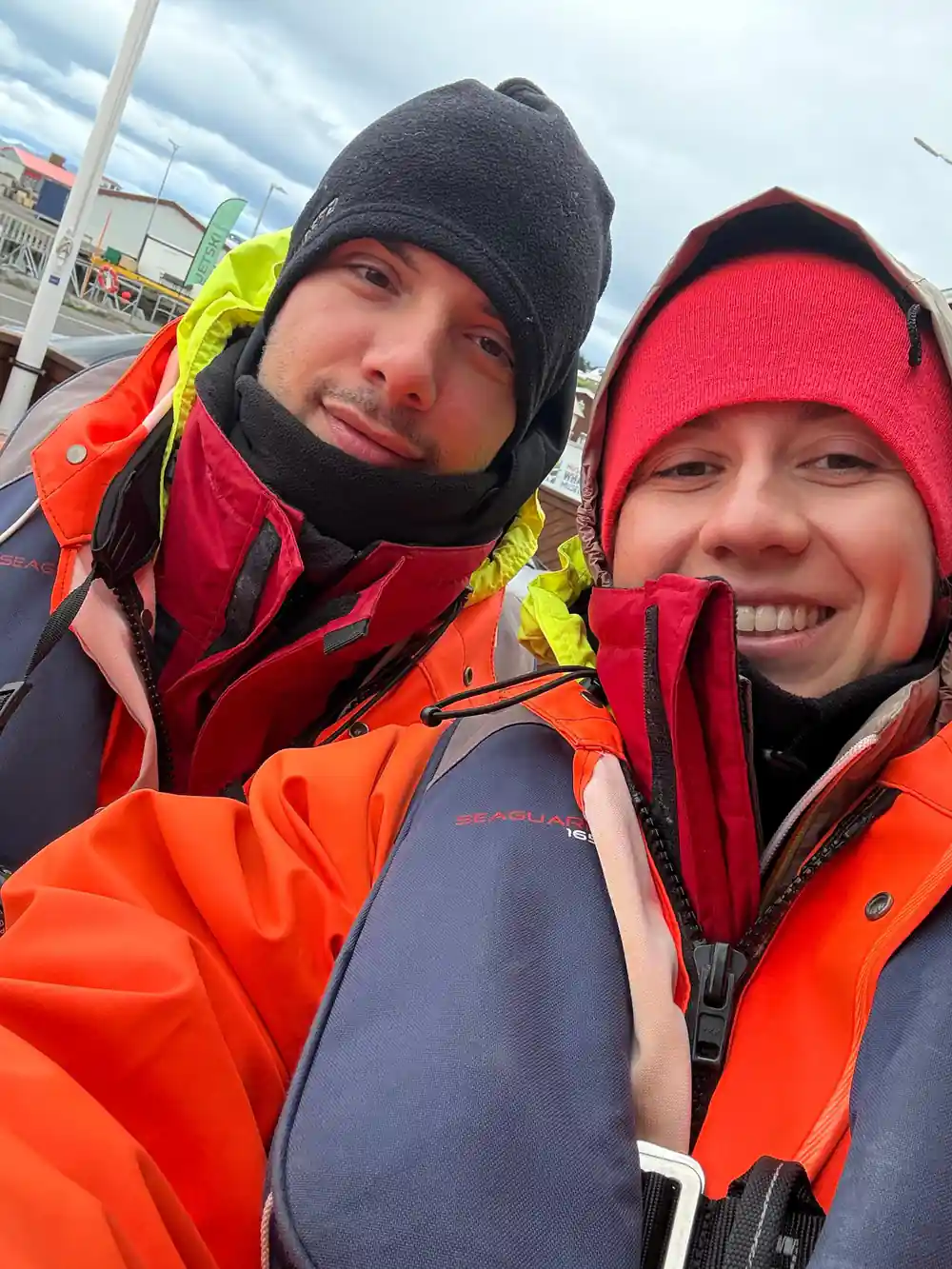
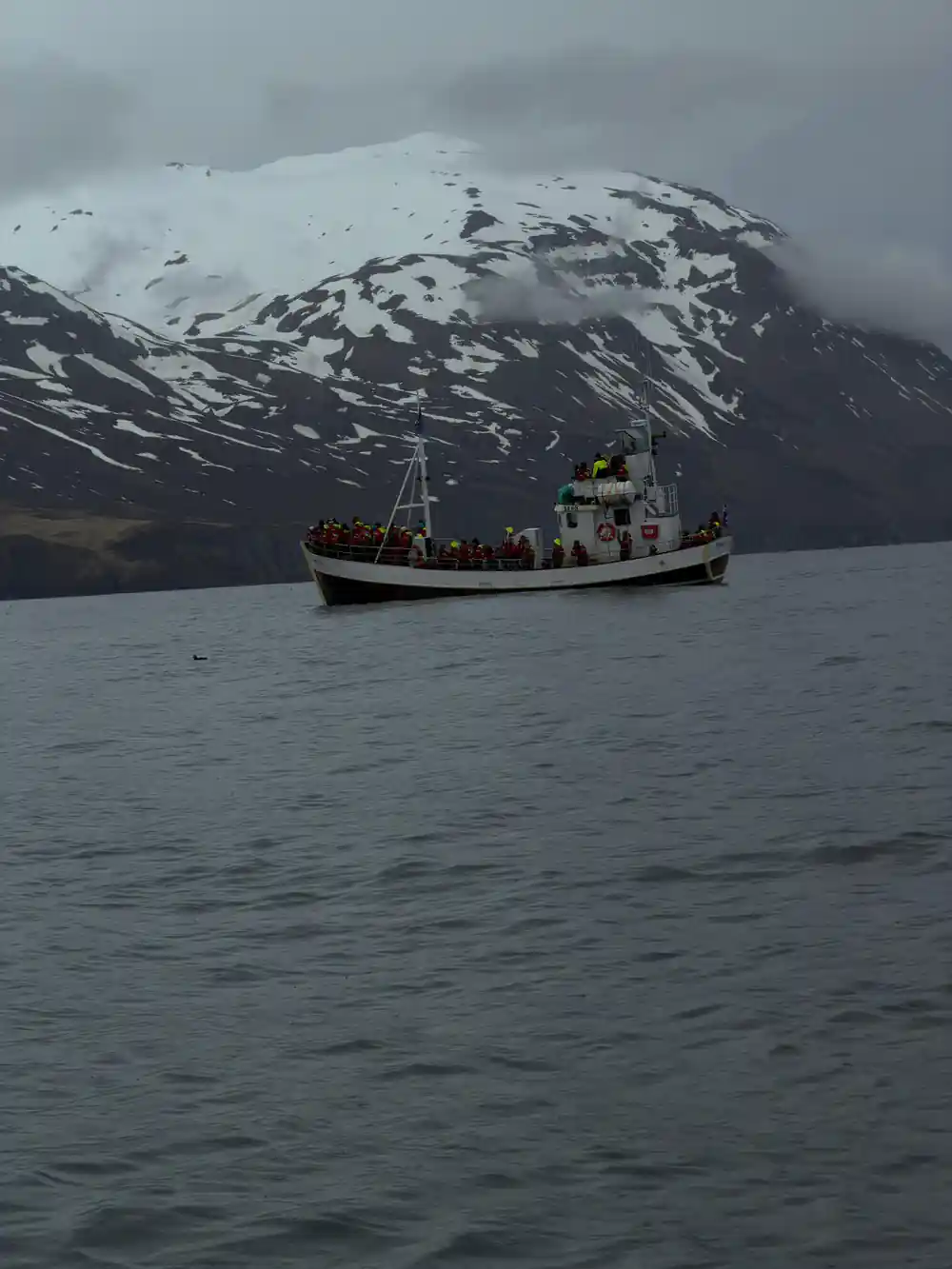
Húsavík harbour, where the museum and the whale watching boats sit close together.
Tickets, timing and what to expect
Museum tickets are not bookable through this site, so check the museum's own opening hours before you build a day around a visit. What is bookable here are the boat trips from the same harbour: the whale watching tour with a guide runs 3 hours from US$99 and is rated 4.63 from 2,958 reviews.[4]
This is an indoor stop, which helps on the wet and windy days the north coast is known for, and it slots neatly between a harbour walk and a booked boat departure. Plan the museum around the boat rather than the other way round, since the tour has the fixed start time.
Booking the boat is flexible: you can reserve now and pay later, and there is free cancellation up to 24 hours in advance for a full refund.[4] The tour with a guide is also listed as wheelchair accessible.[4] Give yourself at least an hour in the museum if you like reading panels, and longer if you want to linger over the skeletons.
Whales you may meet in Skjálfandi Bay
Humpbacks found in the Northern Hemisphere reach an average length of 49 to 52 feet, and southern humpbacks reach 60 feet, with the average weight for a mature adult being 50,000 to 80,000 pounds.[13] Numbers like that are hard to picture until you are standing beside a skeleton, which is one of the reasons the museum works so well as a warm-up for a boat trip.
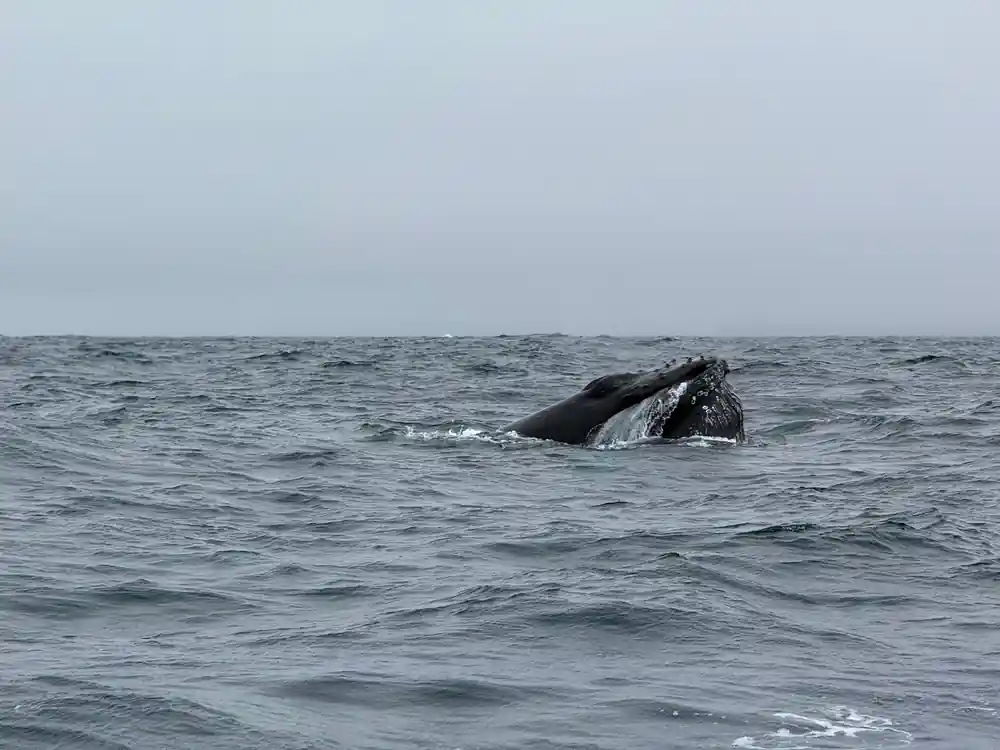
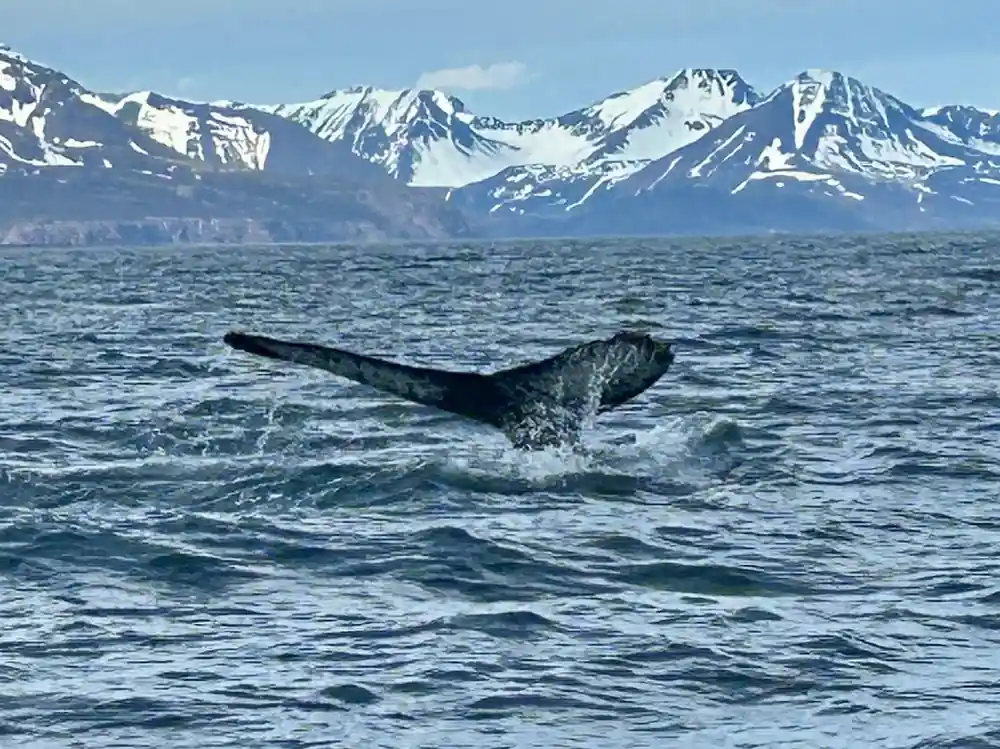
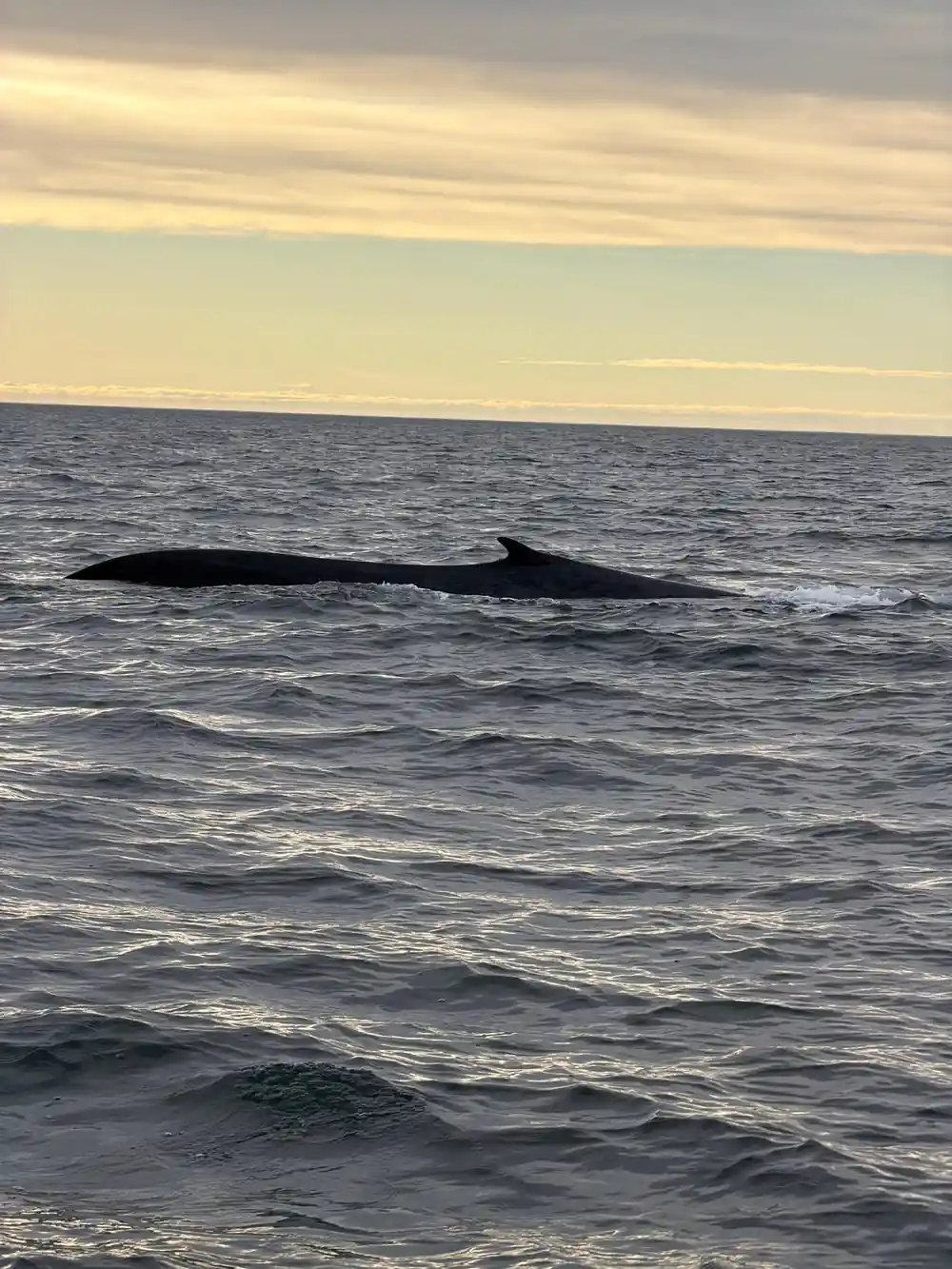
Several cetacean species pass through or feed in the bay, and the museum is a good place to learn how to tell a blow from a back and a back from a fluke. Guides on the water know these waters and the habits of the animals, and their commentary adds depth to what you have already seen on the walls and in the cases.
From the shore, one tip is worth remembering: look for boats, especially if they are stopped, and watch the other people who are watching them.[14] It is a simple way to spot activity without binoculars, and it works from the harbour area as well as from a cliff path. Keep your eyes moving and your expectations patient, and the bay usually rewards you.
1997
The Húsavík Whale Museum was founded in 1997 to give detailed and interesting information about whales and their habitat.[1]
Puffins and seabirds of the bay
Lundey, the low island known as Puffin Island, is a nesting ground for around 36,500 active breeding pairs of puffins.[15] The birds gather on the grassy slopes just above the water line, so most visitors see them from a boat rather than from land. Keep a respectful distance and let the colony get on with its business while you watch.
The museum's displays cover seabirds as well as whales, which makes it a useful primer if your boat trip includes a stop at the island. You will learn what the birds look like in the air, on the water and on the cliff, and that makes the sight of a whole flock of them far less confusing when they are moving.
Photographing seabirds from a moving boat is hard, so watch first and shoot second. A little patience at the rail usually rewards you with a bird sitting still on the water, and a fast shutter speed helps with the ones that do not. On a bright evening the light stays with you far longer than you might expect.
Pair the museum with a whale watching tour
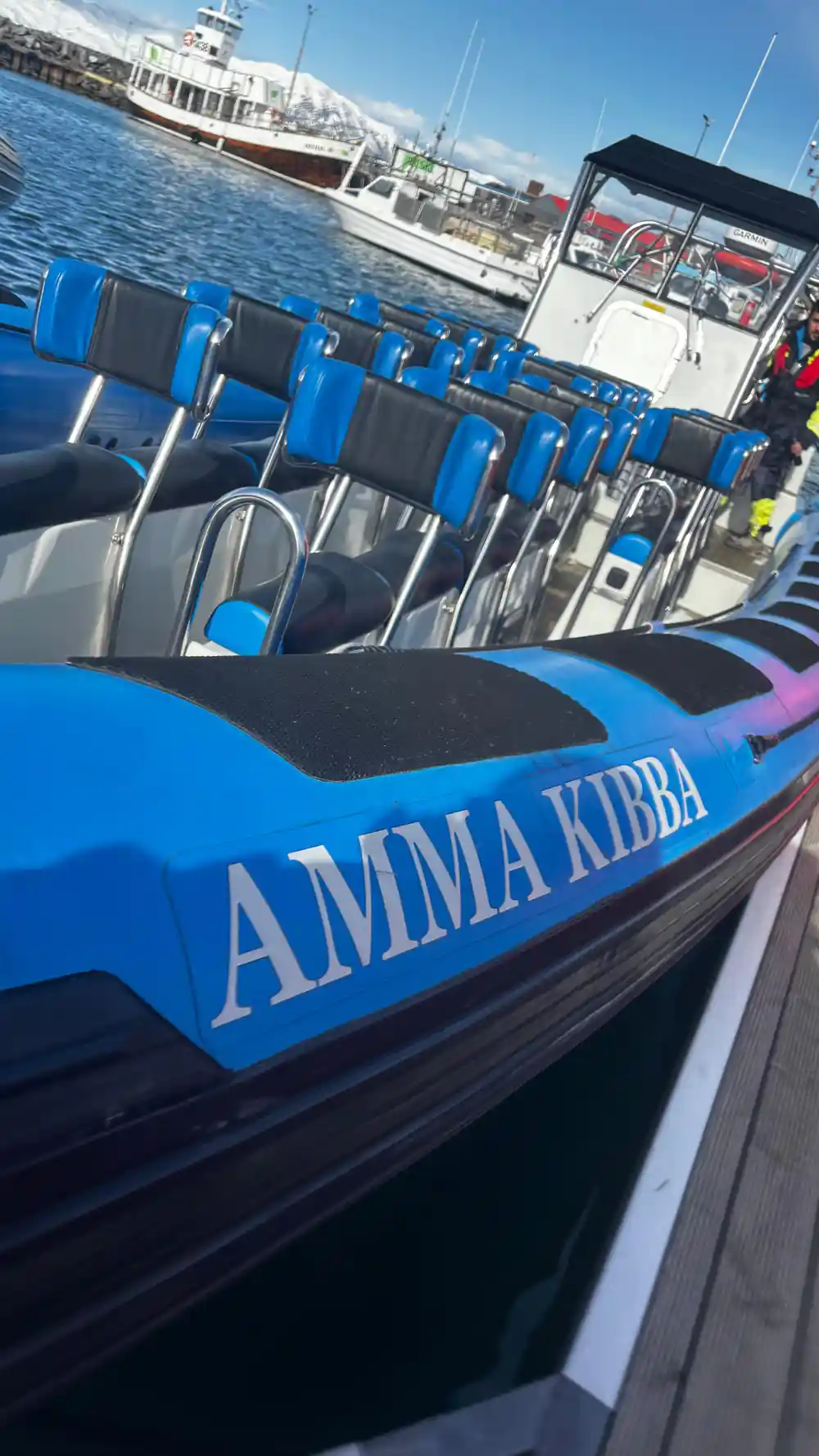
The tour booked from this site is the Húsavík: Original Big Whale Safari & Puffins by Speedboat. It runs for 2 hours and starts from US$171, with live guiding in English.[5] It is rated 4.73 from 1,423 reviews, and the same listing shows free cancellation up to 24 hours in advance for a full refund.[5]
The RIB Express boat has a comfortable cruising speed of 32 knots.[16] Speed matters on a bay this wide when the whales are working the far side, and a quick boat means more of the trip is spent watching animals rather than travelling between them.
The route calls at Husavik, Puffin Island and Skjálfandi.[5] If you would rather take your time, the whale watching tour with a guide runs for 3 hours from US$99, and the family-run tour runs for 3 hours from US$85, both with free cancellation up to 24 hours in advance.[4][17]
When to visit: seasons, light and sea
In summer, the average sea water temperature in Skjálfandi Bay rises to 8.8 C.[9] That is cold water by any standard, so a windproof outer layer, a hat and gloves matter more than a swimsuit on a boat trip. Dress in layers you can peel off in the cabin and pull back on at the rail.
The midnight sun peaks around the summer solstice in June, and the sun never fully sets from May through August, so the nights stay bright right across Iceland.[8] Late departures run in soft, lasting light, which is a gift for photographers and a strange, memorable experience for everyone else on board.
GeoSea Geothermal Sea Baths is a geothermal spa in North Iceland whose infinity pools are filled with seawater from geothermal boreholes kept at 38 to 39 °C year-round.[18] A soak after a cold morning on the water is one of the simplest pleasures in town, and steam rising off the pools against the cliffs makes an easy end to a long day.
Whale watching tour from prices from Húsavík
All figures are the from prices in US dollars of Húsavík whale watching listings.[4][5][6][17]
What a whale watching trip from Húsavík costs
From prices in US dollars for Húsavík whale watching listings.[4][5][6][17]
When to book your museum visit and boat trip
Plan your museum visit
Book a boat
The whale watching tour with a guide runs 3 hours from US$99, and you can reserve now and pay later.[4]
Walk to the harbour
The boats and the museum sit close together in a town of roughly 2,500 people.[2]
Watch for stopped boats
The Whale Trail tip is to look for boats, especially if they are stopped.[14]
Learn the species
The museum explains whales and their habitat, so the next trip makes more sense.[1]
Soak at GeoSea after
GeoSea's seawater pools are kept at 38 to 39 °C year round.[18]
Book the Original Big Whale Safari and Puffins by Speedboat
from US$172Reserve now & pay later