The essentials
- The Original Big Whale Safari and Puffins by Speedboat runs for 2 hours from Húsavík to Puffin Island and Skjálfandi Bay.[1]
- From prices for Húsavík whale tours start at US$85 on the family-run boat, and the speedboat safari starts at US$171.[1][2]
- The speedboat safari offers free cancellation up to 24 hours in advance for a full refund.[1]
- GeoSea Geothermal Sea Baths holds its seawater pools at 38 to 39 °C year round, with entrance from US$60.[3][4]
- The Húsavík Whale Museum was founded in 1997 to give detailed and interesting information about whales and their habitat.[5]
- Top choice Speedboat safari & puffins from US$171 Duration2 hours[1]Rating4.73 from 1,423 reviews[1]GuideLive tour guide: English[1]CancellationCancel up to 24 hours in advance[1]PaymentReserve now and pay later[1] Check availability
- Big whales & puffin island from US$164 Duration2 hours[6]Rating4.83 from 1,059 reviews[6]GuideLive tour guide: English[6]CancellationCancel up to 24 hours in advance[6]PaymentReserve now and pay later[6] See this tour
- Family-run whale watching from US$85 Duration3 hours[2]Rating4.70 from 1,987 reviews[2]GuideLive tour guide: English[2]CancellationCancel up to 24 hours in advance[2]PaymentReserve now and pay later[2] See this tour
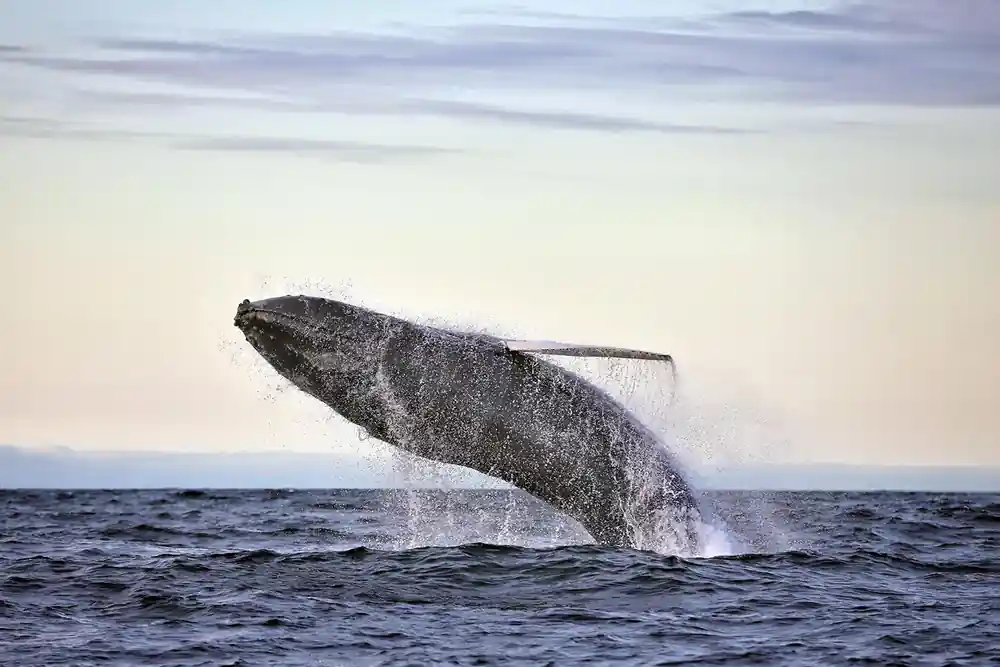
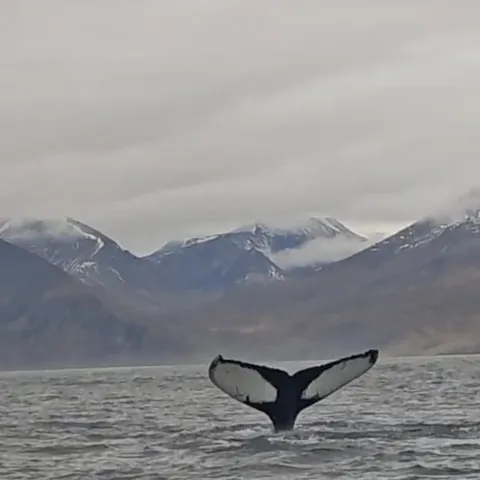
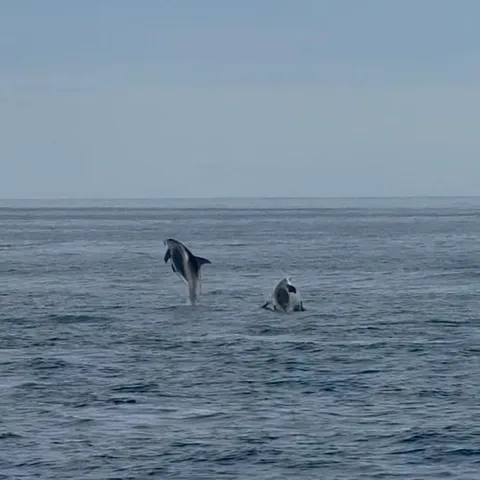
The GeoSea Geothermal Sea Baths is a geothermal spa on a cliff on the Húsavíkurhöfði peninsula outside Húsavík in North Iceland. It has three infinity pools built from local lava rock and slate, with seawater from geothermal boreholes kept at 38 to 39 °C year round and completely chemical free.
Worth it for the hour around the boat as much as the ride
Before you board
- Have the booking ready on your phone; check-in happens at the harbour meeting point.
- Come early enough for a toilet stop, a bag drop and the change into a flotation suit.
- Hat, thin gloves and layers under the suit, even when the town feels warm.
- Summer sea water averages 8.8 C in the bay, so dress warmly.[7]
Toilets and Facilities at Húsavík Harbour Before You Board
Húsavík is a small town of roughly 2,500 people, and the harbour sits at the bottom of it, a few minutes on foot from almost anywhere you park.[8] That is the good news about the hour before your boat: nothing is far. Ticket offices, the whale museum, the church and the cafés around the square are all within a short walk of the pontoons, so the last-minute jobs, a toilet stop, a bag drop, a change of layers and a quick coffee, can be done one after another without moving the car. Give yourself a comfortable margin and the whole build-up stays calm instead of becoming a sprint for the gangway.
Use the toilet before you board rather than hoping for one at sea. Speedboats and RIBs are open boats with no cabin to retreat to, and once you are zipped into a flotation suit the whole business becomes a production. Doing this first means you can enjoy the ride instead of counting the minutes back. It is also the moment to take seasickness tablets if you are prone to it, since they work best before the motion starts, and to hand over anything you do not want to lose. If someone in your group is staying ashore, agree where you will meet afterwards, because the harbour gets busy when boats come in together.
Where to Leave Your Bags While You Are at Sea
Bags are the thing people worry about most, and the answer is usually simpler than expected. On a harbour boat trip you take almost nothing aboard: a small camera or a phone in a zipped pocket, and that is it. Rucksacks, day bags and anything loose are better left ashore, in the car or back in your room, so your hands are free for the railing and your camera. Think about what you actually need for the time afloat and leave the rest; a boat is not the place to discover that your bag has been sitting in spray.
This is worth planning properly: the time on the water is the time your hands are busiest. Wind, spray and the need to hold on make a shoulder bag a nuisance, and loose items can go over the side. Pack a small dry bag if you have one, keep passports, keys and phones in an inside pocket that closes, and leave everything else behind. If you are moving between towns that day, a locked car boot is the usual answer. A cheap waterproof phone pouch takes up no space and saves an expensive mistake.
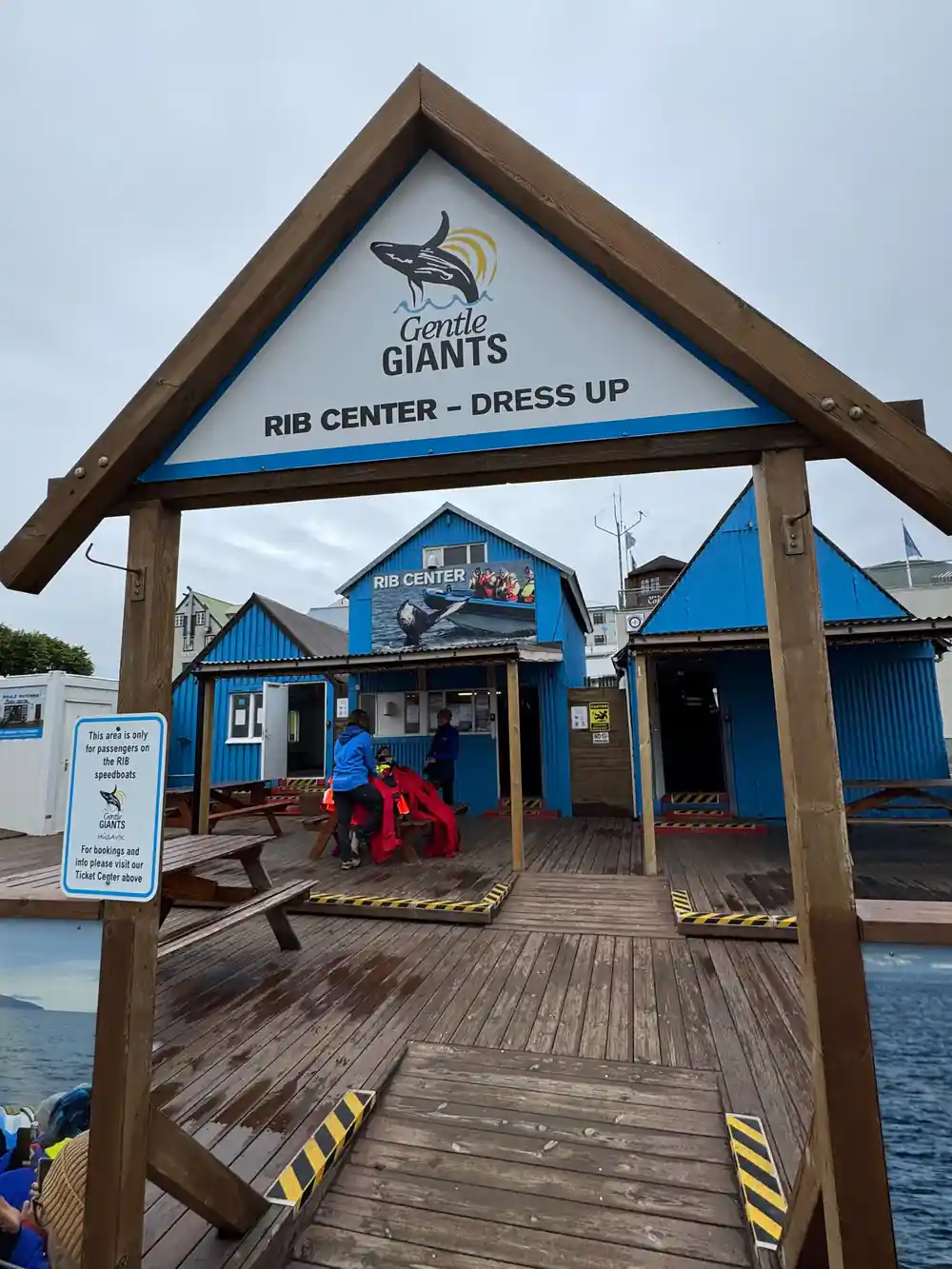
Húsavík harbour in the evening light, with the boats back at the pontoons.
Eating Before a Fast Boat Trip Out of Húsavík
Go light. A speedboat ride out of Húsavík crosses open water, and the bay is about 28 kilometers wide at its widest point and about 25 kilometers long, so there is plenty of exposed sea between you and the puffin cliffs.[9] A heavy meal and a bouncy boat are a poor combination. A bowl of soup, a sandwich or a pastry an hour or so before departure sits far better than a full lunch with a beer, and it keeps the build-up relaxed. If you have a long drive ahead afterwards, eat properly when you are back on dry land instead.
Icelandic hot dogs are quick, cheap and part of everyday life here, and a Húsavík hot dog on the walk down to the harbour is a fine, unfussy choice before a cold ride. Coffee is a personal call: if caffeine makes you jittery, save it for the harbour café afterwards, when the warming up starts in earnest. Water is the one thing worth carrying in a pocket; wind and cold air dry you out faster than you notice. Chewing gum or a boiled sweet helps if the swell tends to bother your stomach, and it costs nothing.
Changing Into and Out of Safety Overalls
At the harbour you will be handed a flotation suit, the padded one-piece overall that doubles as a life jacket and a weather shield. The change is quick if you have dressed for it. Wear thin layers underneath, not a bulky coat, because the suit itself traps warmth and a big jacket makes you clumsy on a moving deck. Jeans are a poor choice: once they are damp they stay cold for hours. Leggings, thermal trousers or soft shell trousers slide in and out far more easily.
Boots or trainers you do not mind getting damp, a hat and thin gloves make a real difference on the water. Summer sea water in the bay averages 8.8 C,[7] and the air over it feels cold as soon as the boat picks up speed. For a sense of that wind, one boat working these waters, the RIB Express, has a comfortable cruising speed of 32 knots.[10] Zip up at the harbour rather than at the rail, check that the collar does not press on your neck, and make sure your hood is not trapped inside the suit.
from US$171
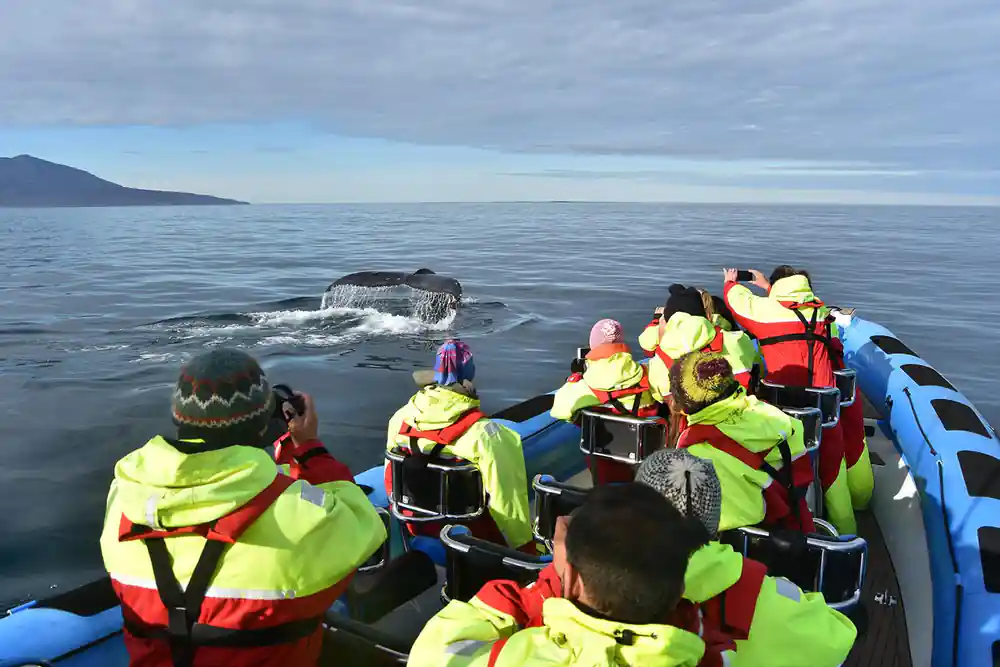
The tour booked from this site: a speedboat run from Húsavík out to Puffin Island and the whale grounds of Skjálfandi Bay.
What Non-Sailing Family Members Can Do While You Sail
The speedboat safari runs for 2 hours,[1] which is about the right length of time for a museum visit or a soak in a hot pool. The Húsavík Whale Museum was founded in 1997 with the aim of giving detailed and interesting information about whales and their habitat.[5] Anyone staying ashore can spend the time finding out what the people on the boat are looking at, and the skeletons on display make the scale of a whale obvious in a way a photograph never does.
GeoSea Geothermal Sea Baths, on the cliff at Húsavíkurhöfði just outside town, is the other easy answer. Entrance starts from US$60, and the ticket is valid on the selected date, entering at your selected time and exploring at your own pace.[4] The infinity pools are filled with seawater from geothermal boreholes held at 38 to 39 °C year round.[3] For anyone who would rather walk, the harbour, the church and the streets above it fill an hour or two comfortably, with the boats always in sight.
Warming Up After the Boat: The Húsavík Spa and a Hot Shower
The cold catches up with you on the walk back up the pontoon, not on the water. Change out of damp layers first, then find heat. A hot shower, a bowl of soup and a coffee in a harbour café are the quick fix, and they cost a fraction of a spa ticket. Dry socks sound like a small thing until you have spent a couple of hours in an open boat, so keep a spare pair in the car or at the top of your bag where you can reach them without unpacking everything.
The grander version is the Húsavík spa, the GeoSea Geothermal Sea Baths on the cliff at Húsavíkurhöfði. Its infinity pools hold seawater from geothermal boreholes at 38 to 39 °C year round,[3] and entrance starts from US$60 on the GetYourGuide listing.[4] Steam coming off a hot pool with Skjálfandi Bay below is a memorable way to finish a whale watching day. Because the ticket is tied to a chosen entry time on a chosen date, it is worth booking a slot rather than turning up at a random moment and hoping.
Your Full Húsavík Harbour Day
Whale watching here is not a footnote. Commercial whale watching in Iceland began in Húsavík in 1995,[11] and the harbour has been the starting point for it ever since. North Sailing reports a 97% overall whale sighting success rate across its Húsavík tours since 1995, based on sightings in Skjálfandi Bay,[12] and there is a chance of encountering up to 11 different cetacean species on its tours.[12] Northern Hemisphere humpbacks average 49 to 52 feet long, with mature adults weighing 50,000 to 80,000 pounds.[13]
Puffin Island, Lundey, is the other headline: a nesting ground for around 36,500 active breeding pairs of puffins.[14] The bay itself is about 28 kilometers wide at its widest point and about 25 kilometers long.[9] The name Húsavík means 'the house bay', and according to the Settlement Book, Garðar and Náttfari set up their winter camp in Skjálfandi Bay and built a house in Húsavík.[15] Walking down the Húsavík rainbow street towards the water puts you on the same slope that has carried people to the harbour for a very long time.
If you have time, add a shore watch. The Whale Trail advises that one of the best ways to find marine mammals is to look for other people who are watching them, especially stopped boats.[16] From the headland above the harbour you can do exactly that with a coffee in hand, and you will often see the same fluke the passengers are photographing. In summer the sun never fully sets from May through August, with the midnight sun peaking around the summer solstice in June,[17] so an evening walk after the boat is easy and bright.
How long Húsavík whale tours last
Durations stated on the GetYourGuide listings for these Húsavík tours.[1][2][6][18]
From prices for a Húsavík boat day
US dollar from prices per person on the GetYourGuide listings for these tours and the sea baths. No separate child rate is published, so each option shows the listing's from price.[1][2][4][6][19]
When to arrange what on your boat day
Before and after the boat
Check in at the harbour
Find the meeting point, confirm your booking and ask where bags go, so the rest of the hour stays calm.
Use the toilet first
Do this before the overalls go on. Once you are zipped in and out on the water there is no easy option.
Stow your bag
Leave rucksacks and camera bags ashore, and keep only a phone in a pocket that closes.
Get into the flotation suit
Step in over thin layers, zip up at the harbour and check the collar and hood before you walk to the boat.
Change back and warm up
Damp layers off first, dry clothes on, then a hot drink or the geothermal sea baths above the town.
Book the speedboat safari, then build the rest of your Húsavík day around it
from US$172Reserve now & pay later