The essentials
- Three thin layers under whatever you are handed at the dock keep you warmer than one heavy jacket, and you can open a zip when the boat slows down to watch a whale.
- A wet, moving deck needs deep rubber treads. Trainers, deck shoes or light hiking shoes work; smooth soles and sandals leave you sliding and cold.
- Thin gloves and a fitted hat that sits under a hood are the two cheapest upgrades to an open boat trip, and the two easiest things to leave at home.
- Phone, camera, spare socks and a small towel all belong in a sealed bag. Spray comes over the tube whenever the boat picks up speed.
- Take motion sickness tablets early if you use them, eat something plain, and leave the big backpack at your guesthouse rather than on the boat.
- Top choice Original Big Whale Safari from US$171 Duration2 hours[1]Rating4.73 from 1,423 reviews[1]GuideLive guide, English[1]CancellationFree cancellation up to 24 hours[1] Check availability
- Big Whales & Puffin Island from US$164 Duration2 hours[2]Rating4.83 from 1,059 reviews[2]GuideLive guide, English[2]CancellationFree cancellation up to 24 hours[2] See this tour
- Whale Watching with Guide from US$99 Duration3 hours[3]Rating4.63 from 2,958 reviews[3]GuideLive guide, English[3]CancellationFree cancellation up to 24 hours[3] See this tour
To provide realistic expectations to spot whales, we have gathered data of sightings in Skjálfandi Bay from every tour since the beginning of whale watching in 1995 in Húsavík. The results are truly impressive, with a 97% success rate of overall sightings!
The short answer on kit for a Húsavík speedboat
Wear on the day
- Thermal base layer, top and bottom
- Windproof outer layer that the boat kit can go over
- Shoes with deep rubber treads, not sandals
- Thin gloves and a hat that fits under a hood
Pack for the boat
- One small soft bag, not a loaded daypack
- Sunglasses on a strap, plus sunscreen and lip balm
- Water and a plain snack for the hours on deck
- Motion sickness remedy you have used before
What the operator provides on board
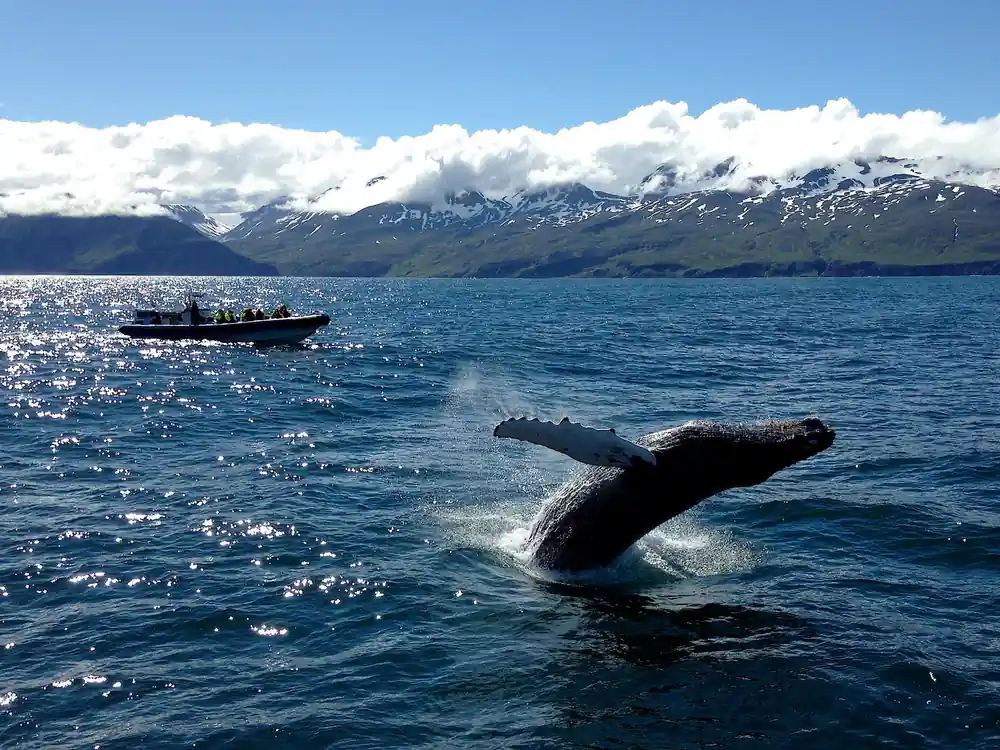
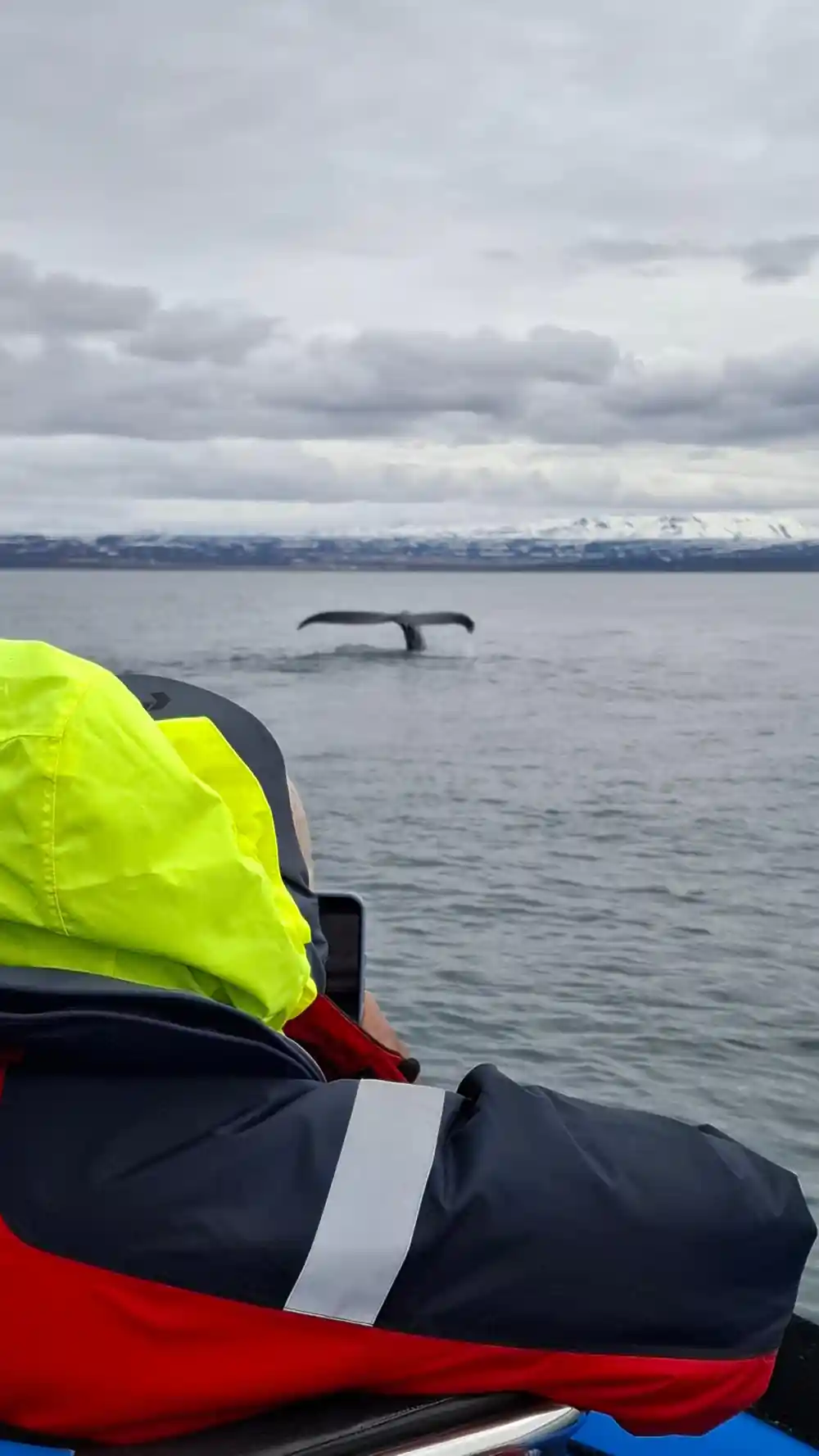
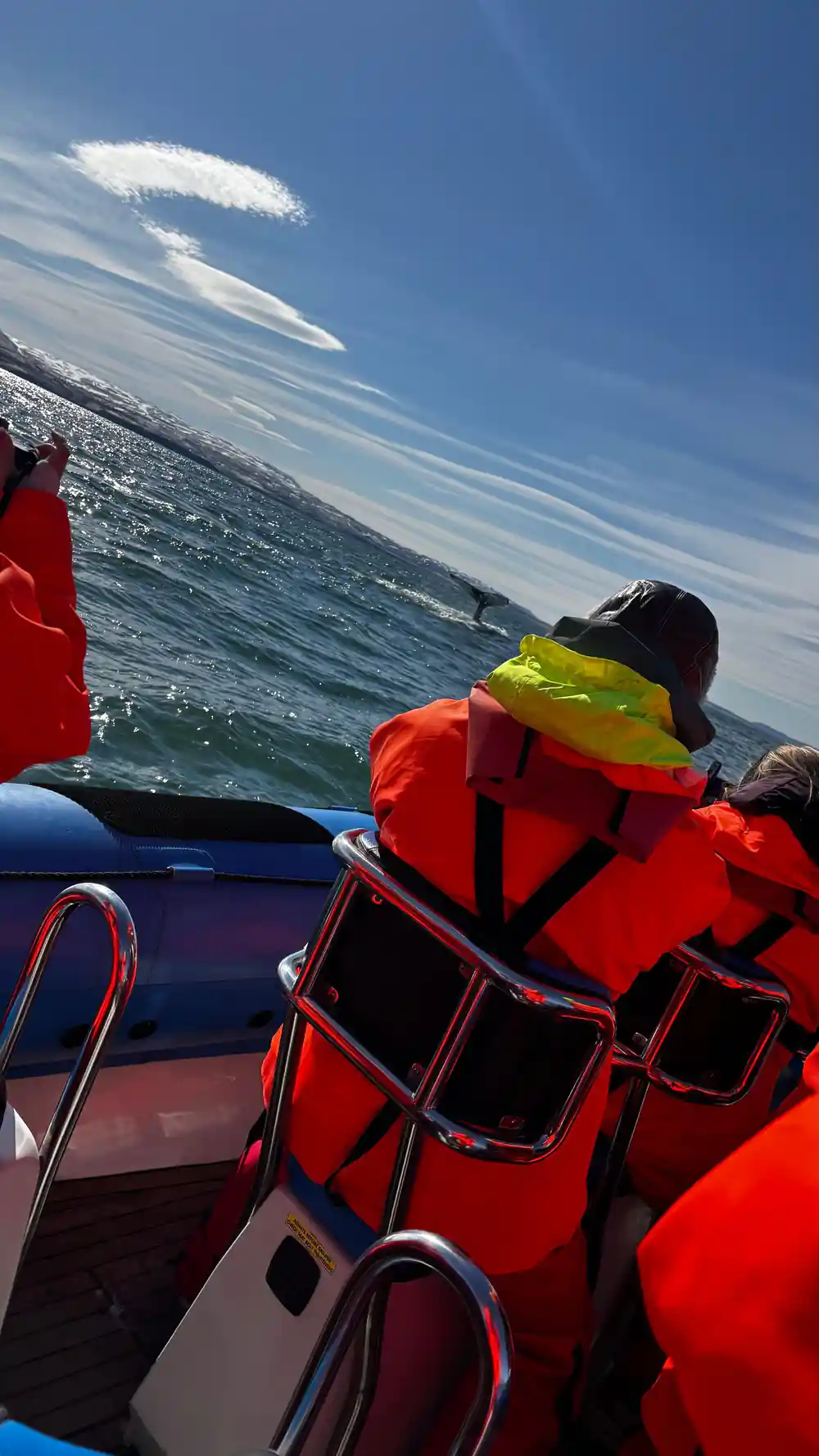
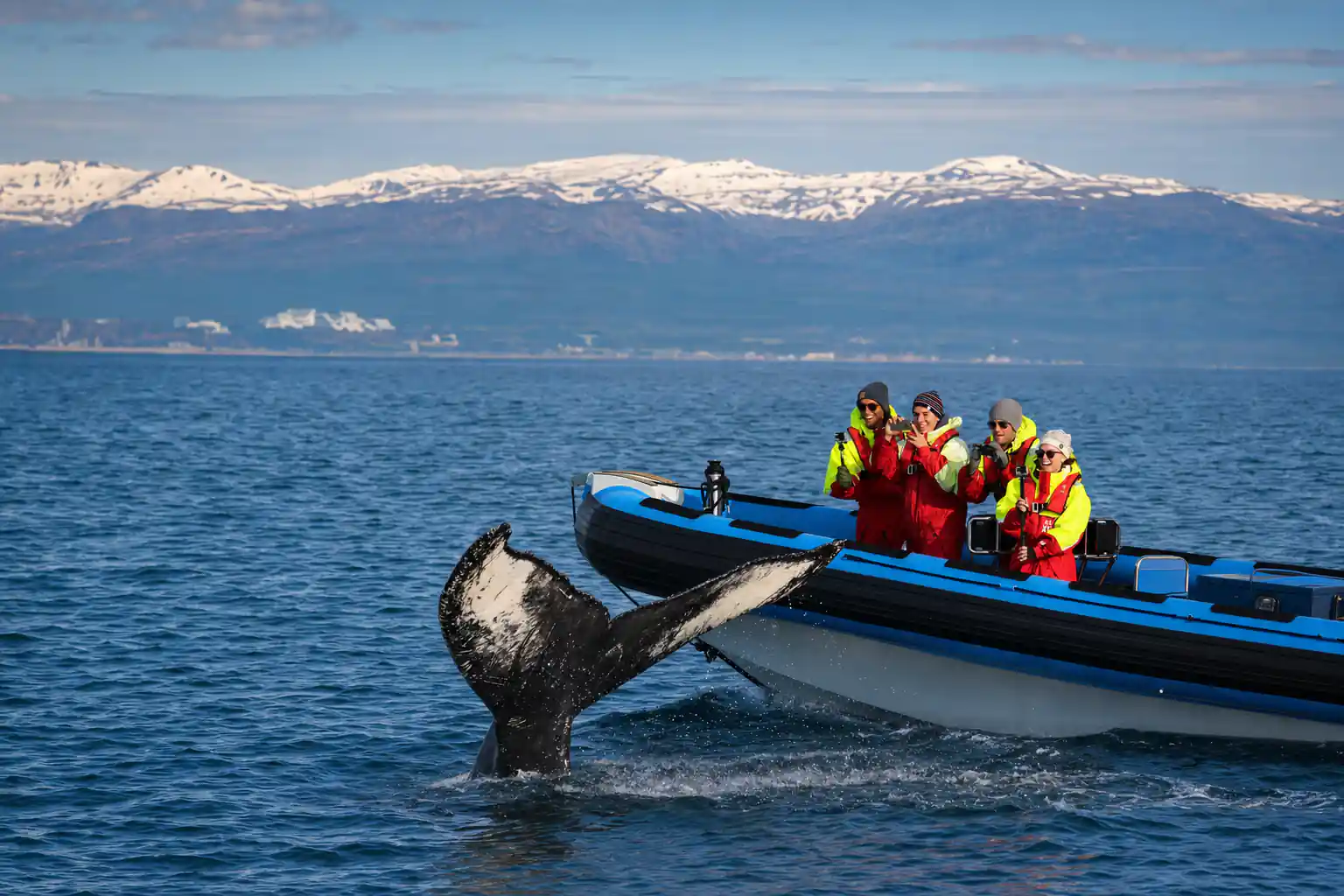
A Húsavík speedboat tour happens in the open air, and that shapes every packing decision you make. You travel on a rigid inflatable boat, sitting on the inflated tube with the sea close by and nothing overhead, so the layers you pull on at the harbour are the layers you keep for the whole trip. There is no cabin to step into and no door to close behind you, and the deck is small. The ride is quick: the RIB Express has a comfortable cruising speed of 32 knots, and at that pace the wind does most of the work on how cold you feel.[4] Ask your operator ahead of time what kit is handed out on the day, then plan your own clothing as if the outer layer is the only part you will not have to think about.
The Original Big Whale Safari & Puffins by Speedboat lasts 2 hours and stops at Husavik, Puffin Island and Skjálfandi.[1] Two hours sounds short on land and feels a good deal longer on a fast boat in the wind. Humpbacks in the Northern Hemisphere reach an average length of 49 to 52 feet, with mature adults weighing 50,000 to 80,000 pounds, and a whale that size looks enormous from a low RIB.[5] The small things do the work: a hat that stays on, gloves you can pull off with cold fingers, a bag that will not open on its own. The tour is rated 4.73 from 1,423 reviews, with prices from US$171.[1] Whatever you are handed at the dock goes over your own clothes, so build your outfit from the skin outwards.
Base and mid layers under the overalls
Think in three thin layers rather than one thick one. A thermal base layer in merino or synthetic fabric sits next to your skin, moves sweat away and keeps some warmth even when it is damp. Cotton does neither, and a wet cotton T-shirt under a suit is a miserable way to spend a boat trip. Over the base, a fleece or a light synthetic jacket adds warmth that a windproof shell cannot provide on its own. Thermal leggings under your normal trousers make a surprising difference too, because the wind on an open boat reaches your legs as much as your upper body.
Keep the middle layer snug rather than bulky. Thick padded jackets bunch up under a floatation suit and leave cold gaps at the wrists, neck and ankles, which is where the wind finds you first. Avoid heavy hoods that bunch at the back of the neck, and take a thin neck gaiter or a soft scarf you can tuck inside your collar. If the forecast looks marginal, add one more thin layer than you think you need. When the boat slows down to watch a whale you are standing still, and that is the moment you will be glad of it.
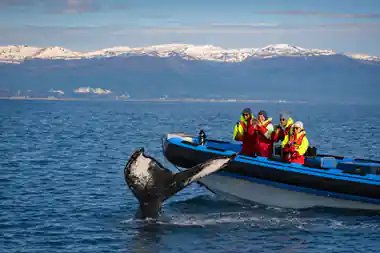
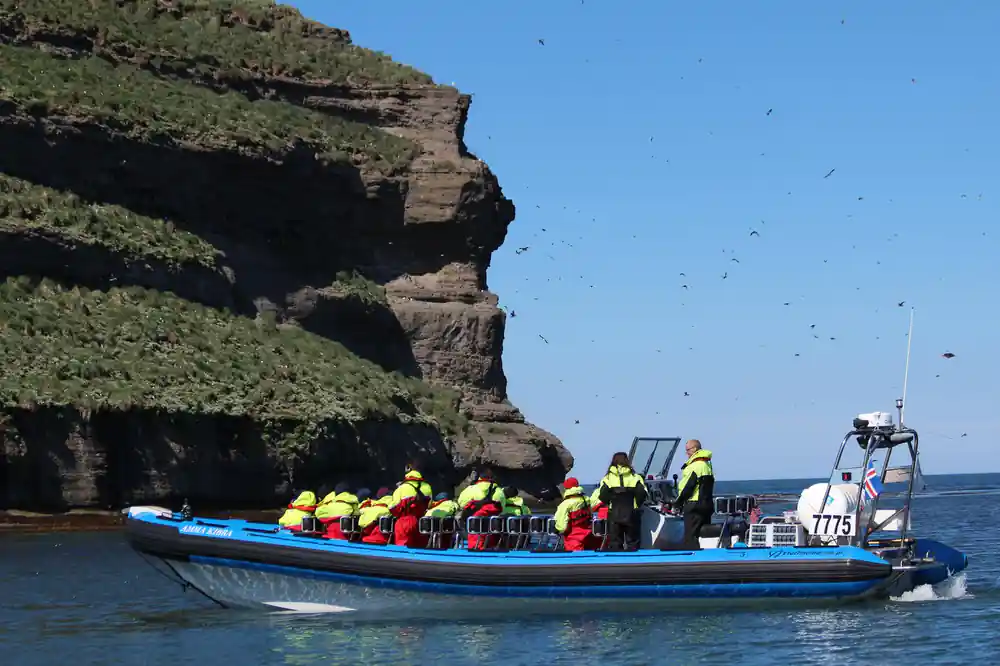
Yellow jackets on the tube of an open RIB, with the cliffs of Skjálfandi behind.
Footwear that grips a wet speedboat deck
Deck shoes, sturdy trainers or light hiking shoes with deep rubber treads are what you want. The deck is wet, often sloping and always moving underfoot, and a smooth fashion sole gives you nothing to hold on to. Leave sandals and flip-flops behind: cold feet arrive within minutes and there is nothing protecting your toes when the boat rolls. Boots with a chunky heel can catch on the tube as you step across, so low, flexible soles are easier to move in when the boat is turning.
Choose shoes you can pull on and off without sitting down for long, and pack a spare pair of socks in your dry bag. Spray comes over the tube when the boat picks up speed and damp feet turn cold quickly. Waterproof socks or neoprene booties earn their place on this kind of trip. If you have room, a second pair of dry shoes left at the guesthouse is a small luxury at the end of the day.
Hats, glasses and eyewear protection
Take a thin hat or a beanie that fits under the hood of whatever outer layer you wear, and add thin gloves to the same pocket. The average sea water temperature in Skjálfandi Bay rises to 8.8 C in summer, and the air over that water is what you are travelling across.[6] A buff or neck gaiter pulled up over your chin takes the edge off the first stretch of a trip. If you wear a scarf, tuck the ends inside your jacket where the wind cannot catch them, and remember that anything loose on deck is a small hazard as well as a loss.
Sunglasses need a strap or a floating retainer, because the moment you take them off with cold hands is the moment they go over the side. Glasses wearers should carry a microfibre cloth in a zip pocket for spray and condensation, and a spare contact lens case if that is your usual routine. Sunscreen and a lip balm with sun protection belong in the bag too; bright days on the water burn more than people expect, especially on faces turned into the wind.
from US$171
The Original Big Whale Safari & Puffins by Speedboat is the tour booked from this site, sailing to Puffin Island and Skjálfandi bay.[1]
Protecting cameras and phones at speed
Spray and speed are unkind to electronics, so put phones, cameras and spare batteries in a sealed dry bag or a heavy duty zip bag and close it between shots. A wrist strap on the camera and a lanyard on the phone cost almost nothing and save the day when a turn catches you mid photo. Keep a lens cloth and a spare memory card in the same bag so you are not hunting through pockets with wet hands. If you shoot with a phone, a small waterproof pouch on a cord is easier than a pocket when you are holding on with one hand.
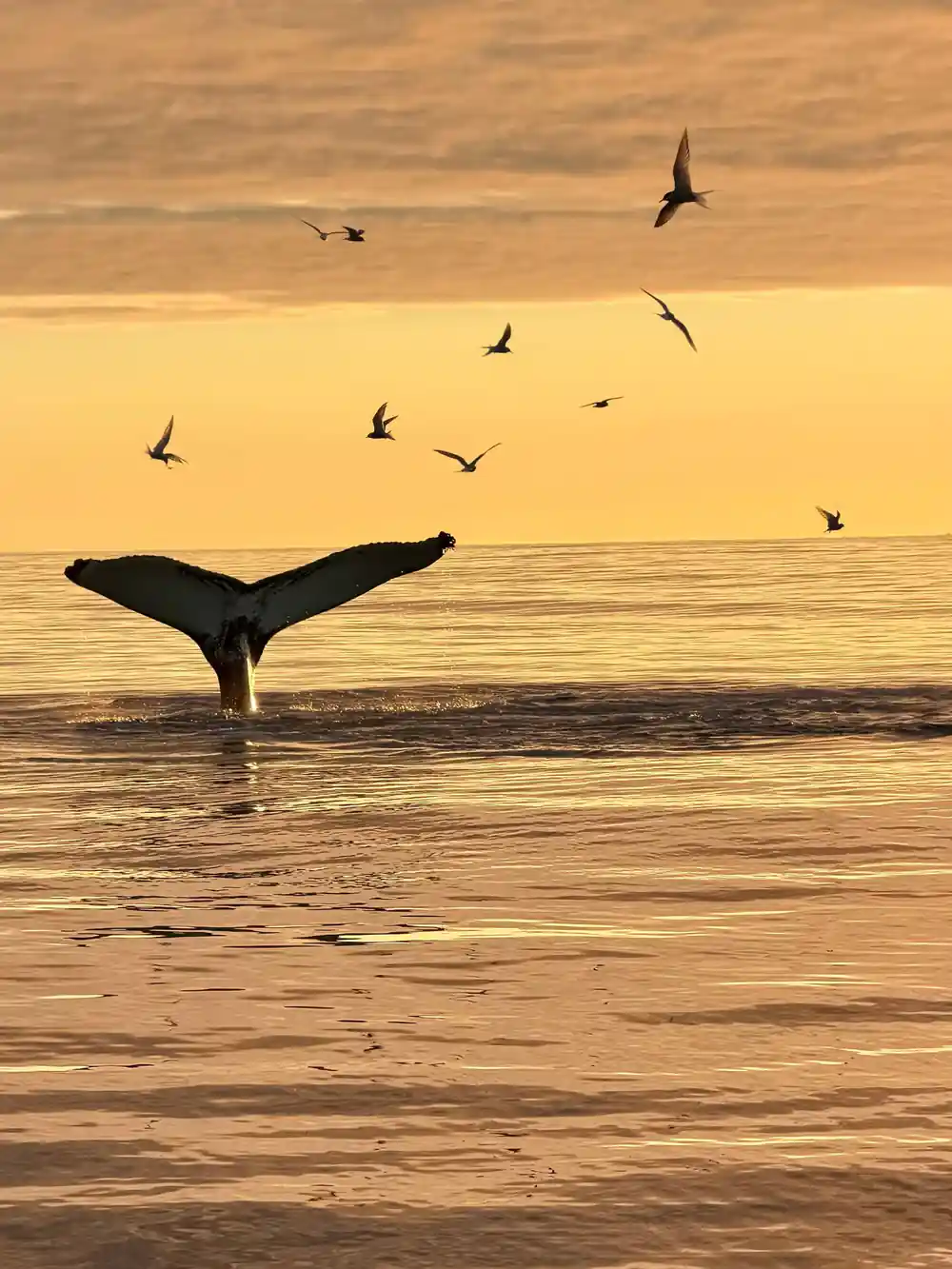
The wildlife is why the camera comes along. Puffin Island in Skjálfandi Bay is a nesting ground for around 36,500 active breeding pairs of puffins, and it is one of the stops on the speedboat route.[1][7] Photographing seabirds from a moving boat works better with a fast shutter speed and a short burst than with a very long zoom. A small pouch on a cord keeps a phone reachable for the wide shots of the bay and the mountains behind it.
Bags, snacks and personal items on the boat
Bring one small soft bag instead of a loaded daypack. There is no room to spread out on a RIB, and a stiff backpack with straps and buckles gets in the way as you move along the tube. Inside, pack a water bottle, a plain snack, any medication you take regularly, and a second pair of gloves for the return leg. Keep the bag small enough to sit between your feet or under the tube in front of you, and use zip bags inside it so that a splash never reaches the things that matter.
Húsavík is a small town, with a population of roughly 2,500, so buy what you need before you walk down to the harbour.[8] Leave tripods, big camera bags and anything you would hate to see soaked at your accommodation, and take only what fits in one bag you can hold on to. A small towel in a zip bag and some spare zip bags weigh almost nothing and solve most of the small problems a fast boat trip creates.
Seasickness prevention on a fast boat
A speedboat moves differently from a sailing boat. It is quicker and flatter, with sharp turns when the guide spots a blow, and that motion catches some people by surprise. If you know you are prone to motion sickness, take tablets or chew ginger well before you board rather than after you start to feel unwell, and give them time to work. Wristbands and acupressure bands are cheap to try and help some travellers, and a light meal before you sail sits better than a heavy one.
On board, sit where you can see the horizon, keep your head up and look at something fixed rather than down at a screen. Fresh air helps, so stay out on deck rather than tucked into a sheltered corner, and tell the guide early if you are struggling; they run these trips constantly and will look after you. Skjálfandi Bay is about 28 km wide at its widest point and about 25 km long, so there is usually room to shift position.[9]
Sailing time on Húsavík whale tours
Durations are as listed on each of these Húsavík tour listings.[1][2][3][10]
From prices on Húsavík boat tours
From prices in US dollars, per adult place, taken from these tour listings.[1][2][10][11]
When to book a Húsavík boat trip
Getting ready for the boat
Pick a sailing time you will enjoy
Morning trips tend to be calm and quiet, later trips come home in long northern summer light. Choose the one that suits how you handle early starts.
Check the forecast, not just the temperature
Wind and rain matter more than the number on a weather app. Pack for the colder of the two forecasts you see and you will be comfortable.
Dress in three thin layers
Thermal base, fleece or light synthetic mid layer, windproof outer layer. Leave cotton and thick padded jackets at the guesthouse.
Bag your kit before you leave
One sealed dry bag with phone, camera, spare socks, a small towel, water and a snack. Nothing loose stays on deck.
Eat plain and take tablets early
A light meal an hour or so before sailing, and motion sickness tablets before you board rather than after you start to feel unwell.
Ready to see Húsavík from a fast open boat?
from US$172Reserve now & pay later