The essentials
- Yes. Húsavík is where commercial whale watching in Iceland began in 1995, and North Sailing tours report a 97% overall sighting success rate in Skjálfandi Bay.[1][2]
- Book Húsavík: Original Big Whale Safari & Puffins by Speedboat from US$171, a 2-hour tour with a live English guide and free cancellation up to 24 hours in advance.[3]
- Lundey, or Puffin Island, hosts around 36,500 active breeding pairs of puffins, so there is almost always something to photograph near the cliffs.[4]
- At sea the average summer water temperature in Skjálfandi Bay is 8.8 C, and salt spray is the thing to respect. Give your camera the same waterproof protection you give yourself.[5]
- From May through August nights stay bright across Iceland, which means long evenings for photography and flexible tour times.[6]
- Top choice Original Big Whale Safari from US$171 Duration2 hours[3]Rated4.73 from 1,423 reviews[3]Live guideEnglish[3]FlexibilityFree cancellation[3] Check availability
- Puffin Island Speedboat from US$164 Duration2 hours[7]Rated4.83 from 1,059 reviews[7]Live guideEnglish[7]FlexibilityFree cancellation[7] See this tour
- Whale Watching with Guide from US$99 Duration3 hours[8]Rated4.63 from 2,958 reviews[8]Live guideEnglish[8]FlexibilityFree cancellation[8] See this tour
Look for boats , especially if they are stopped. Sometimes the best way to find marine mammals is to find the other people who are watching them.
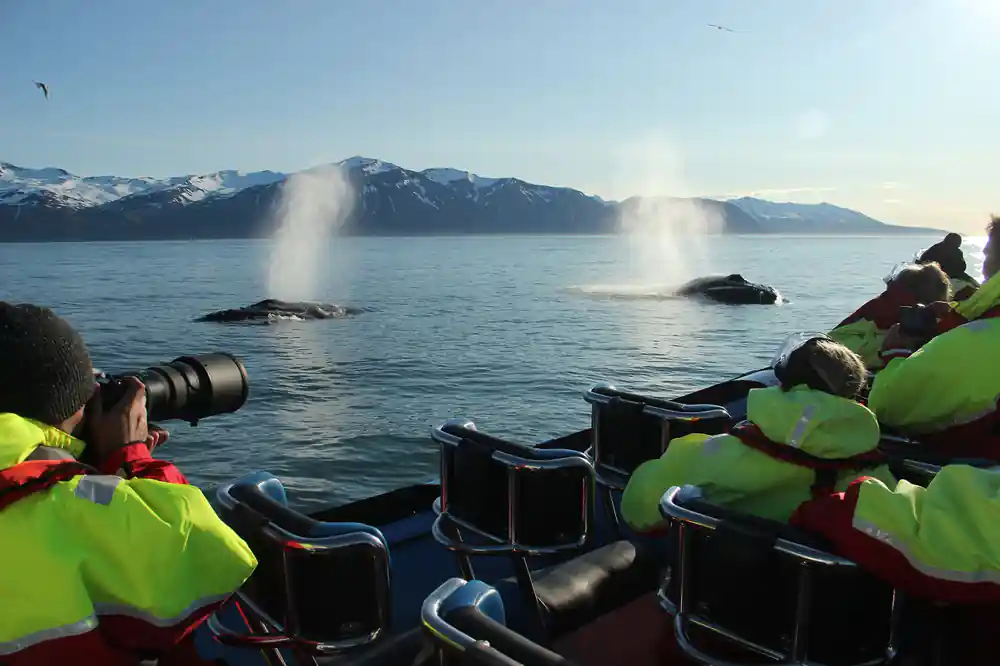
Photograph from the RIB, but keep your priorities straight
Pack for the RIB
- Sunglasses, sunscreen and a warm hat fit in a small dry bag.
- Sea water sits at 8.8 C in summer; dress for cold spray.[5]
- Carry your booking confirmation and photo ID.
- A rain cover or dry bag is your camera's best friend.
Things to check
Lens choice for shooting from a moving RIB
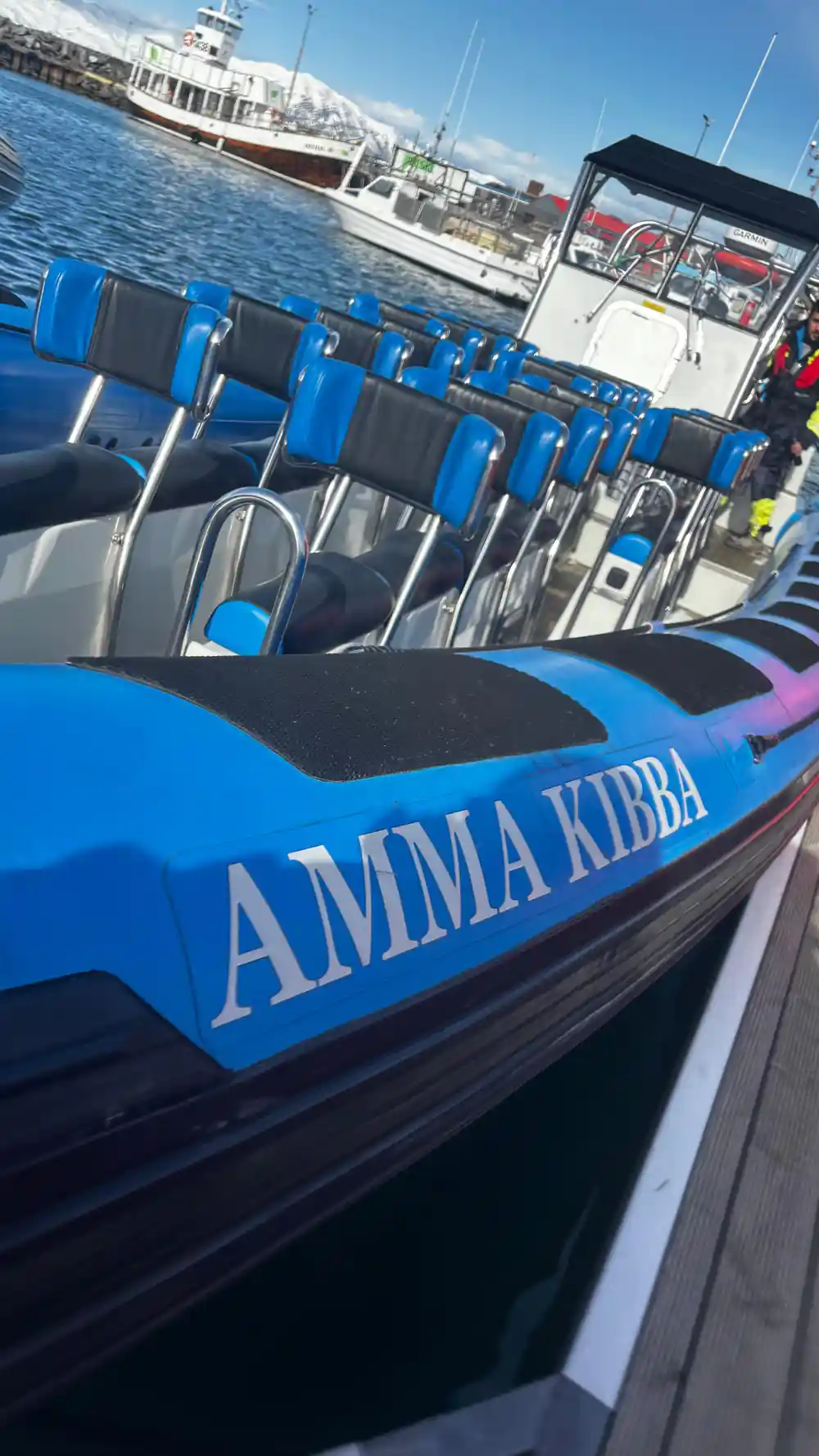
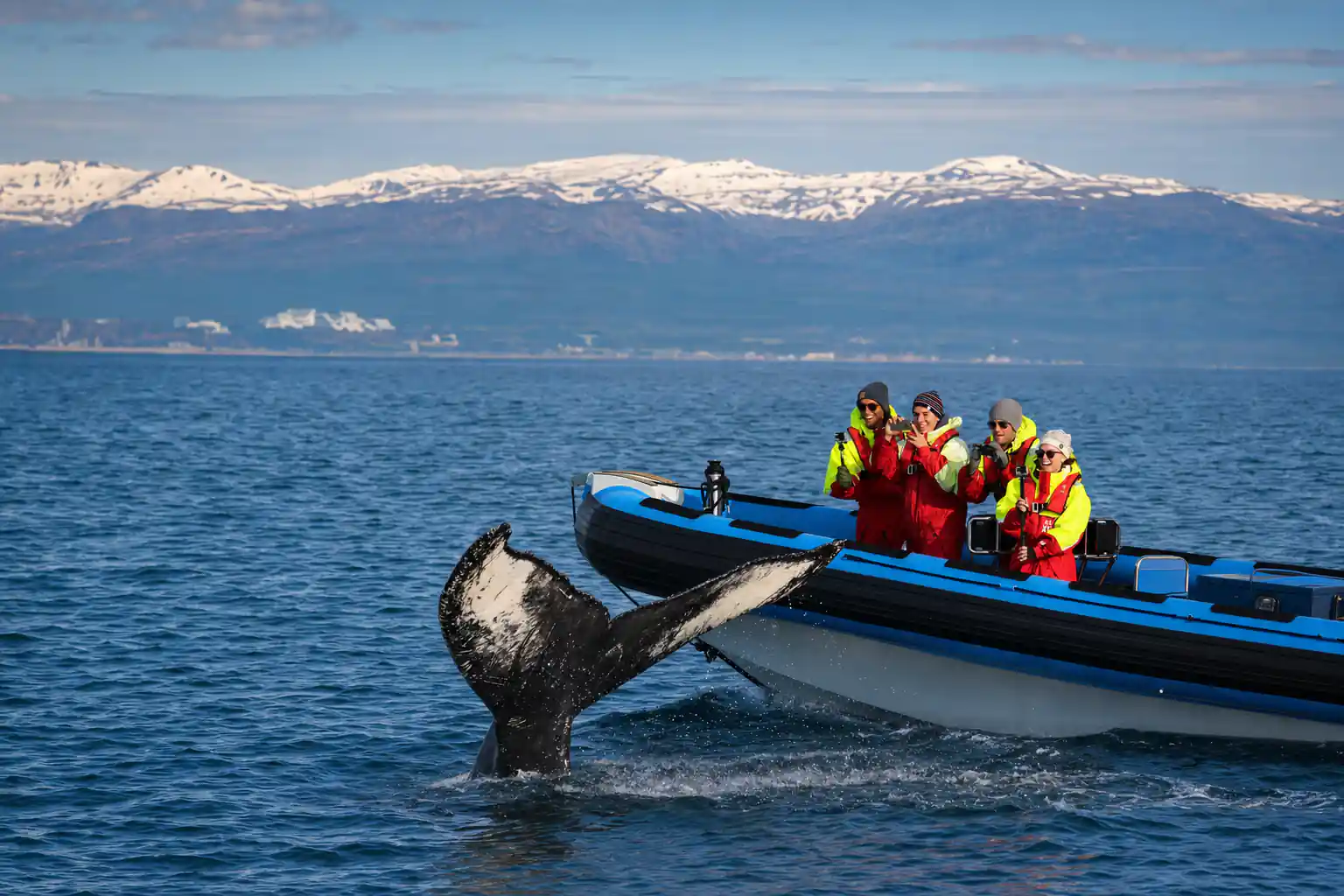
Húsavík is a small harbour town of roughly 2,500 people, and it is where commercial whale watching in Iceland began in 1995.[1][9] From the dock, Skjálfandi Bay opens out about 28 km wide and about 25 km long, a restless sheet of grey-blue water with mountains along the far shore and puffin cliffs guarding the way out.[10] On a RIB you feel that scale quickly, because the boat covers ground fast and the harbour shrinks behind you. The boat does most of the work for you. Your first job is simply to stay ready while the guide watches the water and the other passengers scan the horizon for blows.
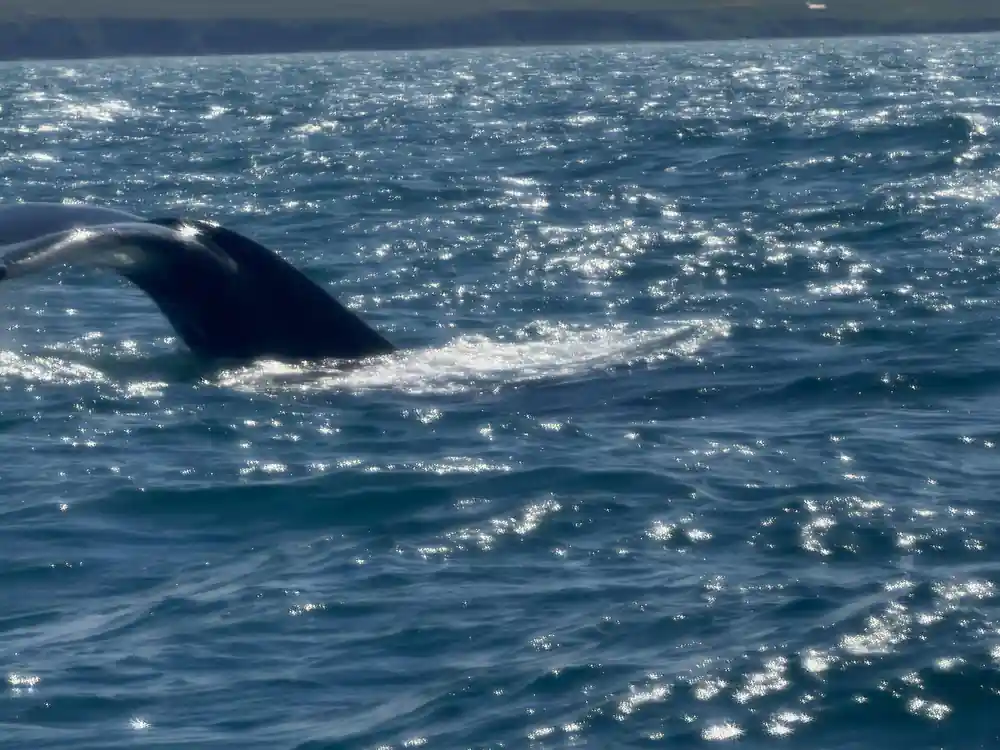
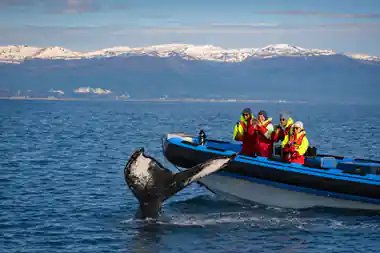
A versatile telephoto zoom is the practical choice from a moving RIB. It gives you enough reach for a humpback's back and fluke without making you swap lenses when the boat is rocking. Keep the lens hood on to shade the glass and block spray. If your camera has a stabilised kit zoom, use that too; sharpness matters more than millimetres when the deck is moving under your feet. The best lens is the one you can raise quickly, brace, and fire in short bursts.
Protecting your camera from salt spray and cleaning it after
Salt spray is the real enemy. The average sea water temperature in Skjálfandi Bay in summer rises to 8.8 C, and the fine mist that comes off the bow dries into a salt film that can dull any lens.[5] A clear filter screwed onto the front of your lens gives you one easy surface to wipe, and a microfibre cloth in a zip pocket will be used far more often than your spare battery. Keep the camera tucked inside your jacket between sightings if the sea is rough, and remember that cold hands fumble. A wrist strap is worth more than any camera bag on a boat like this.
At the end of the trip, do not let the camera dry with salt on it. Use a barely damp cloth to wipe the body and lens barrel, then let everything dry at room temperature before you put the caps back on. If your camera is not weather-sealed, a simple rain cover from a photo shop can make the difference between a working camera and a repair bill. On a RIB you are moving with the sea, and the most dangerous moment is not the wave over the bow; it is the fumble when you try to swap lenses at a cruising speed of 32 knots.[11]
Wipe the outside of the lens barrel as well, and check the filter thread, which is where salt likes to sit. A small towel in your bag is never wasted on a boat, and it doubles as a wrap for a spare battery. Dry everything before you put the caps back on.
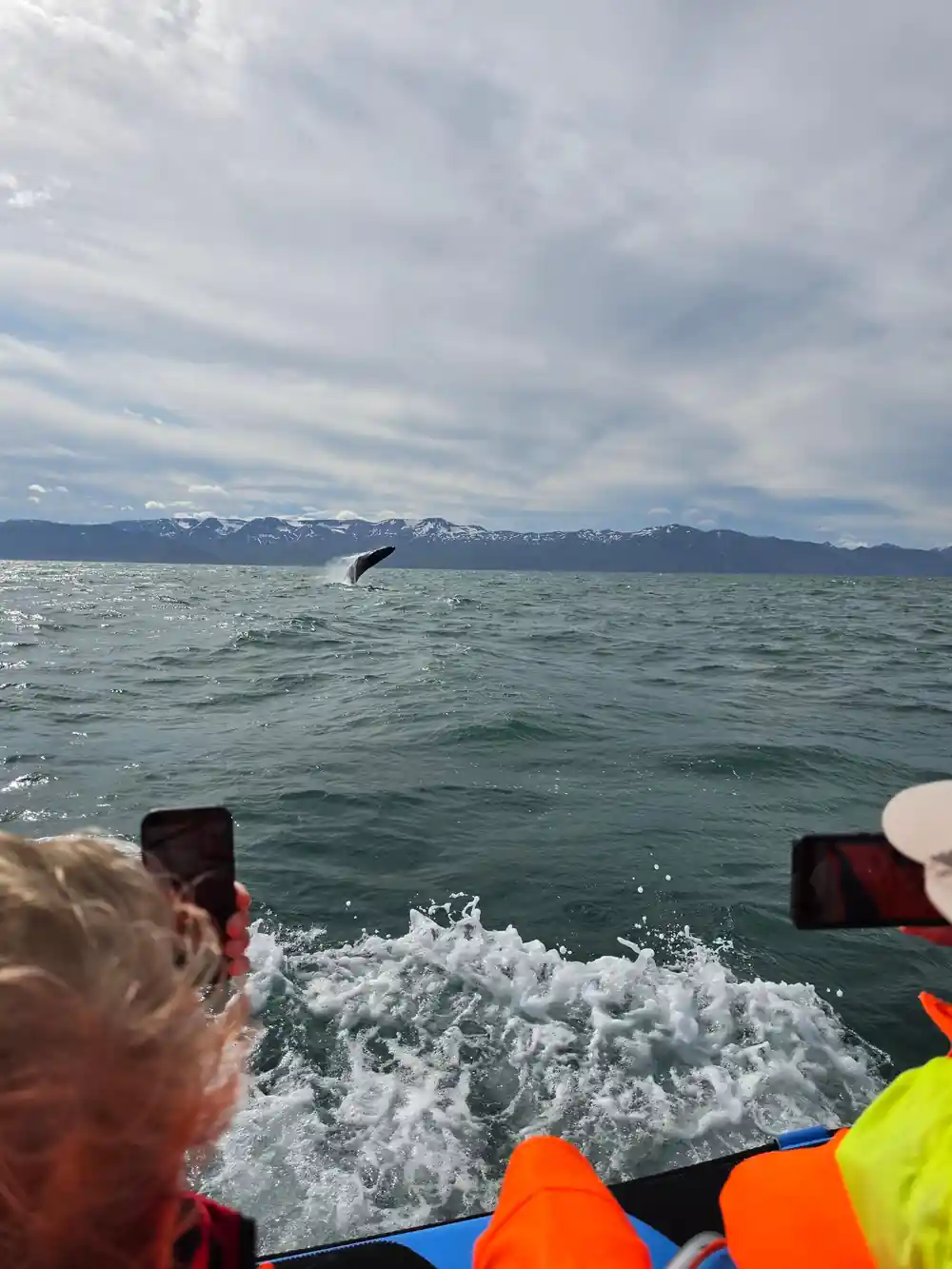
A RIB slows near a puffin cliff on Lundey while passengers watch for blows.
Camera settings to freeze a breaching humpback
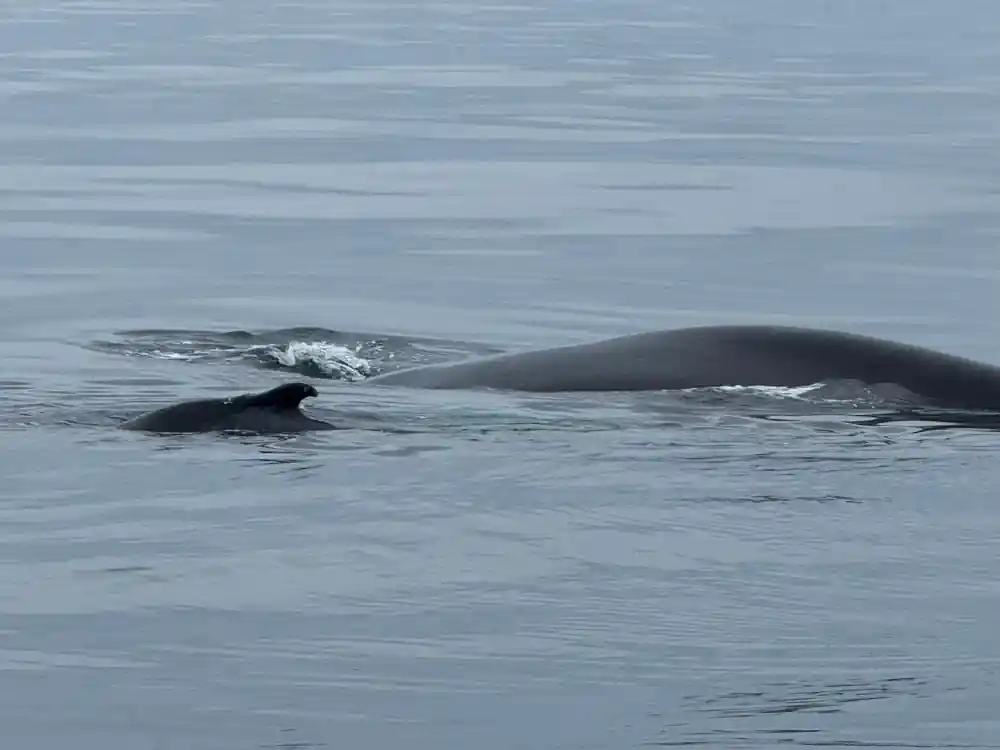
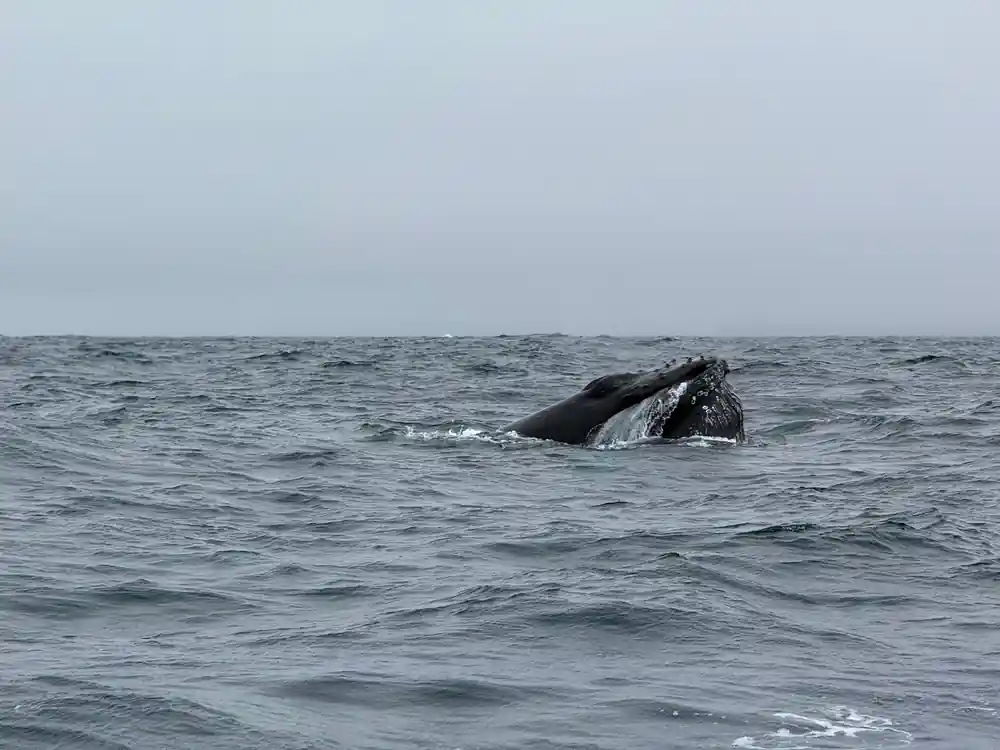
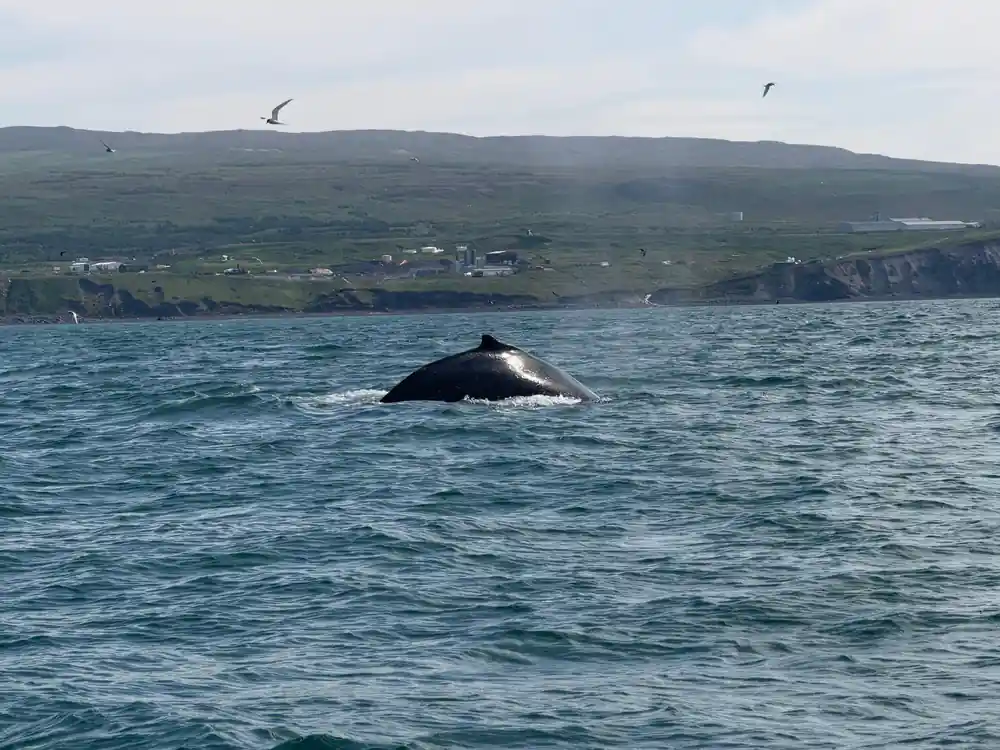
The classic shot is a humpback breaching. Northern humpbacks average 49 to 52 feet long, and mature adults weigh 50,000 to 80,000 pounds, so when one leaves the water the event is enormous but brief.[12] Choose a fast shutter speed and a wide aperture, and let the camera's autofocus track the whale while the boat does its own slow drift. You may not get the perfect frame on the first breach, but bursts give you a second chance. Set your camera before you leave the harbour, because nobody has time to dig through menus when a whale is in the air.
North Sailing reports a 97% overall whale sighting success rate in Skjálfandi Bay since 1995.[2] That means your camera should be switched on and your settings locked in before the guide slows down. Raise the shutter speed whenever the light allows, and do not spend the whole trip looking at the back of the screen. The whale does not wait for you to check your histogram. When the water erupts, you want to be watching, not reviewing. If you only come home with one sharp frame, make it the one where the whole animal is still in the air.
Using a smartphone safely at speed
A smartphone can work well on a calm day. Keep it in a lanyard case around your neck or inside a waterproof pouch, because wet hands and a hard deck are a bad combination. Use the phone's burst mode for action, clean the lens with a soft cloth before you start, and turn off notifications so the screen stays clear. At speed, video is tempting, but a moving RIB makes stable footage hard; short clips filmed during a pause are more useful than minutes of shaky horizon.
If you are travelling with someone who is not photographing, ask them to hold the phone while you manage the camera, or swap roles halfway so you both get a turn. Bright nights from May through August mean you can sometimes shoot late into the evening.[6] The day does not end at sunset, so save some battery for the long light. A phone shot taken from a RIB can be lovely, but it will not replace the feeling of a proper camera in your hands when a whale rolls alongside the boat.
from US$171
Original Big Whale Safari & Puffins by Speedboat gives you 2 hours in Skjálfandi Bay with a live English guide and free cancellation up to 24 hours before departure.[3]
Drone regulations and what you cannot bring
You cannot fly a drone from the boat. Operators run tight schedules, a drone is a safety risk to passengers, and there is no need for one when the boat is already close to the action. Leave it at home, or use it in town where local rules allow, but never launch over groups of people or wildlife. By the time you have a drone in the air, the puffins have usually moved on anyway, and a shot from height rarely beats the view from the water.
A speedboat safari is not the place for extra gear. The tour includes 2 hours on the water, and there is little dry space for a backpack full of camera bodies.[3] Choose one camera, one or two lenses and the smartphone in your pocket. You will move faster, keep your balance better and worry less about the salt. The simpler your kit, the more you will actually shoot, and the fewer things you will have to hold when the boat turns.
Ask before you pack anything unusual. Operators list what a tour includes, and a RIB has no room for a tripod or a large shoulder bag. If photography is the main reason for your trip, say so when you book, arrive early at the harbour, and take the seat that gives you the clearest view of both sides of the boat. Small preparations like these often matter more than an expensive lens.
Binoculars: complement your camera, do not replace it
Binoculars are a complement, not a substitute. On a RIB, the guide is usually calling out directions, and everyone can see the whale's blow or a disturbance in the water before the boat turns. If you have good eyes, keep both hands on the camera and let the guide spot, because your job is to be ready. One of the best ways to find marine mammals is to look for other people who are watching them, especially stopped boats, so the sea itself tells you where to point.[13]
If you do bring binoculars, choose compact ones that hang from a neck strap, and keep them low so spray does not collect on the front glass. There is plenty to scan for: whales, dolphins, seals and seabirds share the bay, and North Sailing tours can encounter up to 11 cetacean species.[2] But when the boat stops, drop the binoculars and lift the camera. The moment you hesitate is the moment the fluke goes under, and the guide will not wait for you to get organised.
How close puffins come and when to stop shooting
Puffins are the easy subject. Lundey, or Puffin Island, in Skjálfandi Bay is a nesting ground for around 36,500 active breeding pairs, so the birds are everywhere in season.[4] From a RIB the boat cannot thread through the colony the way a kayak can, but the skipper will usually pause at a respectful distance. That is the time to photograph the cliff ledges and the birds wheeling in the air. A telephoto zoom does the rest, and a fast shutter freezes wings that beat quickly enough to blur in the frame.
Know when to stop shooting. When puffins are coming in to land, a sudden boat movement or a shouted instruction can flush the whole ledge. Put the camera down, watch the birds, and let the guide decide when it is safe to leave. A good photograph is not worth stress to a colony that still has chicks to raise. Some of the best moments of a whale watching day are the ones you only watched, and the picture in your head stays sharp for years. Give yourself a minute at the end of the trip to look back at the cliffs and simply enjoy the scene without a viewfinder.
Average sea water temperature in Skjálfandi Bay by season
Average sea water temperature in Skjálfandi Bay by season.[5]
Compare US dollar from-prices for Húsavík tours
From-prices in US dollars from GetYourGuide tour listings.[3][7][8][14]
When to book your RIB photo day
Ready for the RIB
Choose the safari
Book the Original Big Whale Safari & Puffins by Speedboat from US$171.[3]
Pack light
One camera, a dry bag and a lens cloth. Leave the drone and heavy backpack on shore.
Dress for spray
Sea water averages 8.8 C in summer, so wear waterproof layers.[5]
Listen to the guide
The guide scans for whales while you frame. Be ready before the boat slows.
Shoot in bursts
Use a fast shutter and short bursts when a whale surfaces or a puffin flies.
See a humpback from a RIB in Húsavík and bring home the shot.
from US$172Reserve now & pay later