The essentials
- The ring road links Akureyri and Húsavík through farm country and over a mountain pass, with the sea in view for much of the way north.
- Give the drive north a full day or break it with a night on the road, and check conditions before you set off in winter.
- Fly or take a bus to Akureyri, then use a scheduled service or a booked transfer for the northern stretch into Húsavík.
- Húsavík has a population of roughly 2,500[1], and the harbour, museum and guesthouses all sit close together.
- Fast boats run out to Puffin Island and Skjálfandi Bay. Summer water in the bay averages 8.8 C[2], and warm layers make the difference.
- Top choice Original Big Whale Safari from US$171 Duration2 hours[3]Rating4.73 from 1,423 reviews[3]GuideLive guide, English[3]CancellationCancel up to 24 hours ahead[3] Check availability
- Big Whales & Puffin Island from US$164 Duration2 hours[4]Rating4.83 from 1,059 reviews[4]GuideLive guide, English[4]CancellationCancel up to 24 hours ahead[4] See this tour
- Original Whale Watching from US$99 Duration3 hours[5]Rating4.63 from 2,958 reviews[5]GuideLive guide, English[5]CancellationCancel up to 24 hours ahead[5] See this tour
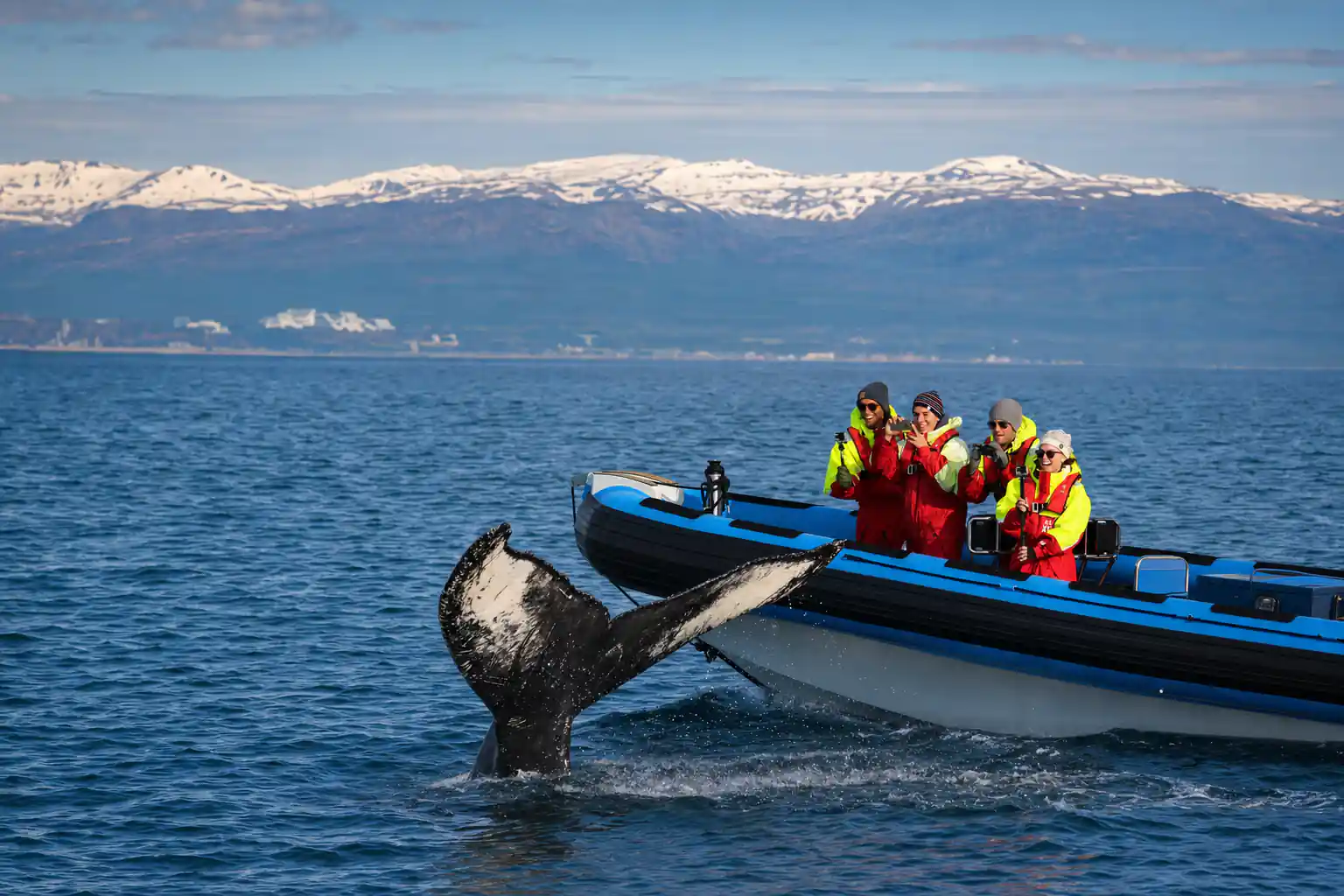
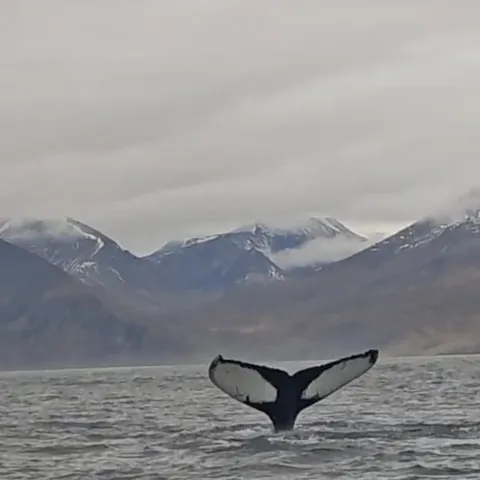
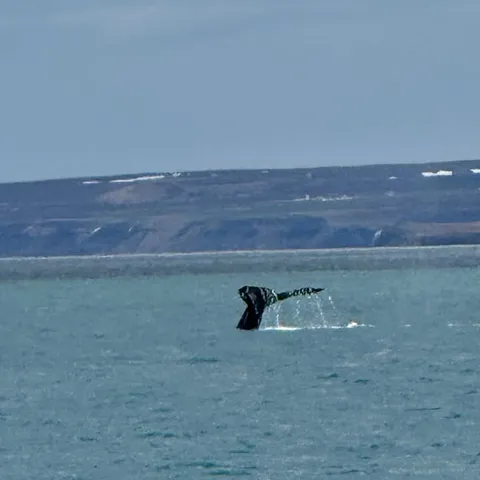
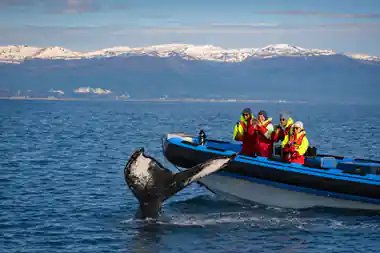
Commercial whale watching in Iceland began here in 1995, and the town's reputation as Iceland's whale-watching capital has only grown since.
Getting to Húsavík without wasting a day
On the way there
- Drive: the ring road from Akureyri runs north through farm country and over a pass to the coast.
- Bus: scheduled services connect Akureyri and Húsavík, with limited departures on most days.
- Time it right: build your drive or transfer around your sailing time, not the other way round.
- Fuel: fill up in Akureyri, where stations are easy to find before the northern stretch.
On the water
- Cold water: the summer average in Skjálfandi Bay is 8.8 C[2], and spray makes it colder.
- Long light: the midnight sun keeps nights bright from May through August.[6]
- Flexible plans: free cancellation up to 24 hours in advance.[3]
- Safety first: listen to the crew briefing and hold the rail when the boat is moving.
Where Húsavík sits on Skjálfandi Bay
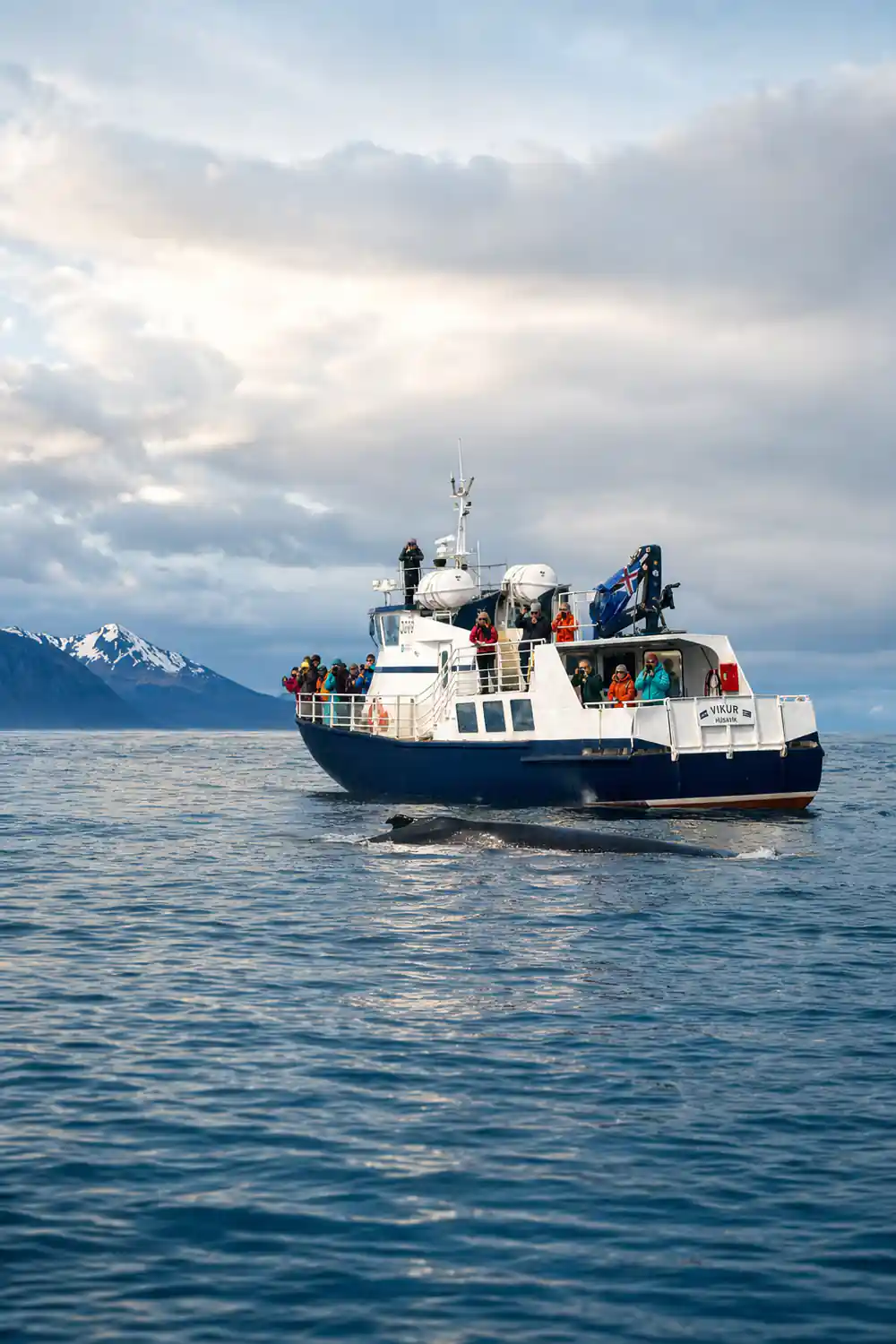
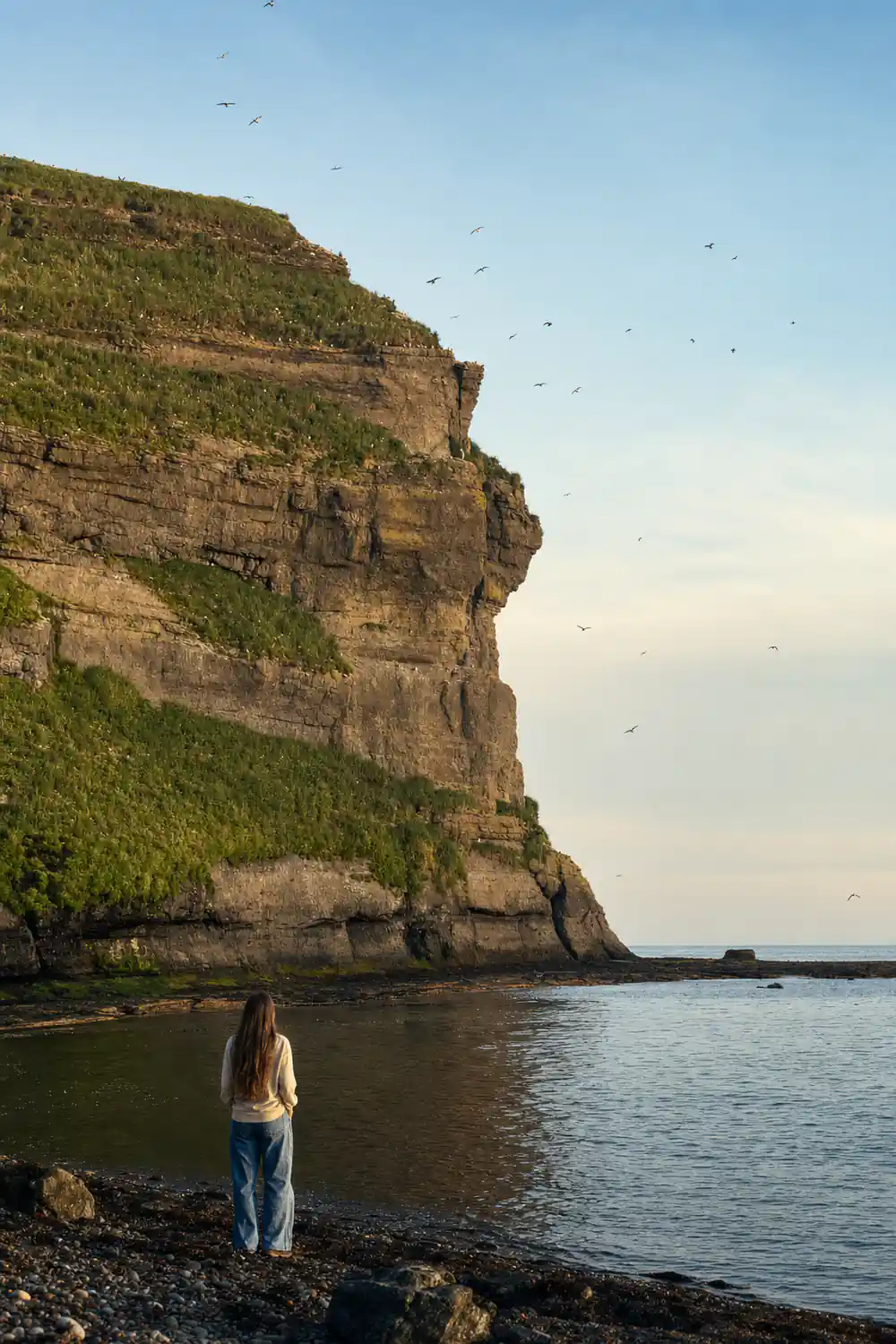
Húsavík sits on the north coast of Iceland, on the eastern shore of Skjálfandi Bay, a broad and sheltered body of water that opens north towards the Greenland Sea. The bay is about 28 km wide at its widest point and about 25 km long.[7] Snow covered mountains stand along the far side of the water, and they usually stay in view for the whole of a whale watching trip, framing the boat, the birds and the occasional spout.
The town has a population of roughly 2,500.[1] Almost everything a visitor needs sits within easy walking distance of the harbour: the ticket offices, the whale museum, cafes, guesthouses and a geothermal swimming pool. Commercial whale watching in Iceland began in Húsavík in 1995.[8] The name means 'the house bay', and the Settlement Book records that Garðar and Náttfari set up their winter camp in Skjálfandi Bay and built a house here.[9]
This is a working harbour town rather than a resort. Fishing boats still use the docks, the church stands on the hill above the bay, and the centre is compact enough to walk end to end without hurrying. Coming in by car, you will see the harbour signed as you drop down towards the water, and the whale watching offices are clustered around it.
Akureyri to Húsavík: the drive north
The usual approach to Húsavík is from Akureyri, the largest town in the north and the natural base for this corner of Iceland. You leave Akureyri on the ring road, run along the shore of Eyjafjörður and then turn inland up a broad valley of birch woods and farmland, climbing to a pass before the land opens out again towards the north coast.
The second half is the part people remember. The road comes down towards Skjálfandi Bay, passes small farms and a village or two, and finally drops into Húsavík with the church on the hill and the harbour below it. Fuel up before you leave Akureyri; filling stations thin out on this stretch and the weather over the pass can close in quickly.
If you are heading straight to a boat, allow time to park and walk to the harbour. Sailing times are shown when you check availability on the listing; book first, then build the drive around that time rather than guessing.[3] A short buffer also covers the usual northern surprises: roadworks, a flock of sheep, and a photo stop you had not planned.
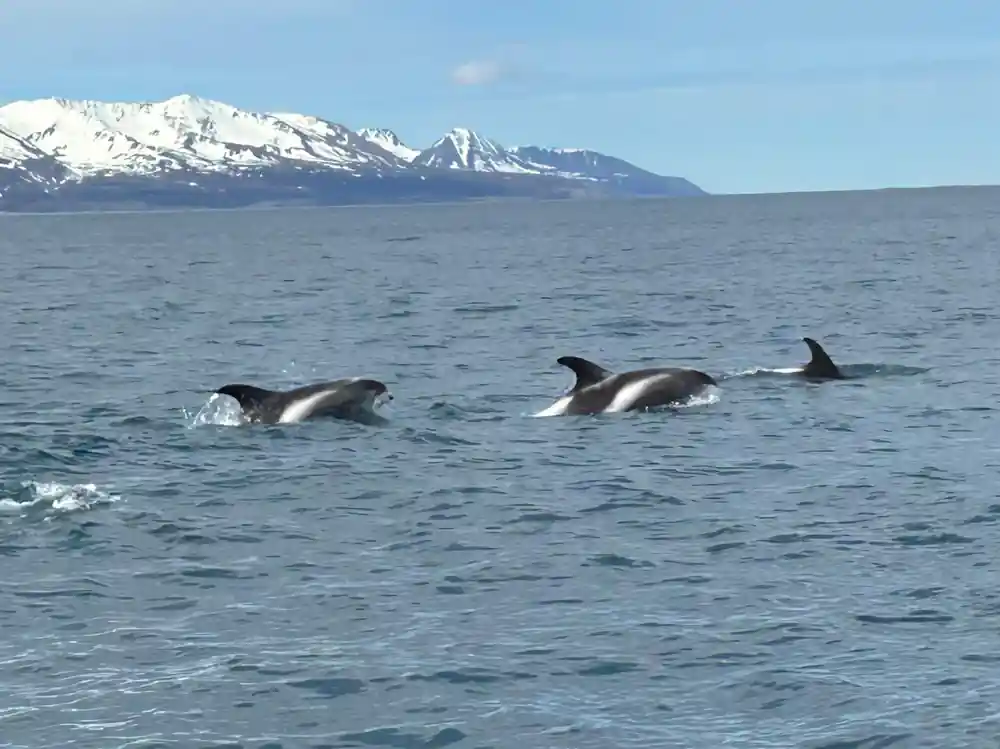
Snow covered mountains across Skjálfandi Bay, seen from the harbour at Húsavík.
Reykjavík to Húsavík by car
Anyone wondering how far is Húsavík from Reykjavík should treat the journey as a proper drive rather than an afternoon outing. The route follows the ring road north and west of the capital, through Borgarfjörður, across the high moorland at Holtavörðuheiði, down into Skagafjörður and on through the north to Akureyri and the coast beyond.
A common plan is to split the journey with a night on the road. Stop around Borgarnes, Staðarskáli or Sauðárkrókur, then give the northern stretch a day of its own and arrive in Húsavík with an afternoon free. That leaves room for a detour to Goðafoss beside the ring road, or east to Mývatn and its lava fields.
Driving in Iceland is rarely difficult, but it is slow. Single lane bridges, gravel shoulders, sheep on the road and sudden fog all ask for patience, and a line on the map says very little about how long a stretch will really take. In winter, or in any spell of bad weather, passes can close at short notice; check road conditions before you set off and keep the plan flexible.
Flying, buses and transfers
Not everyone wants to drive the northern roads. Domestic flights link Reykjavík with Akureyri, and from there you can hire a car, take a bus or arrange a transfer for the last stretch to Húsavík. Buses also run between Akureyri and Húsavík, though the timetable is sparse and often tied to working days.
Another approach is to let someone else do the driving. Day tours from Akureyri often combine the road north with time in the bay, and some visitors base themselves in the town and come up for the day. Travelling independently instead, the practical combination is a flight or a bus to Akureyri plus a car hire for the final leg.
Whichever you choose, the boats leave from Húsavík harbour; aim to be in town with time to spare. The Original Big Whale Safari & Puffins by Speedboat, for example, starts in Húsavík and runs out to Puffin Island and Skjálfandi Bay.[3] Give yourself a buffer, and a delayed flight or a slow bus will not cost you your seat.
from US$171
Rated 4.73 from 1,423 reviews, the Big Whale Safari speedboat runs from Húsavík to Puffin Island and Skjálfandi Bay.[3]
What to see on the way
The north rewards a slow approach. Goðafoss is a broad horseshoe of water right beside the ring road, and the Mývatn area beyond it has lava fields, pseudocraters, steaming ground and a bird life that keeps binoculars busy. Dettifoss, reached by a side road, is a thundering wall of water in a bare grey canyon. All three work as stops on the way rather than destinations in themselves.
Closer to Húsavík, the GeoSea Geothermal Sea Baths sit on the cliffs at Húsavíkurhöfði just outside town, with seawater from geothermal boreholes held at 38 to 39 °C year round.[10] It is a fine place to warm up after a cold morning on the water, and the view over the bay is worth lingering for.
In town, the Húsavík Whale Museum was founded in 1997 with the aim of giving detailed and interesting information about whales and their habitat.[11] The exhibits pair well with a boat trip, particularly if you are travelling with children who want to know what they are looking at. A wander around the harbour afterwards is the easiest way to finish the day.
Whale watching in Skjálfandi Bay
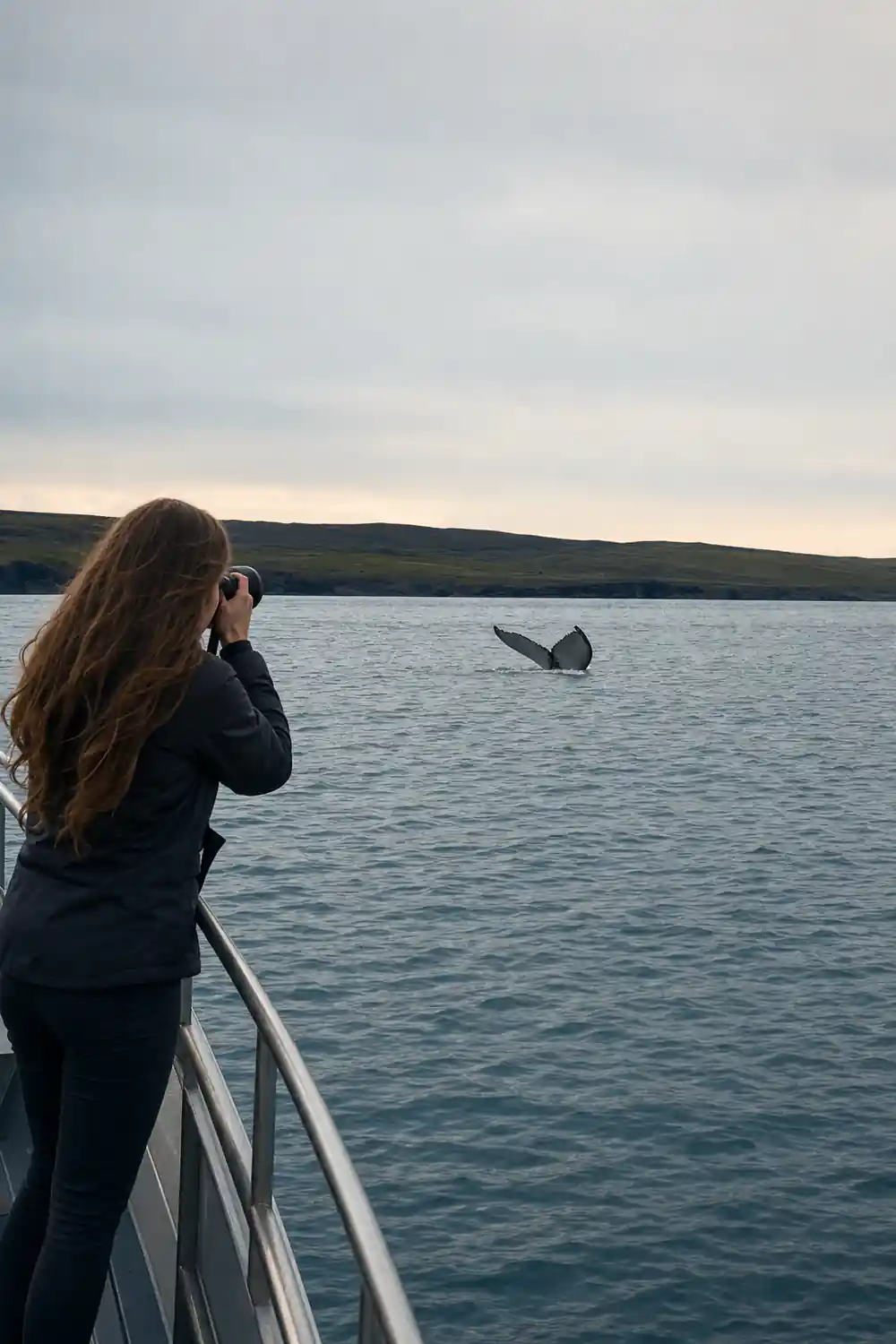
Skjálfandi Bay is what draws travellers north, and the record here is unusual. North Sailing reports a 97% overall whale sighting success rate for its Húsavík tours, based on sightings in the bay since 1995.[12] On those tours there is a chance to encounter up to 11 different cetacean species.[12]
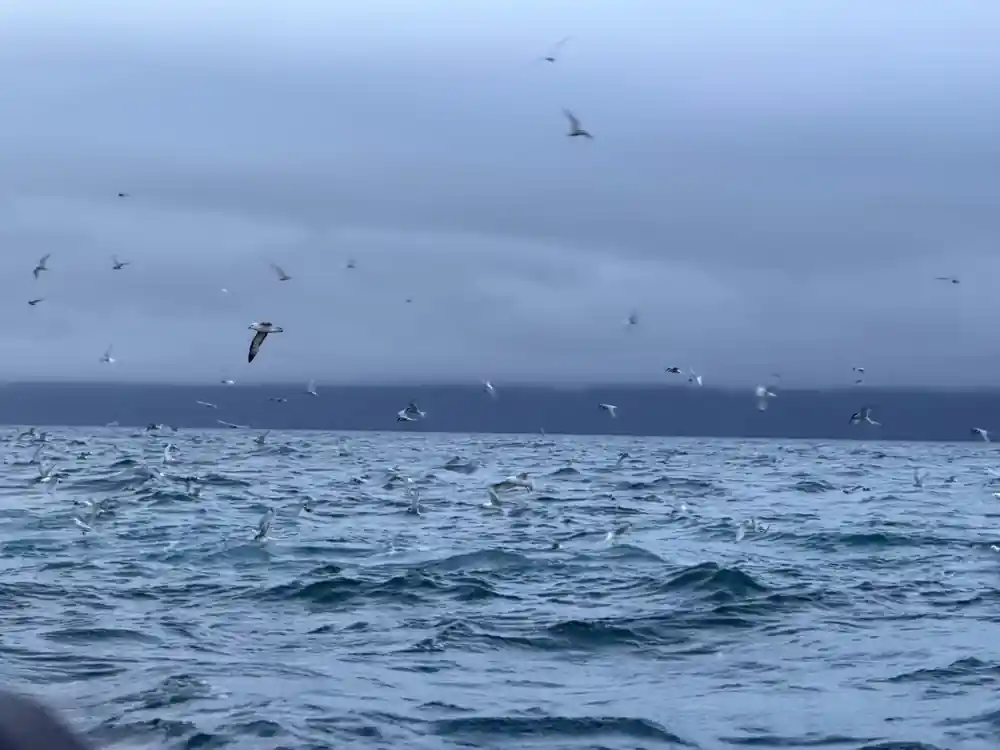
Humpback whales are a highlight of the bay. Those in the Northern Hemisphere average 49 to 52 feet long, and mature adults weigh 50,000 to 80,000 pounds.[13] Puffins are the other draw. Lundey, known as Puffin Island, is a nesting ground for around 36,500 active breeding pairs.[14]
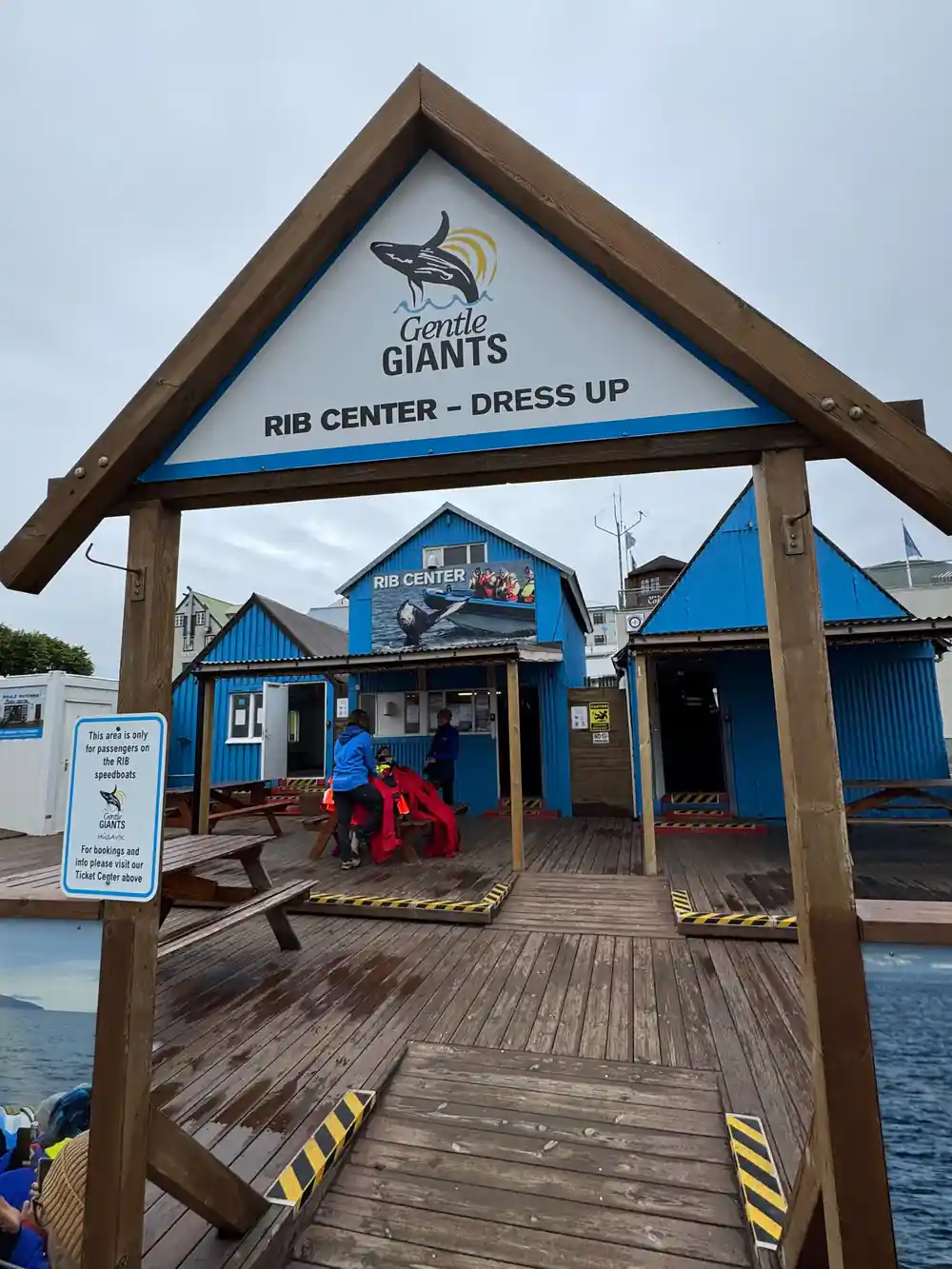
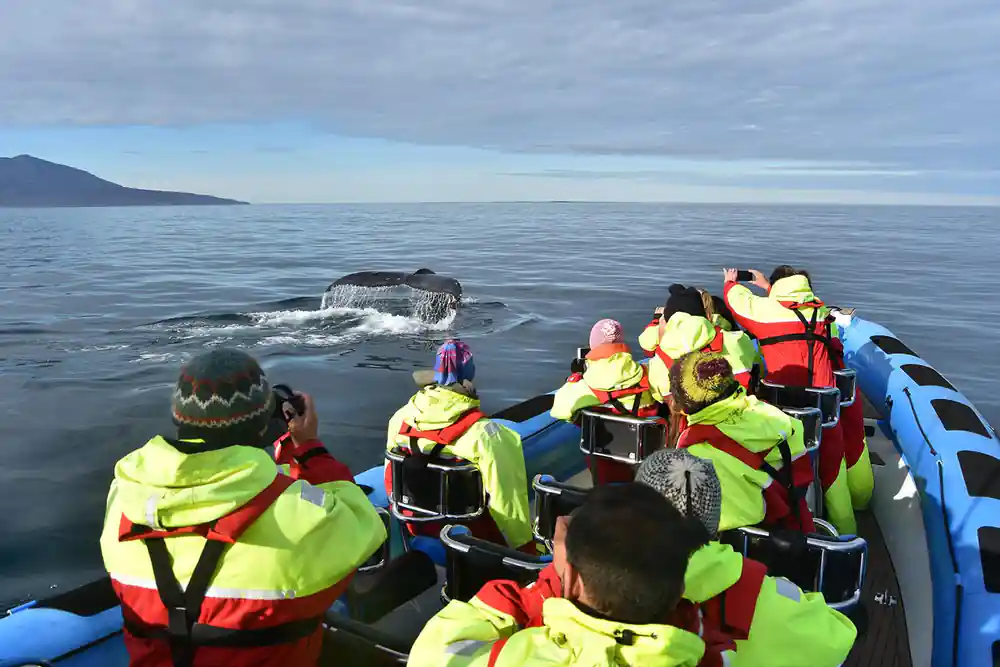
Speedboats cover more ground in the time available, and the RIB Express boat has a comfortable cruising speed of 32 knots.[15] In summer the average sea water temperature in Skjálfandi Bay rises to 8.8 C.[2] Warm layers and a waterproof outer shell make a real difference. Summer light stretches late too: the midnight sun peaks around the summer solstice in June, and the sun never fully sets from May through August, so nights stay bright right across the island.[6] Keep your eyes on the water when the engine drops to an idle, and watch for other boats that have stopped.[16]
Plan your day around the boat
Boat places in Húsavík are finite, and popular dates fill up in the busy months. Book the date you want early, then watch the forecast. Sailings can be moved or cancelled when the wind picks up, and free cancellation up to 24 hours in advance leaves room to change your mind.[3]
Plan the day around the boat rather than the other way round. A morning departure leaves the afternoon for GeoSea or the whale museum; a later sailing lets you spend the morning driving the coast east of town. Parking in Húsavík is easy, and the harbour is a short walk from the centre, so you can leave the car once you are settled.
Pack for changing weather. A base layer, a fleece, a waterproof shell, a hat and gloves are sensible even in the middle of summer, and sunglasses help with the glare off the water. Bring binoculars if you have them, and keep scanning the water, especially when the engine drops.
Húsavík whale watching listings: from-prices
From-prices in US dollars from these Húsavík tour listings on GetYourGuide:[3][4][5][17]
Compare from-prices for a Húsavík boat trip
From-prices in US dollars for these GetYourGuide listings:[3][4][5]. Each listing shows one from-price.
Booking windows for a Húsavík sailing
Getting to Húsavík
Choose your route
Decide whether to drive, fly or take a bus to the north, then work out how the last stretch to Húsavík fits with your sailing time.
Reach Akureyri
Akureyri is the northern hub, with domestic flights from Reykjavík and a ring road link south. It is your last easy stop for fuel.
Take the northern road
From Akureyri the ring road runs north through farmland and over a pass before dropping to the coast and into Húsavík.
Arrive and park
Park near the harbour, walk the last few minutes to the ticket office and pick up anything you need before boarding.
Sail out into the bay
Boats head for Puffin Island and Skjálfandi Bay[3]. Keep an eye on the water and on any boats that have stopped.
Check sailing times and book your Húsavík whale safari
from US$172Reserve now & pay later