The essentials
- Mid-summer brings the longest days and the brightest nights, with the midnight sun peaking around the June solstice.[1]
- Puffin Island in Skjálfandi Bay is described as a nesting ground for around 36,500 active breeding pairs of puffins.[2]
- North Sailing reports a 97% overall whale sighting success rate for its Húsavík tours, based on sightings in Skjálfandi Bay since 1995.[3]
- Morning departures often bring the flattest water; the speedboat safari takes 2 hours, with starting times shown when you check availability.[4]
- The Original Big Whale Safari and Puffins by Speedboat is from US$171, and other Húsavík whale watching tours from US$85.[4][5]
- Top choice Big Whale Safari & Puffins from US$171 Duration2 hours[4]Rating4.73 from 1,423 reviews[4]StopsHusavik, Puffin Island, Skjalfandi[4]CancellationFree up to 24 hours ahead[4] Check availability
- Big Whales & Puffin Island from US$164 Duration2 hours[6]Rating4.83 from 1,059 reviews[6]StopsHusavik, Puffin Island, Skjalfandi[6]CancellationFree up to 24 hours ahead[6] See this tour
- Family-Run Whale Watching from US$85 Duration3 hours[5]Rating4.70 from 1,987 reviews[5]StopsSkjalfandi[5]CancellationFree up to 24 hours ahead[5] See this tour
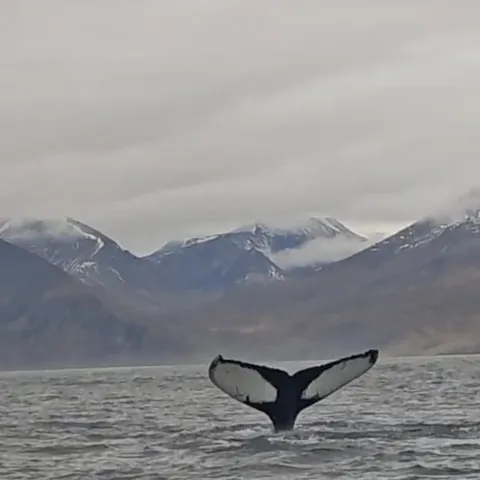
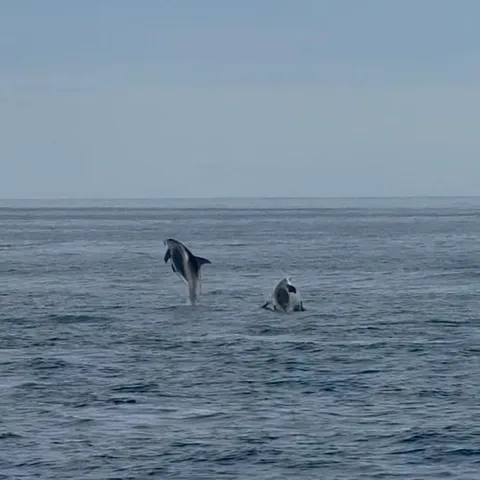
To provide realistic expectations to spot whales, we have gathered data of sightings in Skjálfandi Bay from every tour since the beginning of whale watching in 1995 in Húsavík. The results are truly impressive, with a 97% success rate of overall sightings!
The best time to go, in short
Things to check
On the day
- Bring sunglasses and sunscreen; the light on the water is bright even under cloud.
- Summer sea temperature in the bay averages 8.8 C, so pack a warm hat and gloves.[8]
- Take the seasickness tablets that work for you before you leave the harbour, not after.
- Some Húsavík whale watching boats are wheelchair accessible.[7]
Spring in Húsavík: quiet boats and bright light
Spring is when Húsavík feels like a working harbour rather than a busy one. Snow still sits on the mountains across Skjálfandi Bay, the water is cold, and the boats that go out usually have room on them. The bay itself is big: it is about 28 kilometers wide at its widest point and about 25 kilometers long.[9] Migrating birds arrive, the light comes back to the evenings, and the town shakes off winter at its own pace.
Whale watching here is not a new idea. Commercial whale watching in Iceland began in Húsavík in 1995[10], and North Sailing reports a 97% overall whale sighting success rate for its Húsavík tours, based on sightings in Skjálfandi Bay since 1995.[3] That record is what the town has built its reputation on, and it is why so many travellers plan a whole day around the water.
Cold is the thing to plan for. A warm hat, gloves, a windproof jacket and a layer underneath make a two-hour speedboat ride far more comfortable.[4] Keep spare camera batteries in an inside pocket where they stay warm, and hold the rail when the boat turns and picks up speed. Sunglasses matter as much as gloves, because the low sun off the water is bright even under cloud.
Peak season and the midnight sun
The middle of summer is when the bay is at its most generous. From May through August the sun never fully sets in Iceland, and the midnight sun peaks around the summer solstice in June, so the nights stay bright right across the island.[1] A late sailing can end in light that looks like the middle of the afternoon, and you will come back to harbour wondering what time it is.
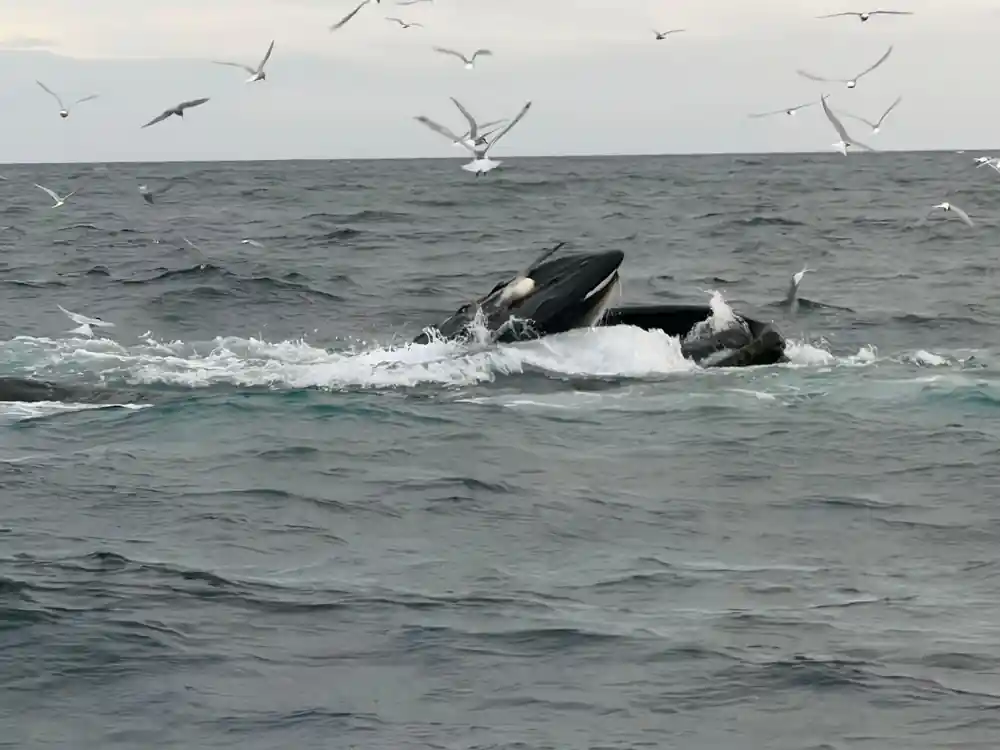
Puffins are the other half of the draw. Lundey, the puffin island in Skjálfandi Bay, is described as a nesting ground for around 36,500 active breeding pairs of puffins.[2] The Original Big Whale Safari and Puffins by Speedboat runs from Húsavík to Puffin Island and on into Skjálfandi.[4] Puffin watching is a short, loud, busy business: the birds wheel around the island in flocks and land with a patter of orange feet.
Warm it is not. In summer the average sea water temperature in Skjálfandi Bay rises to 8.8 C[8], and the air over the water feels colder still once the boat is moving. Dress as you would for a winter walk in town, with a hat that stays on, and you will enjoy the ride far more. A buff or neck gaiter takes up no room and blocks the wind that finds every gap.
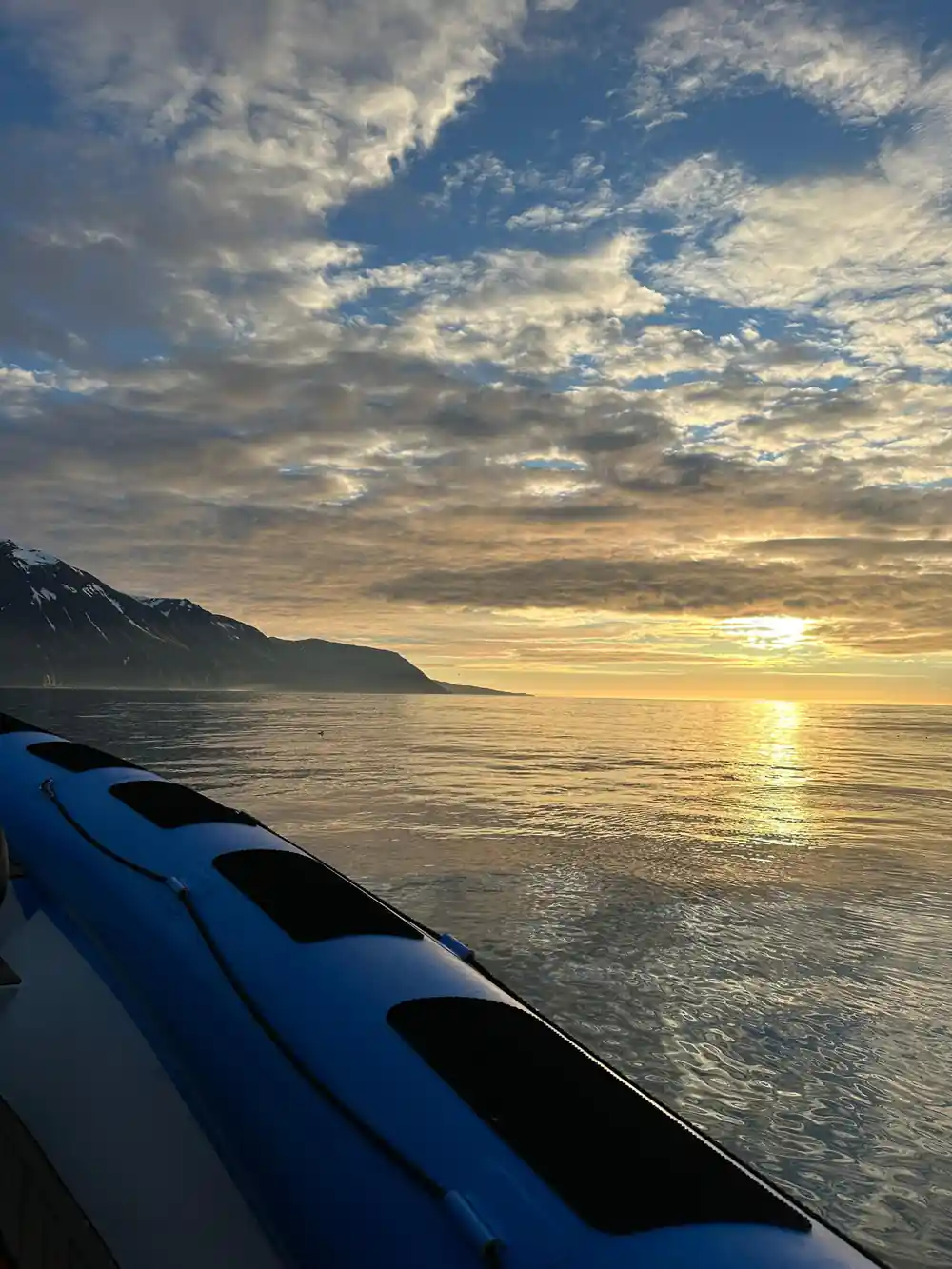
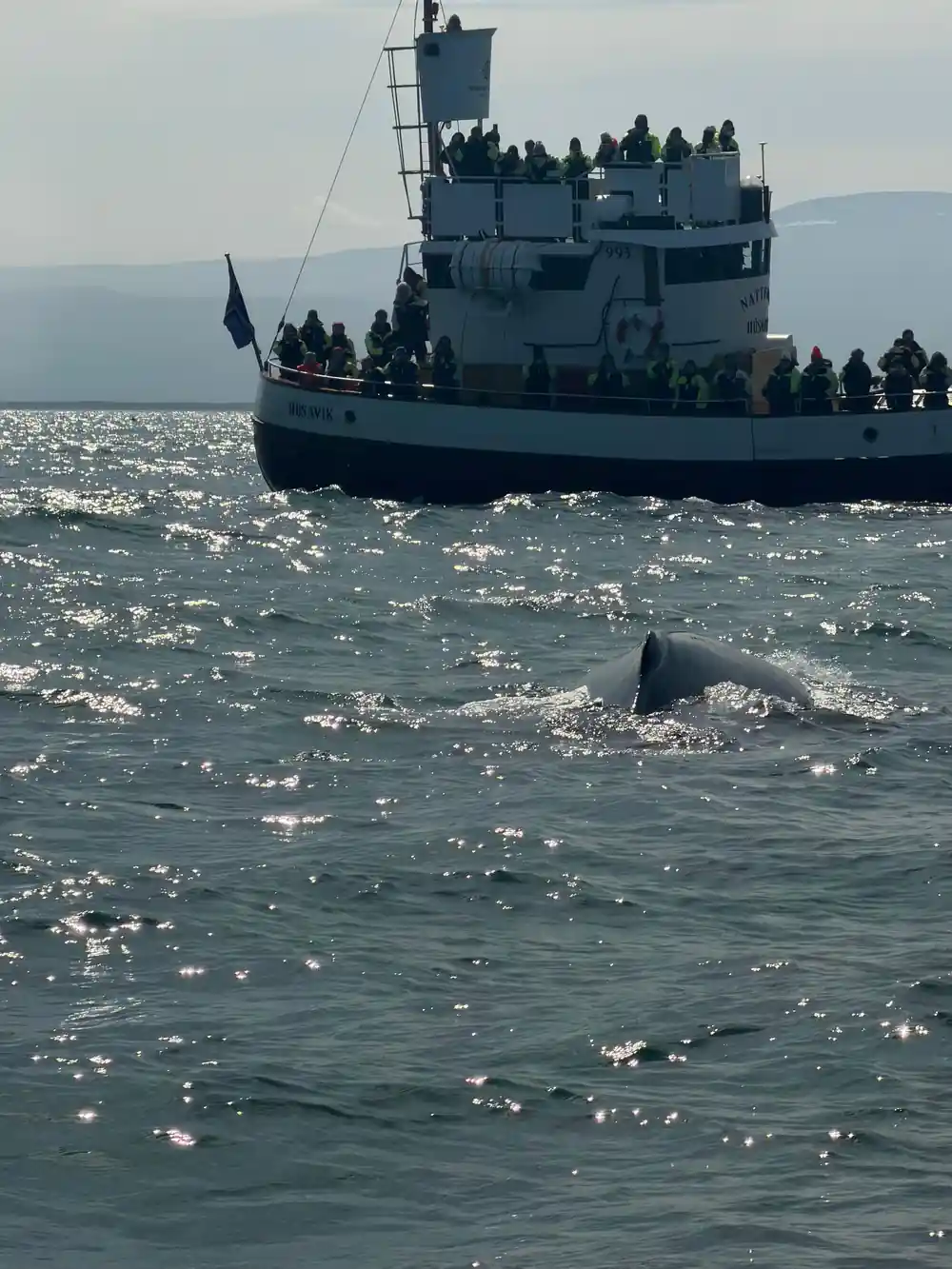
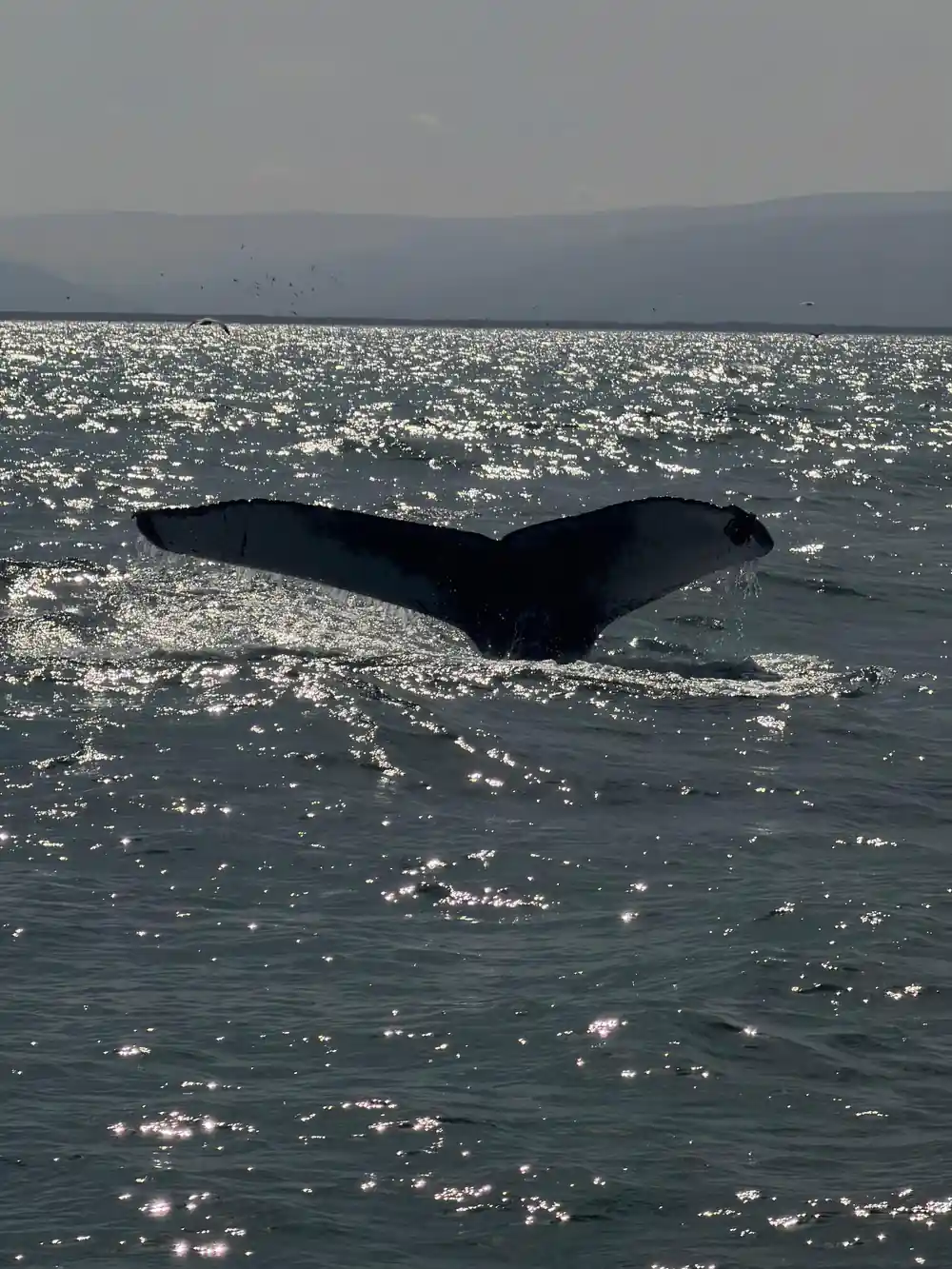
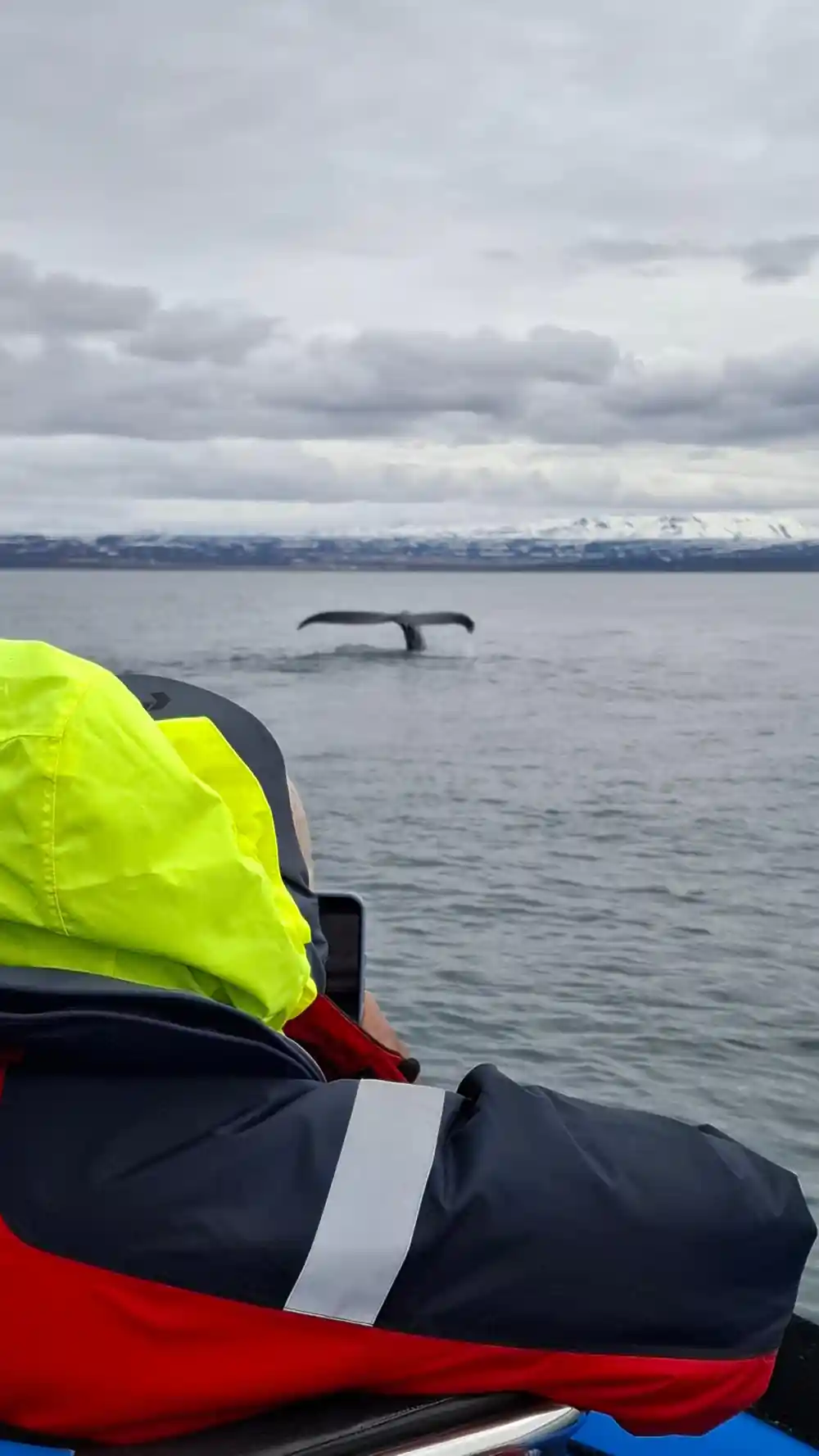
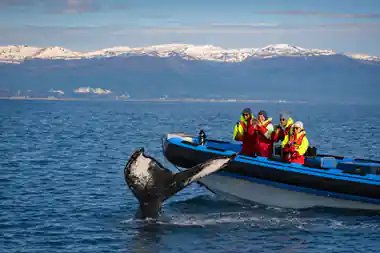
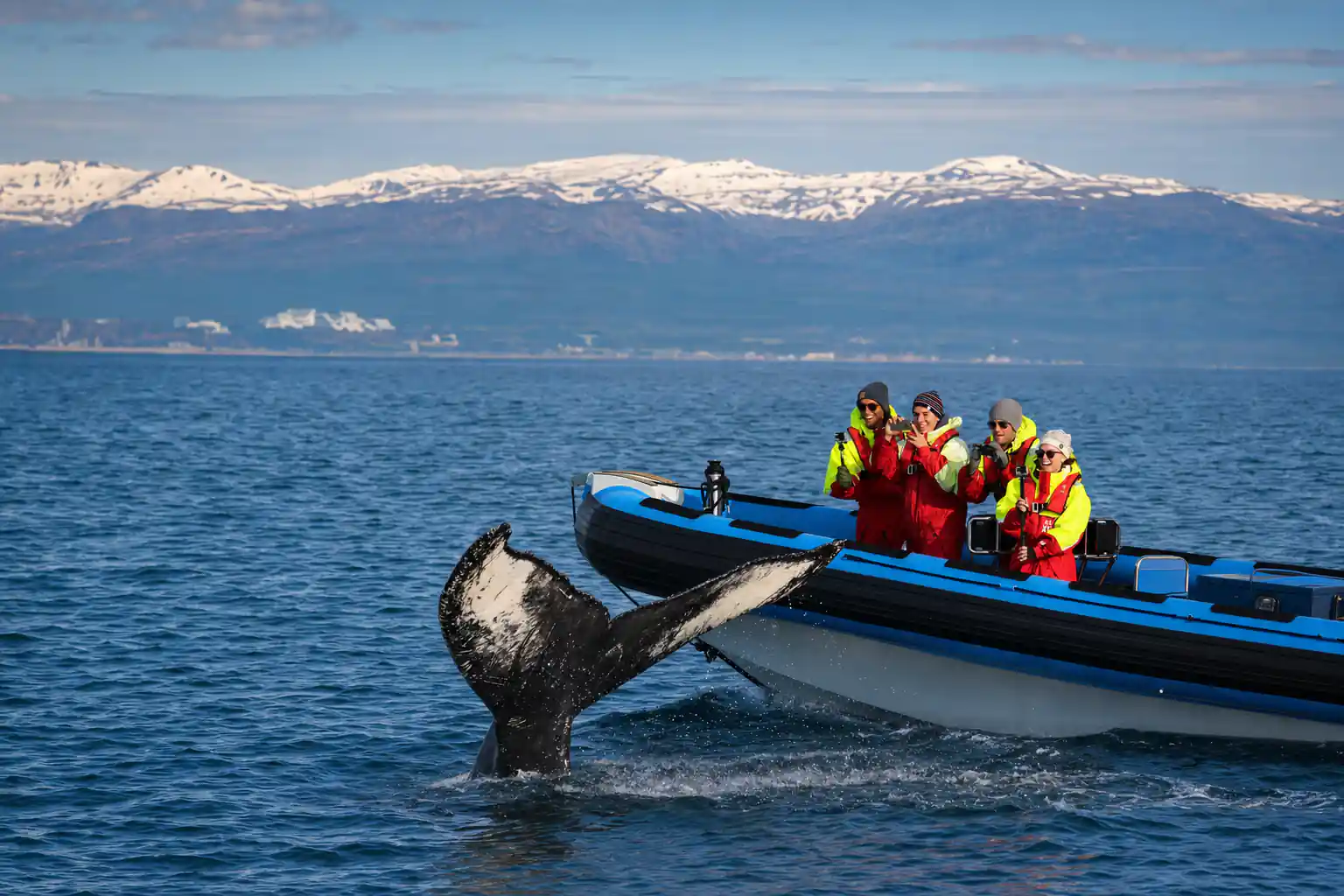
A humpback fluke above the water with snowy mountains behind
Late summer: August and early September
Late summer keeps most of the advantages of midsummer. The sun still never fully sets from May through August[1], so evening departures stay bright, and the water is as warm as it gets all year. Húsavík is a small town, with a population of roughly 2,500[11], so when whale watching season is in full swing the harbour, the cafés and the guesthouses all feel busy at once.
The puffin colony is finishing its nesting work by then, and the birds spend more time rafting on the water around the island, where they are easy to pick out from a boat. Whales are still working the bay, and the sea can be calmer than in the middle of summer. Boats often have more space than in midsummer, and the crews have more time to talk.
The light is the real gift of late summer. Long, low sun makes the mountains across the bay glow, and photographs taken in the last hours of the day often carry more colour than midday shots. Bring a lens you can hold steady on a moving boat, and wind the strap around your wrist. The sunsets get earlier and more dramatic as the weeks pass.
October and the autumn transition
Autumn is the quiet end of the year on the bay. Days shorten quickly, the first snow often dusts the mountains, and the sea is more inclined to chop. Summer's average sea water temperature of 8.8 C[8] is a fast-fading memory, so the wind off the water feels sharper than it did weeks earlier. What you lose in comfort you gain in atmosphere: the bay looks wilder and emptier.
Book flexibly if you travel late in the year. The Original Big Whale Safari and Puffins by Speedboat offers free cancellation up to 24 hours in advance for a full refund, and you can reserve now and pay later.[4] Terms like that leave room to move your day if the forecast turns. If you are travelling late in the season, build a spare day into your itinerary.
Windy or wet days are the moment for the town's indoor option. The Húsavík Whale Museum was founded in 1997,[12] and the GeoSea geothermal sea baths are from US$60, with pools filled with seawater from geothermal boreholes kept at 38 to 39 °C year-round.[13][14]
from US$171
The Original Big Whale Safari and Puffins by Speedboat is rated 4.73 from 1,423 reviews and runs for 2 hours from Húsavík.[4]
Time of day: morning or afternoon departures
Mornings on Skjálfandi Bay often bring the flattest water and the softest light. If you have a full day in Húsavík, an early departure leaves the rest of it free for the whale museum, the harbour and a soak in the sea baths afterwards. Boats can move more freely in the morning, and the bay is often glassy before the afternoon breeze builds.
Afternoon and evening sailings have their own appeal. From May through August the sun never fully sets[1], so the light stays golden for hours. The speedboat safari takes 2 hours, and starting times appear when you check availability.[4] The larger family-run boat takes 3 hours.[5] Whichever you choose, arrive early enough to park and walk down to the harbour.
Wildlife keeps its own schedule, so no slot guarantees a whale. Pick the departure that fits your day, keep scanning the horizon rather than the middle distance, and treat every sighting as a gift rather than a promise. On the water, hours pass quickly, and most people are surprised by how soon the harbour appears again.
Big whales and rarer species in Skjálfandi Bay
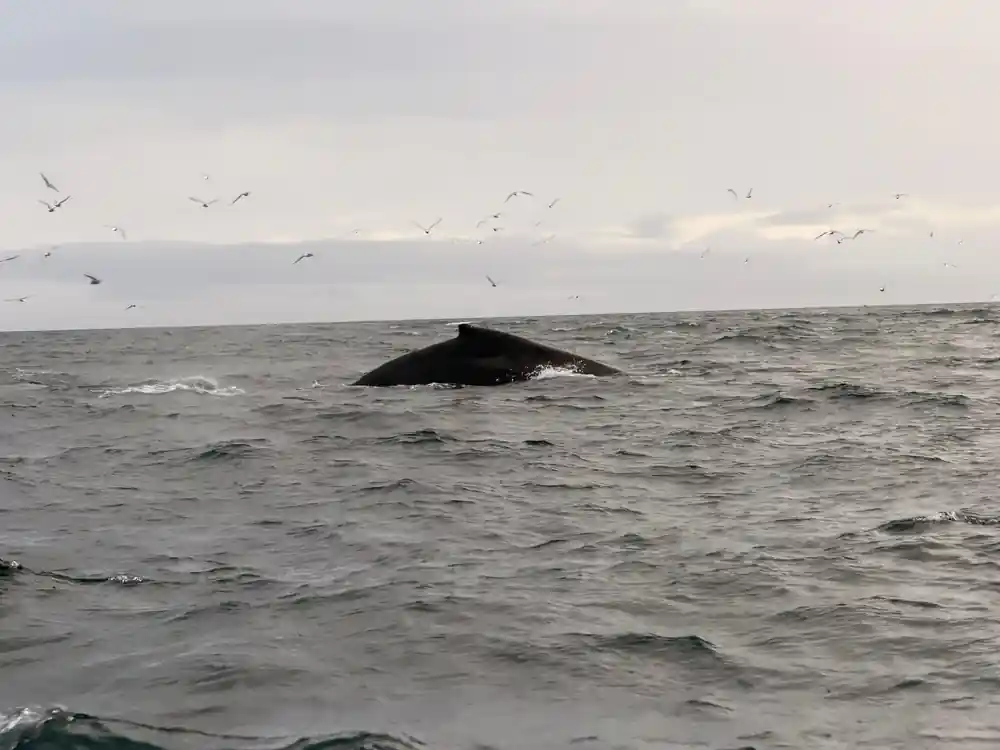
Humpbacks are the crowd-pleasers, and they are enormous. Humpbacks in the Northern Hemisphere reach an average length of 49 to 52 feet, and the average weight for a mature adult is 50,000 to 80,000 pounds.[15] A fluke comes up, the water slides off it, and the animal is gone again. Photograph the blow first and the fluke second, because the fluke is easier to catch once you know roughly where the animal will surface.
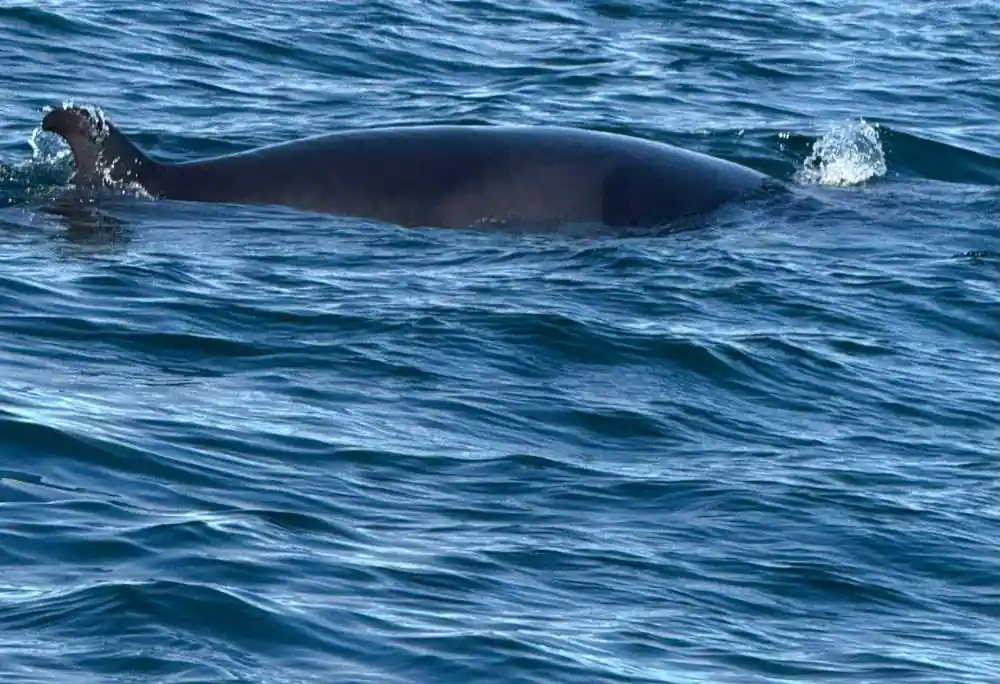
Smaller cetaceans turn up too. North Sailing notes that on its tours there is a chance to encounter up to 11 different cetacean species.[3] Binoculars and a quick eye help, and so does patience. The harbour itself is a good place to practise: the Whale Trail advises that one of the best ways to find marine mammals is to look for other people who are watching them, especially stopped boats.[16]
Húsavík has been a whale town for a very long time. According to the Settlement Book, Garðar and Náttfari set up their winter camp in Skjálfandi Bay and built a house in Húsavík, which means 'the house bay'.[17] The whale museum, the harbour and the boat crews all sit inside that long story of people living from this water.
Weather, sea state and what to wear
The most useful number for packing is the water temperature. In summer the average sea water temperature in Skjálfandi Bay rises to 8.8 C[8], and the wind over a moving boat makes it feel colder than that. Layers beat one thick coat, and a thin pair of gloves is worth more than you would think. Waterproof trousers are the difference between a great afternoon and a cold, damp one.
Sea state changes quickly. A calm morning can turn sloppy by afternoon, and the open stretch of water towards the puffin island is where you feel it most. If you are prone to seasickness, take your usual tablets before departure, stay on deck in the fresh air and keep looking at the horizon rather than down at your phone.
The town is compact and easy to walk. Húsavík has a population of roughly 2,500[11], so you can usually leave the car at the guesthouse and stroll down to the boats. Allow extra time anyway, because nobody wants to be pulling on a waterproof jacket while the boat is already casting off.
From-prices for Húsavík whale and puffin tours
From-prices in US dollars as listed for these Húsavík tours:[4] US$171,[6] US$164,[7] US$99,[5] US$85.
What a Húsavík whale trip costs in US dollars
From-prices per adult in US dollars:[4] US$171,[6] US$164,[7] US$99,[5] US$85. Child fares are not stated in these listings.
When to go through the year
Plan your Húsavík sailing
Choose your window
Midsummer has the longest days, while spring and autumn are quieter. Check the listing's availability calendar for the boats running on your dates.[4]
Pick a departure time
The speedboat safari takes 2 hours, and starting times appear when you check availability, so build your day around the slot you choose.[4]
Decide on the boat
Fast boats cover ground quickly: the RIB Express has a comfortable cruising speed of 32 knots[18], while larger boats ride higher and take things more slowly.
Dress for cold water
The average sea water temperature in Skjálfandi Bay rises to 8.8 C in summer, so bring a warm hat, gloves and a windproof layer.[8]
Keep a wet-weather plan
If the sea turns rough, the Húsavík Whale Museum and the GeoSea baths, from US$60, are easy alternatives.[13]
Book the Original Big Whale Safari and Puffins by Speedboat
from US$172Reserve now & pay later