The essentials
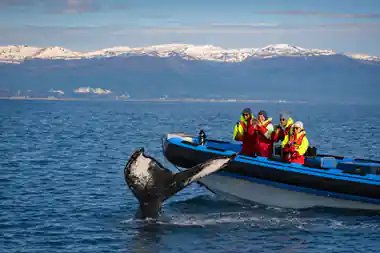
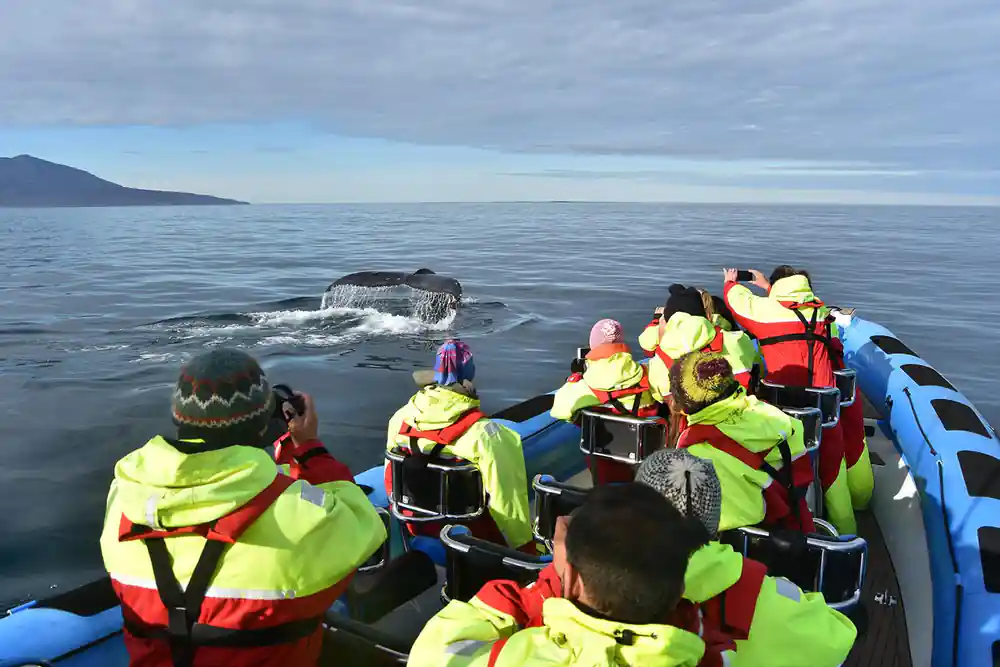
- The speedboat route starts in Husavik, calls at Puffin Island and heads on out into Skjalfandi Bay.[1]
- Lundey, known as Puffin Island, is a nesting ground for around 36,500 active breeding pairs of puffins.[2]
- The Original Big Whale Safari & Puffins runs 2 hours and is rated 4.73 from 1,423 reviews.[1]
- The sun never fully sets in Iceland from May through August, and late sailings come back in daylight.[3]
- The safari is from US$171, with free cancellation up to 24 hours in advance for a full refund.[1]
- Top choice Original Big Whale Safari from US$171 Duration2 hours[1]Rated4.73 from 1,423 reviews[1]GuideLive tour guide: English[1]CancellationFree cancellation, 24 hours ahead[1] Check availability
- Big Whales & Puffin Island from US$164 Duration2 hours[4]Rated4.83 from 1,059 reviews[4]GuideLive tour guide: English[4]CancellationFree cancellation, 24 hours ahead[4] See this tour
- Original Whale Watching from US$99 Duration3 hours[5]Rated4.63 from 2,958 reviews[5]GuideLive tour guide: English[5]CancellationFree cancellation, 24 hours ahead[5] See this tour
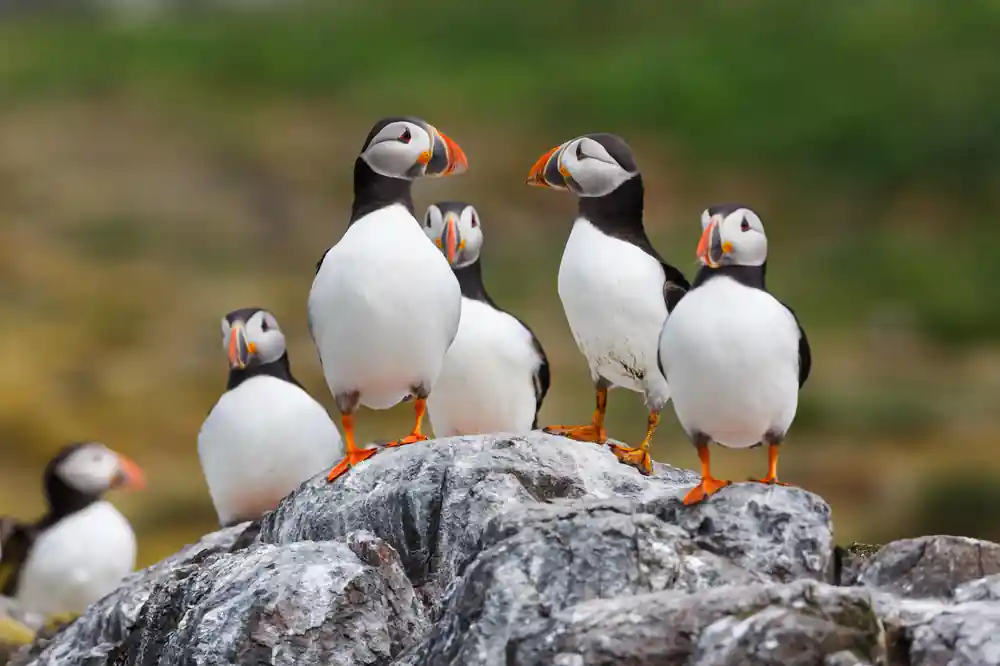
The Puffin Island is a nesting ground for around 36.500 active breeding pairs.
Is the speedboat safari worth booking?
Before you sail
Lundey: Iceland's Puffin Island
Lundey sits in Skjálfandi Bay, a short boat ride north of Húsavík harbour, and it is usually called Puffin Island. The bay is about 28 km wide at its widest point and about 25 km long,[9] and the town you sail from has a population of roughly 2,500.[10] The name Húsavík means 'the house bay', and the Settlement Book records that Garðar and Náttfari set up their winter camp in Skjálfandi Bay and built a house there.[11] It is a small place with a long memory of the sea.
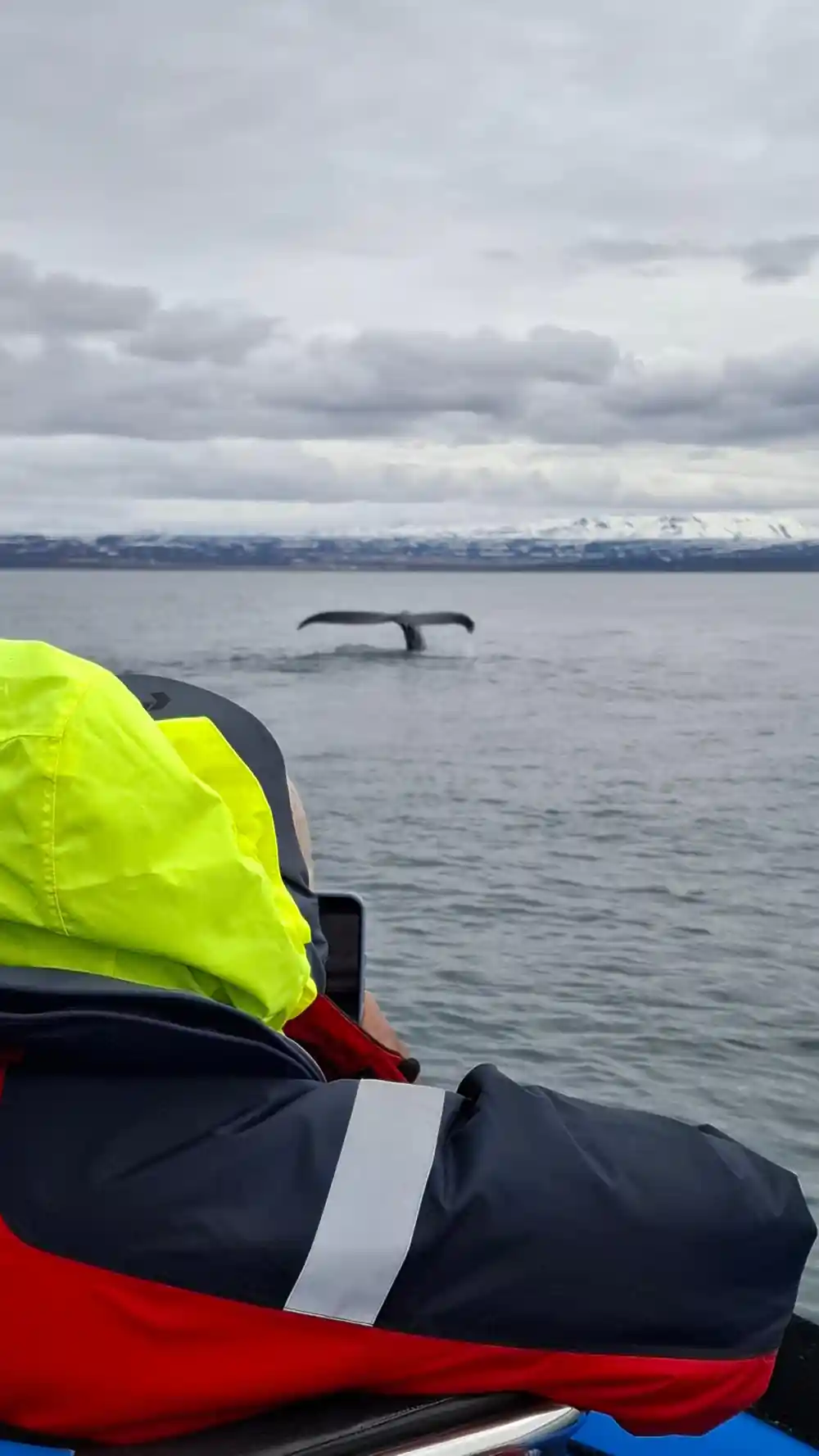
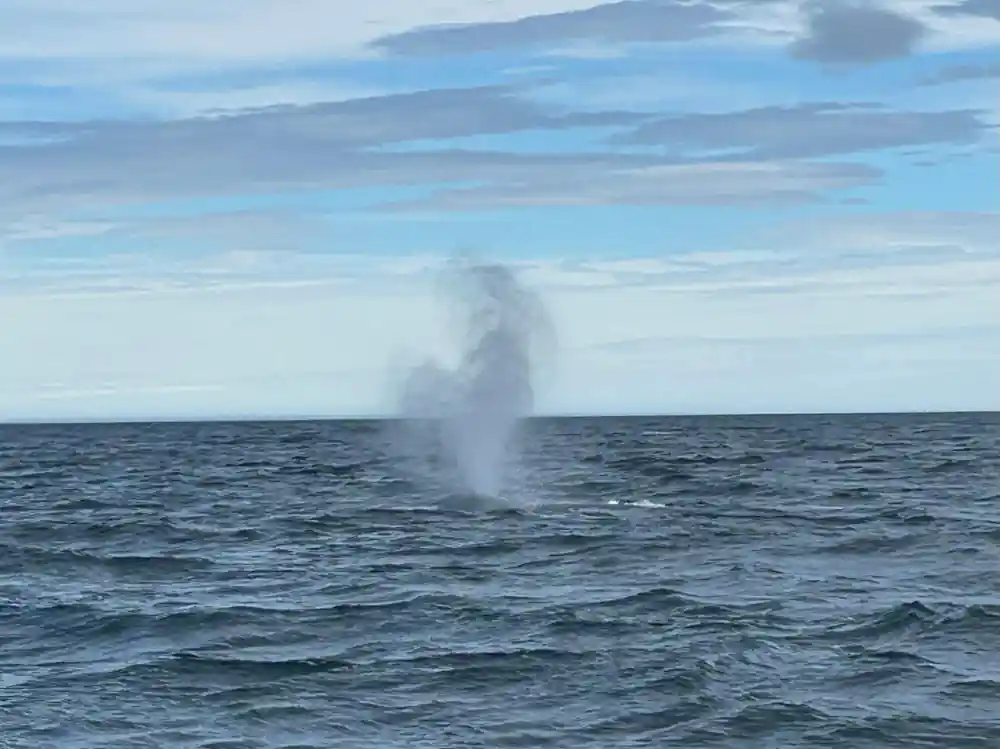
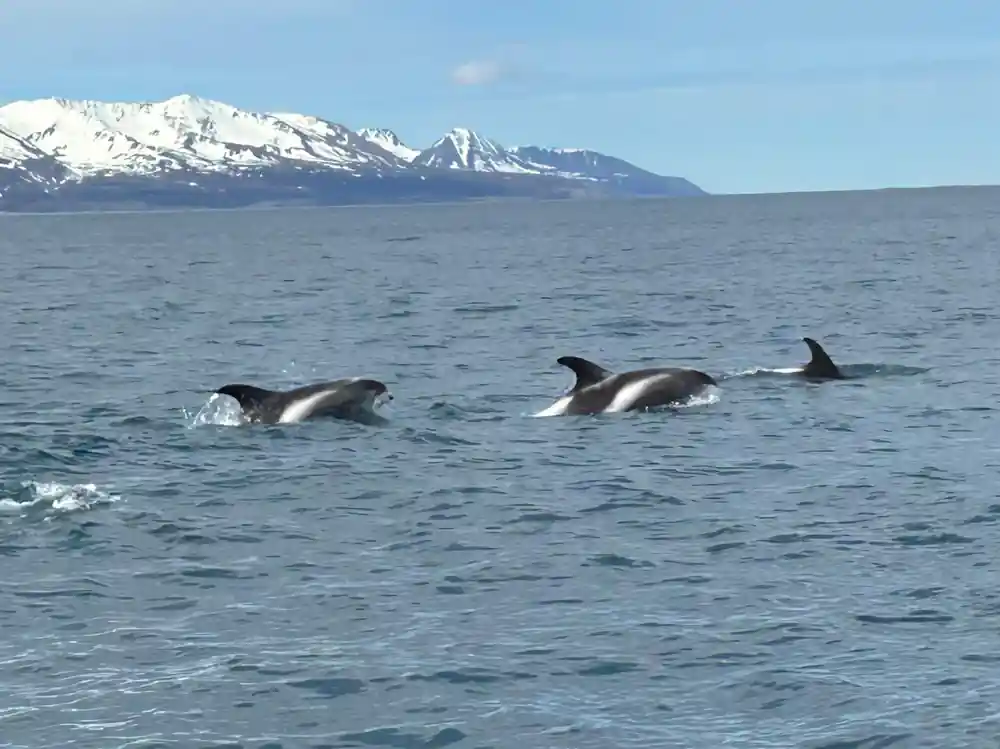
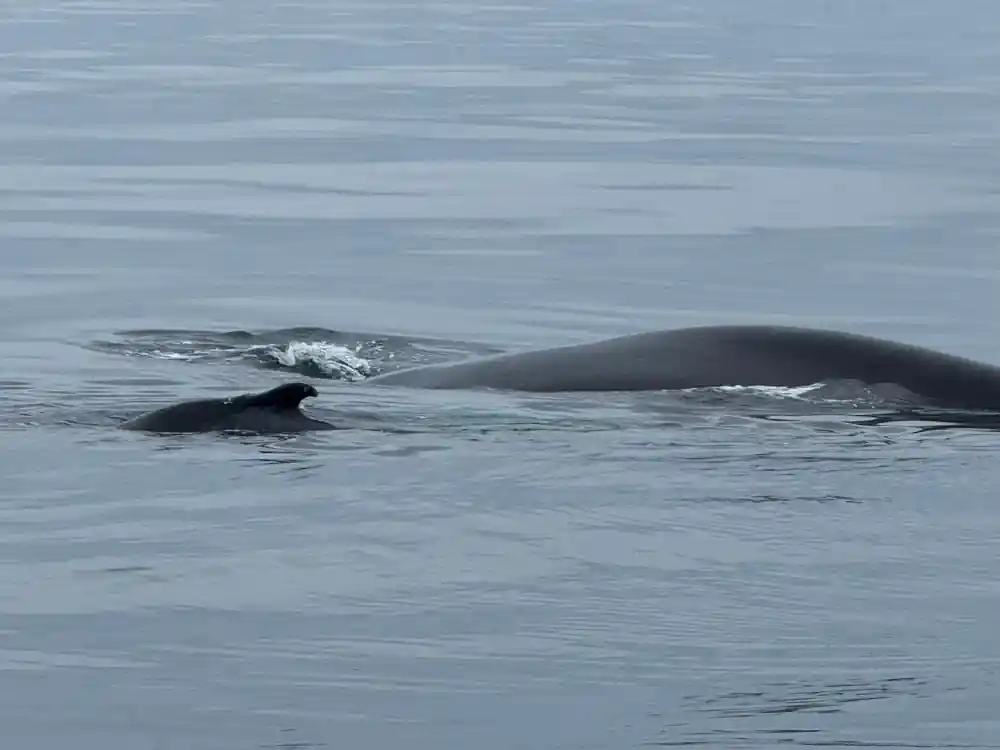
Lundey is a nesting ground for around 36,500 active breeding pairs of puffins.[2] You watch the colony from the water while birds wheel over the grass, stand at their burrow entrances and raft in loose flocks on the swell. The Húsavík: Original Big Whale Safari & Puffins by Speedboat starts in Husavik, calls at Puffin Island and heads on into Skjálfandi.[1] One puffin boat cruise of 2 hours[1] covers the birds and the whales on the same outing. North Sailing notes that there is a chance to encounter up to 11 different cetacean species on its tours.[12]
Boat choice changes the price. The traditional whale watching tour is from US$98[13] and the family-run tour with indoor seats is from US$85,[6] while the two speedboat options are from US$171[1] and from US$164.[4] Every boat leaves from the same small harbour on the edge of town, and you can compare them in person before you decide.
How Puffins Dig and Defend Their Burrows
Puffins nest underground. On grassy islands such as Lundey they scratch and shovel a tunnel back into the turf with their bill and their webbed feet, and they line the chamber at the end with grass and feathers. The tunnel can run well back into the slope, and soft, peaty soil suits the birds far better than bare rock. The same burrow is often occupied again in later seasons.
A burrow is worth fighting for. Neighbours squabble over entrances, fencing with their bills and shoving with their bodies, and a bird that has just landed with food may be chased across the grass. From the boat you see the calmer side of colony life: puffins standing outside their doorways, watching the water, and lifting off in a hurry when something passes overhead.
If you are travelling with children, the burrows are the best part of the story. A chick stays underground for weeks and then makes its own way down to the sea at night, when the colony is quiet and the danger from above is smaller.
Puffins stand on the grassy slopes of Lundey through the breeding season.
The Puffin's Unlikely Flight and Wing Speed
A puffin's wings are short and stubby. That makes the bird a superb swimmer and an odd looking flyer: it beats its wings very fast, skims low over the water and needs a pattering run across the surface before it can get airborne. In the air it looks busy and slightly comical; under the surface it is fast and completely at home. Around the colony, birds come and go in whirring lines.
The boats are quick too. The RIB Express has a comfortable cruising speed of 32 knots,[14] and on a fast boat the crossing is part of the fun. Hold on to your hat, keep your camera strap around your wrist and listen for the guide's call.
On the water, the puffin's flight style works in your favour. Birds take off into the wind, and a boat that sits quietly lets them come and go. Give them room, keep the sun behind you if you can, and let the crew read the colony for you.
Why Puffins Carry Multiple Fish at Once
When a puffin comes back to feed its chick, it does not swallow the catch. It holds each small fish crosswise in its bill and works the next one into place behind it, and a single bird can arrive at the burrow with a neat row of sandeels or capelin in its beak. Watching a bird fold fish after fish into place is a small piece of theatre.
Small spines on the tongue and the roof of the bill help to hold the fish while the bird opens its beak for another. That is how a puffin ends up with a beakful stacked like a small bookshelf, and it is one of the sights people hope for on a puffins boat tour.
Keep an eye on the birds sitting low on the water with their heads up. They are usually waiting for the right moment to fly back to the burrow, and when they go, they often fly straight past the boat.
from US$171
The Húsavík: Original Big Whale Safari & Puffins by Speedboat runs 2 hours and is rated 4.73 from 1,423 reviews.[1]
Puffin Pairs and Their Lifelong Bond
Puffins are loyal. A pair tends to return to the same island and the same patch of turf season after season, and the two birds greet each other with quick bill taps and head flicks before one of them drops down the tunnel. Both birds spend the summer fetching food, taking turns at the burrow. The same doorways are busy again every summer.
Once you know the signal, the colony makes more sense. Two birds standing close, facing each other with their beaks tilted up and knocking together, are a pair rather than rivals, and the low murmuring you hear from the water is part of the same conversation. Watching from a boat lets you see it without walking over the burrows.
For photographers, this is the calmest moment of the trip. Two birds side by side on a grassy ledge, one leaning towards the other, will stay put for a long time, and a longer lens pays off more here than a fast shutter.
The Puffin's Mysterious Winter at Sea
When the chick has grown and the days shorten, the puffins leave. Adults head out into the open ocean and spend the winter on the water, far from land, riding out the swells and diving for small fish. Where they go and how far they travel varies from bird to bird. Tracking studies have slowly filled in the picture, but the winter months are still the least known part of a puffin's year.
A summer visit is a seasonal visit: the birds are on the island for the breeding season only. Outside that window Lundey goes quiet, the burrows empty and the birds are scattered across the North Atlantic. If you want the noisy, busy colony, plan your trip for the months when the sun never fully sets.[3]
Winter at sea makes puffins hard to study. For a visitor it comes down to timing: book for the breeding season, when the birds are tied to the island and easy to watch from the water.
When Rough Seas Close Access to Lundey
Skjálfandi Bay is sheltered, but it is still the North Atlantic. A northerly wind can push up a chop, and plans on the water change with the weather. If you are prone to seasickness, take your remedy well before you leave the harbour rather than waiting until you are bouncing. On a cold day, layers, a hat and gloves change everything, and a dry bag for your camera is cheap insurance.
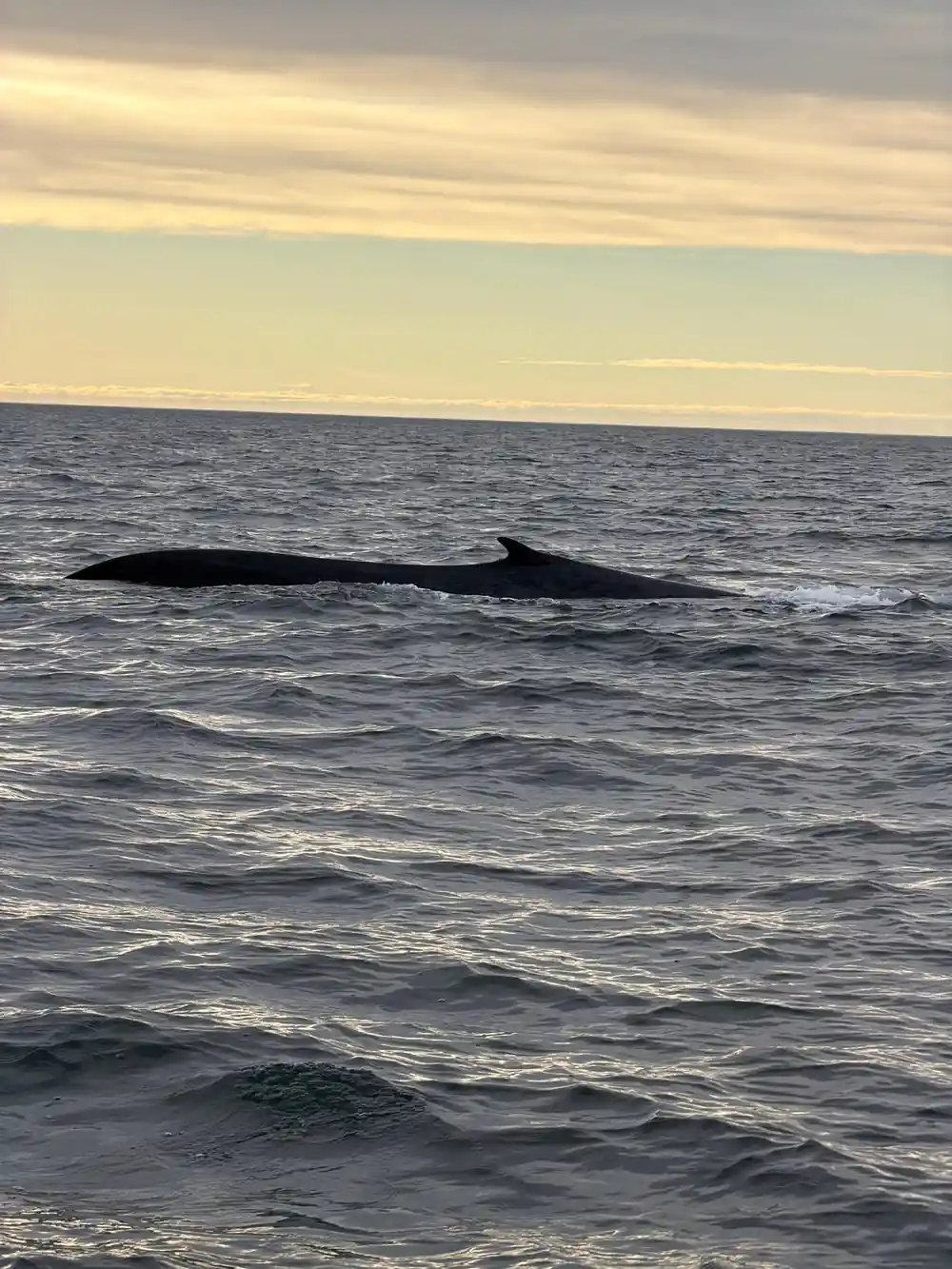
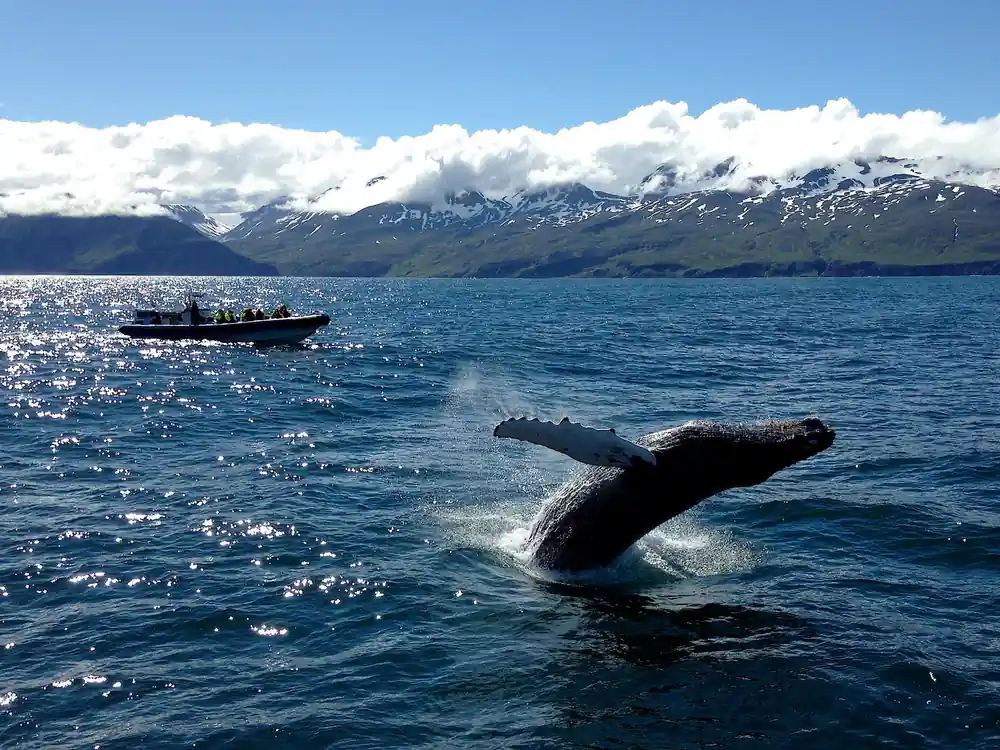
Whale watching has deep roots here. Commercial whale watching in Iceland began in Húsavík in 1995,[15] and North Sailing says its Húsavík whale watching tours have had a 97% overall whale sighting success rate based on sightings in Skjálfandi Bay since 1995.[12] Humpbacks found in the Northern Hemisphere reach an average length of 49 to 52 feet, and mature adults average 50,000 to 80,000 pounds.[16] If the weather turns, the speedboat safari offers free cancellation up to 24 hours in advance for a full refund.[1]
Take the early sailing if you can. The light is soft, the bay is often calmer and you still have the rest of the day for the Whale Museum or the geothermal baths at GeoSea, both of which sit close to the harbour. A puffins cruise is a short outing, and Húsavík is easy to walk in an afternoon.
From-prices for whale and puffin tours from Húsavík
Values are GetYourGuide from-prices for these listings:[1][4][5][6][13]
Compare adult from-prices for Húsavík boat tours
Adult from-prices in US dollars from these listings:[1][4][6][13]
When to book your puffin and whale trip
Planning your puffin day
Pick your boat
Fast RIB boats reach Puffin Island quickly and put you close to the water; larger boats are steadier and have indoor space.
Book your slot
The speedboat safari runs 2 hours and can be reserved now with payment later.[1]
Dress for the bay
Summer sea water in Skjalfandi Bay averages 8.8 C, and the wind on deck bites.[7]
Watch the birds
Look for puffins standing at burrow entrances, rafting on the sea and flying low with a beakful of fish.
Add the museum
The Husavik Whale Museum was founded in 1997 to give detailed information about whales and their habitat.[17]
See Puffin Island and the whales of Skjálfandi Bay by speedboat
from US$172Reserve now & pay later